LBAM quarantines: San Diego, Sacramento counties

  • Portions of San Diego and Sacramento counties have been added to areas of California under quarantine for the light brown apple moth.
  • Nineteen counties are currently part of the quarantine, totaling 5,147 square miles.
  • The quarantine applies to residential and public properties as well as plant nurseries, farms and other commercial enterprises.

Portions of San Diego and Sacramento counties have been added to areas of California under quarantine for the light brown apple moth. Nineteen counties are currently part of the quarantine, totaling 5,147 square miles. It is one of the largest pest quarantines in state history.

In San Diego County, 10 square miles are under quarantine near Balboa Park in the City of San Diego. The quarantine boundaries are: to the north, El Cajon Blvd; to the east, Chollas Pkwy.; to the south, Market St.; to the west, Park Blvd.

A link to a map: http://pi.cdfa.ca.gov/pqm/manual/pdf/maps/3434LBAMSanDiego.pdf.

In Sacramento County, 16 square miles are under quarantine in south Sacramento. The quarantine boundaries are: to the north, Sutterville Rd.; to the east, Stockton Blvd.; to the south, an imaginary line near Beach Lake; to the west, Freeport Blvd.

A link to a map: http://pi.cdfa.ca.gov/pqm/manual/pdf/maps/3434LBAMSacramento.pdf.

State and federal quarantine regulations prohibit the movement of all nursery stock, all cut flower, and all host fruits and vegetables and plant parts within or from the quarantined area unless it is certified as “free-from” the pest by an agricultural official; is purchased at a retail outlet; or was produced outside the area and is passing through in accordance with accepted safeguards. Additionally, federal regulations apply to host commodities from the entire county if the commodities are moving interstate.

The quarantine applies to residential and public properties as well as plant nurseries, farms and other commercial enterprises. Residents of the quarantined area are asked to consume fruits and vegetables from yards and gardens on-site rather than removing them from the property. Landscapers and yard maintenance companies will be among the businesses placed under compliance agreements to ensure that yard waste is disposed of properly. People who are unsure if they are within the quarantine zone are asked to assume that they are.

Treatment with pheromone twist ties is scheduled to begin Tuesday, Sept. 7 in San Diego County. The pheromones create mating confusion for light brown apple moths and actually prevent them from mating during their lives.

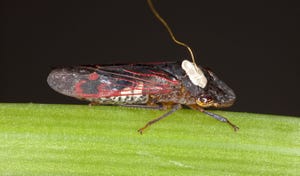
The light brown apple moth is native to Australia and is also found in New Zealand, the United Kingdom and Hawaii. The range of host plants is broad with hundreds of plant species known to be susceptible to attack by this pest, including more than 250 crops. It threatens California’s environment — including cypress, redwood and oak trees — by destroying, stunting or deforming young seedlings and damaging new growth in the forest canopy. The moth also feeds on host plants favored by a number of endangered species; spoils the appearance of ornamental plants; and damages citrus, grapes, and deciduous fruit tree crops.

Discuss this article 2

LIGHT BROWN APPLE MOTH (LBAM) PROPAGANDA CONTINUES. This LBAM program has been shown to be invalid, a mockery of science and a fraud in multiple counties in Northern California. Isn't that enough? Does it really need to be demonstrated in every county in the state. When someone is caught frauding the public in numerous counties of Northern California, is it ok to do the same thing in Southern Cal? If what the CDFA said about LBAM back in 2006 was true, then today there would be no forests, backyard gardens or agriculture production in Northern California. Last time I looked, everything was just fine. See a Professor's Press Release on the Fraud of the CDFA LBAM program: http://www.californiachronicle.com/articles/view/76798
By Anonymous (not verified)  on Sep 4, 2010
There is NO THREAT caused by the LBAM ANYWHERE it is found in the world. The moth has been in the state for decades and has, by CDFA's own admission in their EIR, NOT CAUSED ANY DAMAGE in the state. The moth was misclassified decades ago and the USDA and CDFA refuse to respect modern research and knowledge regarding the real threat of this innocuous insect. In New Zealand, where it has been found for more then 100 years (this is true also for Hawaii, the UK, and everywhere it is native or has been introduced) farmers are required to provide only LBAM-free produce if they intend to export to the US. New Zealand farmers are not subject to quarantines, do not have to have LBAM-free farms, and the government helps these farmers with useful information on control. Our CDFA and USDA are not there to help just prevent farmers from doing their jobs and imposing restrictions. LBAM is easy to control with organic IPM methods. The ONLY threat of LBAM is the inspections and draconian quarantines imposed on our farmers and the violation of our farms and businesses by the CDFA/USDA. The media and agricultural commissioners have not acted responsibly and need to check the misinformation they promulgate as facts regarding the LBAM and the eradication program. Be aware that the mating disruption hormones used to reduce the number of LBAM have never had efficacy tests completed in any setting outside of agriculture. The CDFA do not know if these substances will even work. These chemical pheromones have also never been tested for any effects on humans. Please understand that the levels of these artificial substances being used in urban areas are at levels 10's of thousands of times more concentrated than those encountered in nature. What are the effects of these very persistent chemicals on humans? No one knows? Do you want to accept that risk? Resist the quarantines, ask questions, get educated (Northern California resisted after the CDFA sprayed regions of Santa Cruz and Monterey counties with synthetic chemicals never meant for or tested for exposure to humans and without any efficacy tests on how these treatments might work), urge reclassification of LBAM. Refuse to sign compliance agreements until all of your questions are answered. Stand up and fight with legal challenges. LBAM is not a threat, our Ag agencies are the real threat despite the fact their job is to protect us.
By Anonymous (not verified)  on Sep 5, 2010
Post new comment
Sign In or register to use your Western Farm Press ID

(optional)
Connect With Us
Continuing Education Courses
New Course

The course details six of the primary diseases affecting citrus: Huanglongbing (Citrus...

Get the latest info on almond insect pest management.
Weeds Resistance Management covers a wide array of weed control strategies from mechanical to...