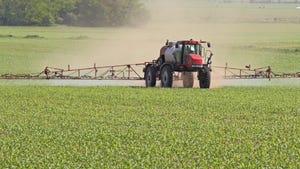
John Diener’s goal — change history of SJV

What is in this article?:

John Diener wants SJV history reversed using Integrated On-Farm Drainage Management (IFDM). The system would separate the salts from farmland drain water; sell the byproduct solids to industry, and either use the cleaned up water for farming or sell it as fresh water to cities.

Second-generation San Joaquin Valley farmer John Diener refuses to accept the adage that history repeats itself.

History repeating itself will eventually mean the demise of the richest agricultural valley in America.

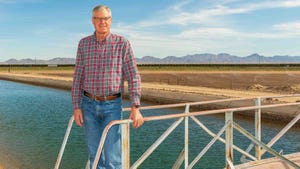
Diener, 58, farms on the West Side of the San Joaquin where he and his neighbors are fighting with one hand for fresh irrigation water to grow crops, while with the other they are challenged to economically dispose of subsurface, perched water.

Diener farms out of Five Points, Calif. He is doing everything he can think of to survive two opposing dilemmas that are like a vise squeezing him and his peers in the middle. However, is it more than personal. At stake is a major food source for a nation, and he is passionate there is no alternative but to successfully meet both challenges.

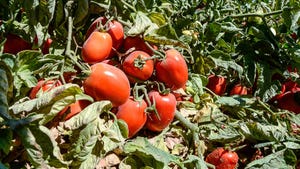
“Thirty percent of the all the processing tomatoes grown in the U.S. are produced in Fresno County; 30 percent of the country’s grapes are produced here,” he says, listing two of the myriad of facts that make Fresno County the No. 1 agricultural county in the nation.

He bristles at the notion that somehow growing food in the San Joaquin Valley is bad. Without its bounty, people will take to the streets and riot for food, he believes.

Lost in the battles over getting water to irrigate and the equally important farmland drainage issue is the unmistakable truth that it is the climate that makes the Valley so enviably productive. Diener believes most people are unaware of this one fact that makes the Valley so productive.

There is nothing you cannot grow in abundance in the San Joaquin Valley if you have the water and drainage, Diener says.

Agriculturally, California is a “Mediterranean” climate, much like that of ancient Mesopotamia, the birthplace of modern civilization. Today it is the dusty, desolate Iraq we see on television daily. In 2,400 B.C., the Tigris and Euphrates rivers fed water to the rich Mesopotamian valleys, which also had a Mediterranean climate. With water, a highly diversified agriculture became a key part of the birth of civilization as we know it today.

However, as John Letey, distinguished professor of soil physics at the University of California, pointed out in an article in California Agriculture, ancient history records “the turning white of the fields” of those rich valleys from salt buildup due to a lack of drainage.

“The story of Mesopotamia is ancient, but it could be repeated in California,” wrote Letey, who said 4.5 million acres of irrigated California cropland, primarily on the West Side of the San Joaquin Valley, are affected by saline soils or saline irrigation water. Already, Letey said tens of thousands of productive agricultural acres are “clearly at risk.”

Although imported irrigation water is relatively low in salt, Letey says 1.9 million metric tons are imported daily into the San Joaquin from irrigation water and other sources. This is the equivalent of 57 railroad cars of salt. The problem is compounded by the Valley’s alluvial soils originating from mountains that were once below sea level.

It doesn’t take history to tell Diener what his San Joaquin Valley is facing. He has seen it first hand. Land his father and uncle farmed is no longer productive from salt buildup due to a lack of drainage. He has also reclaimed salted ground to make it productive once again.

Discuss this article 0

Post new comment

Sign in or Register to use your Western Farm Press ID
(optional)
CAPTCHA
This question is for testing whether you are a human visitor and to prevent automated spam submissions.
Incorrect please try again
Enter the words above: Enter the numbers you hear:
Sign Up
Sign Up!

For the Western Farm Press Newsletter
Keep up with the latest news with our daily newsletter

Continuing Education Courses
New Course

Integrated weed management (IWM) programs and orchard cultural practices have been developed for specific orchard and vineyard crops. This accredited CEU provides information on economically and environmentally sound IWM practices.

New Course

American agriculture exports 20 to 30 percent of its production annually. For specific commodities, the percentage is much higher. When recommending and applying pest management products for crops, license Pest Control Advisers (PCAs) and applicators and farmers must be aware of which products applied are in compliance with Maximum Residue Levels (MRLs) established by foreign customers

New Course

This online accredited course focus on Calcium, an important plant nutrient in fertilizer management for maximum, healthy plant development as well as disease and pest prevention.