Fly parasite not a major threat to honey bees

What is in this article?:

  • Honey bee expert Eric Mussen said he does not consider the phorid fly as significant threat.
  • Mussen does not see the phorids as a major threat: “All the other stresses that we have been studying have combined to impair the immune system of the bees.  Then, whatever mechanism in the bees' bodies that used to prevent successful parasitism by the fly no longer is working as well.  Nearly every facet we have studied--microbes, mite feeding, exposure to pesticides, etc.--all have had a suppressing effect on the honey bee immune system.  The current U.S. environment seems to be very stressful to honey bees."

Extension Apiculturist Eric Mussen of the UC Davis Department of Entomology speaks out about bee health.

Noted honey bee expert Eric Mussen, Extension apiculturist with the UC Davis Department of Entomology, will discuss three decades of beekeeping when he delivers the keynote address on Thursday, Jan. 5 at the 43rd annual American Honey Producers’ Association Convention in Phoenix. Mussen will speak on “Never Expert ‘Business as Usual” in the Sheraton Crescent Hotel. He will cover pests, parasites, pesticides, diseases, malnutrition and stress.

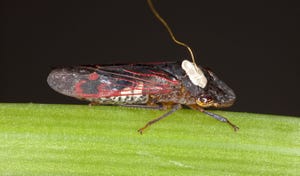
Mussen, who joined the UC Davis Department of Entomology in 1976, will also touch on the newly announced threat to honey bees, the parasitic phorid fly (Apocephalus borealis). San Francisco State University researchers, in work published Jan. 3 in the Public Library of Science (PLoS One) journal, found that the parasitic fly lays its eggs in the honey bees; it was previously known to parasitize bumble bees, but not honey bees. (http://www.plosone.org/article/info%3Adoi%2F10.1371%2Fjournal.pone.0029639)

The infested bees reportedly fly around like zombies and cannot return to their hives.

“This information explains why some, infested, honey bee adults leave the colony at night and are not likely to come back,” Mussen said. “The percent infestation level is not high enough to cause a Colony Collapse Disorder (CCD) loss, by itself. However, anything that further stresses the bee population and increases bee losses can contribute to CCD.”

Mussen said the fly “may be contributing to the loss of adult bees from colonies, but that probably is happening, also, in colonies that are not collapsing.  CCD seems to be an additive malady, so losses to fly parasitism can join the other stresses.  It does not appear to be a dominant factor. ”

The San Francisco researchers detected the fly parasite in some commercial hives in California and South Dakota.  Mussen said that without surveys, “we would not know for sure how widespread it is.  However, it is likely that a bumble bee parasite would be distributed at least as widespread as its bumble bee hosts.”

Mussen said he does not consider the fly a significant threat.  “Honey bees have an amazing ability to ‘make up for’ unanticipated losses--like exposures to bee-toxic agrichemicals in the fields--to the adult population by rearing more brood than would be expected at that time of the year to return to normal populations size.  So, if the colony is shrinking, abnormally, the bees often can re-establish the normal size by rearing ‘extra’ brood.  However, depending upon the inherent genetic abilities of a specific colony to tolerate fly parasitism, some colonies might be prone to developing parasite levels that are overwhelming, and actually succumb to the infestations.”

Discuss this Article 9

Anonymous (not verified)
on Jan 5, 2012

Sounds like someone’s circling the wagons considering several government agencies and major universities sponsored the release of said flies to control fire ants. Good job there fellows.

Anonymous (not verified)
on Jan 9, 2012

Dr. Mussen is a respected professional with a good reputation in the bee keeping community.
Your implication that he is somehow being dishonest to protect someone or something is not evidence of him being dishonest, it is evidence you are a conspiracy-minded whacko who knows little or nothing about the bee keeping community.

Anonymous (not verified)
on Jan 18, 2012

The beekeeping community and their spokesmen are looking as deceitful as the tobacco industry.

Anonymous (not verified)
on Jan 14, 2012

I have to agree with Anonymous #1 and disagree with Anonymous #2. Dr. Mussen is trying to protect the nation's beekeeping community from the truth.
Recent research papers studied dead bees found outside the hive (not a symptom of CCD) and found that they contained high dosages of pesticides. If pesticides could be determined to be the cause of CCD, then chemical companies can be sued, and the Federal government would need to provide billions of disaster relief dollars to the entire nation's beekeepers.
But CCD also occurs in areas devoid of pesticides. When will this nation finally establish that CCD is caused by disease, spread by centuries old poor honey beekeeping techniques? Just because our economy is still recovering doesn't mean we should install apiaries in every city and town, spreading disease coast to coast, on trucks or just hive to hive, possibly devastating our native pollinating insects.
"Zombee" producing phorid fly populations have exploded due to our negligence, whether it be from introducing phorid fly species in Texas, where many Bay Area colonies originated, or from installing apiaries along our open spaces where native pests may find a new abundant food source and flourish. If one Zombee can nurture one to over a dozen phorid larvae, then fifty thousand honey Zombees from a single hive could produce millions of phorid flies. Are we going to sacrifice the health of our environment so a few can temporarily profit?

Anonymous (not verified)
on Jan 15, 2012

Dr Mussen is trying to protect the bee keeping community from the truth! The spread of disease and disease-carrying pests is what is wiping out our bees. If the decline in bee populations is due to pests and disease, then increasing the number of apiaries will only allow for easier disease spread. Apiaries have spread out from agricultural land throughout a majority of our nations cities and towns. Did this newly discovered honey bee threat, the Phorid fly, originate in Texas, or from native pests from Bay Area (protected?) open spaces, where the number of apiaries has dramatically increased? We shouldn't put profit over the health of our environment! Keep the apiaries on agricultural land and leave the residential neighborhoods and open spaces to the native insects. Government laws and rules should be enforced or made more strict.

Anonymous (not verified)
on Jan 17, 2012

What can chemical can I spray on my bees to make the flies go away?

Anonymous (not verified)
on Jan 17, 2012

"Infected bes were found in San Francisco, Oakland, Orinda, Walnut Creek, Concord, El Cerrito, El Sobrante, Benicia, San Rafael, Mill Valley and Larkspur. They were not found in hives in Los Gatos, Saratoga, San Jose or Mount Hamilton. Bees from the infected hives are often infected with a virus and a fungus -- suggesting the fly might be a vector for these pathogens."
http://www.mercurynews.com/top-stories/ci_19666381

Anonymous (not verified)
on Jan 17, 2012

"Pollen has been deemed an additive by the European Court, instead of an integral part of honey, so Mr Pilbeam says beekeepers will have to relabel their produce and face expensive safety tests."
http://www.buckinghamtoday.co.uk/community/environment/our-world-in-your...

Anonymous (not verified)
on Jan 17, 2012

What about what this guy says: "From his observations he realized conventional apiculture which has been used for almost two centuries interferes with techniques the bees have perfected over eons of evolution. While Perone doesn’t believe that apicultural practices are directly causing CCD, he argues that they lower a colony’s immunity to illness and toxins.
In the wild a beehive consists of a large nest (usually located inside a giant tree) with pollen stored on the sides and honey stored above. The honey serves as food and insulation from the cold. In Langstroth hives - standard industrial hives - Perone claims the panels are not high enough to build the big healthy nest bees need to stay healthy."

http://greenanswers.com/news/269066/why-saving-bees-might-be-simpler-we-...

Post new comment
Sign In or register to use your Western Farm Press ID
(optional)

Continuing Education Courses
This accredited CE course focuses on choosing the correct variety alfalfa based on a number of...
New Course
The 2,000-member Weed Science Society of America’s (WSSA) Herbicide Resistance Action...

The course details six of the primary diseases affecting citrus: Huanglongbing (Citrus...

Newsletter Signup