Drought herbicide carryover could be problem for farmers

  • In a normal year, soil moisture helps dissipate herbicide soil concentrations, but in a drought year, the lack of moisture slows that process. Some herbicides might carry over and exceed the labeled crop rotation restrictions meant to prevent injury to the next crop.

This summer's lack of rain has translated into the potential for summer-applied herbicides to carry over into winter wheat or even spring-planted corn and soybean crops - something growers need to be monitoring, two Purdue Extension weed scientists say.

In a normal year, soil moisture helps dissipate herbicide soil concentrations, but in a drought year, the lack of moisture slows that process. Some herbicides might carry over and exceed the labeled crop rotation restrictions meant to prevent injury to the next crop.

"The largest concern this year is the carryover of atrazine and subsequent injury on wheat," Bill Johnson said. "It is off-label to plant any crop other than corn or sorghum during the same calendar year of an atrazine application."

Labels vary on exact rotational restrictions, but most atrazine premix labels range 14-15 months.

Another herbicide with potential to injure wheat is fomesafen applied postemergence in soybeans. The wheat rotational restriction for fomesafen is four months after application, but in areas that saw the least rainfall, Johnson said the carryover could be longer.

"Producers who applied a fomesafen product to soybeans this summer and have not seen significant rain following application should be aware of the potential for injury on emerging wheat," he said.

The return of rain to some areas has reduced some of the concern for herbicide carryover into spring-planted crops, but it hasn't eliminated it altogether.

According to Travis Legleiter, Purdue Extension weed scientist, producers in areas that haven't had significant rain should still be aware of the potential for atrazine and HPPD inhibitors to carryover into soybeans - especially in high pH or high clay content soils.

He also suggested that producers be wary of potential imidazolinone chemistry carryover into spring-planted corn.

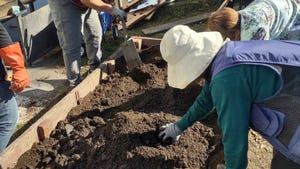
Growers concerned about herbicide carryover have two options for analyzing soil. The first is to conduct a bioassay, a method of planting susceptible crop seeds into suspected soil and comparing the growth and injury to plants grown in a non-herbicide treated soil. A bioassay can be done in the field or in containers.

The second option is to take soil samples from suspected carryover fields and have them analyzed by a commercial lab, which can be costly.

"Both bioassays and lab analysis should either be done in late fall or early spring to allow for maximum herbicide degradation and provide a more representative result of potential injury at planting," Legleiter said.

Discuss this Article 0

Post new comment
Sign In or register to use your Western Farm Press ID

(optional)

Continuing Education Courses
This accredited CE course focuses on choosing the correct variety alfalfa based on a number of...
New Course
The 2,000-member Weed Science Society of America’s (WSSA) Herbicide Resistance Action...

The course details six of the primary diseases affecting citrus: Huanglongbing (Citrus...

Newsletter Signup