Castor an oilseed crop that can cure, kill you

What is in this article?:

  • Castor beans are back in California as a possible source crop for making biofuels.
  • Castor's main toxic protein, ricin, is so potent that a single milligram is sufficient to kill an adult.
  • Castor oil is essential to the global specialty chemical industry because it is the only commercial source of hydroxylated fatty acids.

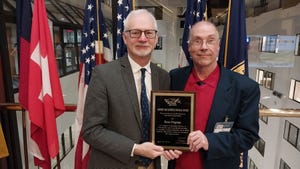
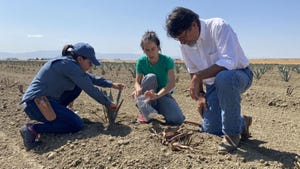
Australian Nic George, left, is a UC associate specialist,who is working on oilseed research with UC Davis Cooperative Extension biofuels guru Steve Kaffka, right. They are standing beside a castor trial.

The latest entry into the California derby to find a profitable biofuel crop is one that can kill you, cure all that ails you and get you tossed into jail as a terrorist, if found in your possession.

It was featured in an article in the University California’s California Agriculture magazine as a potential new crop for California agriculture — in 1949.

You guessed it. Castor beans are back in California, at least as the latest research crop that University of California, Davis Cooperative Extension biofuels guru Steve Kaffka is looking at as a possible source crop for making biofuels.

Kaffka, is the director of the California Biomass Collaborative, a statewide assembly of government, industry, environmental groups and educational institutions administered for the state through UC Davis’ Energy Institute.

He is field testing a passel of potential biofuel crops: canola, camelina, meadowfoam, sugar beets, sweet sorghum, sugar cane, and switchgrass among others. Castor is the latest. It is the only one where there is "Do Not Cross" yellow tape circling the experimental plots.

The seed of a castor bean plant, Ricinus communis, contains two toxins that are poisonous to people, animals, and insects. The main toxic protein, ricin, is so potent that a single milligram is sufficient to kill an adult. Ricin is considered both a chemical and biological weapon and is explicitly prohibited by the Biological and Toxin Weapons Convention (BTWC). It is a slow-acting poison, with death occurring after 1-3 days.

The other toxic protein in the castor bean, RCA (Ricinus communis agglutinin), glues together red blood cells. Injection of RCA into the bloodstream essentially causes a person's blood to coagulate internally.

Toxin within the castor seed has been reported as seven times more deadly than cobra venom.

In the 1940s, the U.S. military experimented with using ricin as a possible warfare agent. In some reports ricin has possibly been used as a warfare agent in Iraq and more recently by terrorist organizations in Afghanistan.

The U.S. Centers for Disease Control (CDC) classifies ricin as a Class B biological terrorism threat, identifying it as an agent that can be disseminated relatively easy. U.S. Homeland Security and the FBI carefully monitor interest in castor production for this reason.

Discuss this Article 4

Anonymous (not verified)
on Oct 10, 2012

Why not run a field trial on industrial hemp?

Mickey White (not verified)
on Oct 10, 2012

They used hemp for rope. It grows great in the Phoenix area.

Anonymous (not verified)
on Oct 14, 2012

Because this industry runs deep VERY deep.

Duane Johnson (not verified)
on Oct 26, 2012

World castor oil sells averages around $1/lb. How can you use this costly material as a biofuel? Given biodiesel raw material costs are 80% of fuel cost, this would make biodiesel (pre-tax biodiesel) $9.375/gallon. Where is Kaffka's head?

Post new comment
Sign In or register to use your Western Farm Press ID

(optional)

Continuing Education Courses
This accredited CE course focuses on choosing the correct variety alfalfa based on a number of...
New Course
The 2,000-member Weed Science Society of America’s (WSSA) Herbicide Resistance Action...

The course details six of the primary diseases affecting citrus: Huanglongbing (Citrus...

Newsletter Signup