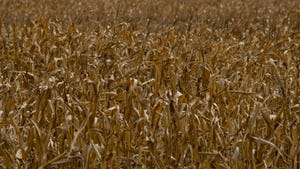
California farmers slow to adopt conservation tillage

What is in this article?:

  • CT consumes less energy and labor, thereby reduces costs, reduces environmental impacts, increases soil carbon content and improves soil tilth, fertility and overall organic matter, according to CT apostles.
  • California farmers are proving slow-to-reluctant to adopt Midwest-style conservation tillage (CT) farming practices.

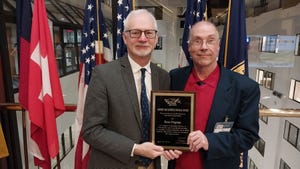
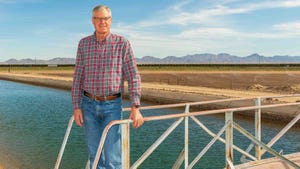
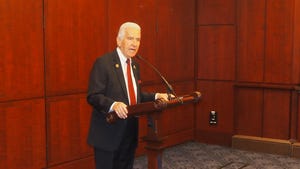
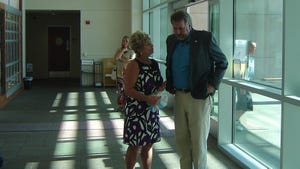
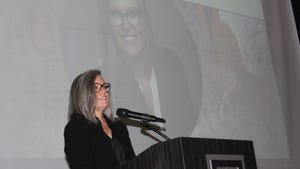
Dino Giacomazzi, left, Hanford, Calif., dairy farmer, was the keynote speaker of the CASI media event moderated by Bob Wample, center, Clovis, Calif., consultant, and organized by Jeff Mitchell, UC cropping system specialist.

California farmers have proven repeatedly they can be quick to adopt new technology.

GPS tractor guidance systems and the compatible variable rate technology along with drip irrigation are two cases in point.

Conservation tillage advocates contend CT offers much the same advancement as satellite directed tractors and micro irrigation systems.

CT consumes less energy and labor, thereby reduces costs, reduces environmental impacts, increases soil carbon content and improves soil tilth, fertility and overall organic matter, according to CT apostles.

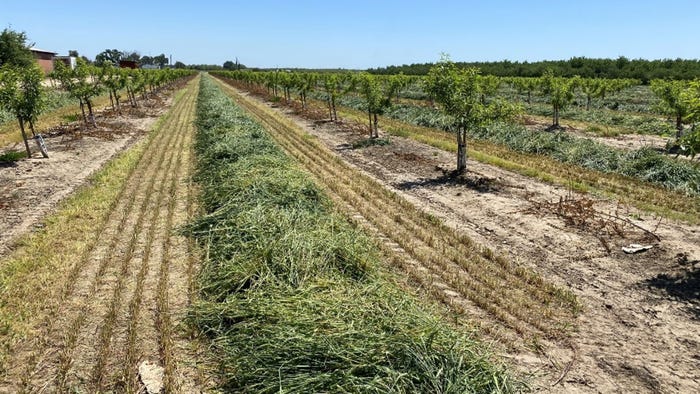
However, after more than a decade of one of the most intensive research efforts, coupled with a media blitz, California farmers are proving slow-to-reluctant to adopt Midwest-style conservation tillage (CT) farming practices.

Despite the accolades from a handful of progressive growers who have adopted CT technology, many believe true no-dirt-moving conservation tillage still represents only roughly 1 percent of row crop acreage in the state, even though it can at least maintain and often surpass yields of so-called conventional tillage.

Jeff Mitchell, University of California cropping systems specialist, is the driving force behind the California conservation tillage thrust and recently spearheaded a media gathering in Clovis, Calif., to promote California’s Conservation Agriculture Systems Institute (CASI).

Formed in 1998, CASI has been the promoter of conservation tillage and of late pivot and linear irrigation systems as part of the conservation tillage mantra.

Since it was formed, CASI has brought together more than 1,500 farmers, the private sector, universities, USDA Natural Resources Conservation Service, other public agencies and environmental groups to “solve economic and environmental quality challenges” in California’s central valley farming.

One of Mitchell’s early converts was Dino Giacomazzi, a fourth-generation dairy farmer in Hanford, Calif.

Giacomazzi, who began his CT journey in 2003, was the keynote speaker at the Clovis event. He farms 900 acres, all of it for feed for his 950-head dairy. He double crops wheat and corn using strip-till. He also grows alfalfa for his family dairy.

Discuss this Article 2

Anonymous (not verified)
on Feb 17, 2012

Kudos to Dino Giacomazzi and his efforts in conservation tillage in California. His story about what his father told him on his death bed pulled at my heart strings. I can imagine how it must have hurt Mr. Giacomazzi.

I want to thank you for your great efforts and sacrifice to make your farm, your state and our planet better. Your father should have been proud of your accomplishments and your return to the farm to continue his legacy, only better.

Anonymous (not verified)
on May 7, 2012

Dino is amazing--straddling the world of conventional and new thinking while firmly grounded in the everyday world of dairying and raising his family and never for a moment questioning the importance of agriculture.

He is a powerful advocate for briding the farming community and the urban world.

Post new comment
Sign In or register to use your Western Farm Press ID
(optional)

Continuing Education Courses
This accredited CE course focuses on choosing the correct variety alfalfa based on a number of...
New Course
The 2,000-member Weed Science Society of America’s (WSSA) Herbicide Resistance Action...

The course details six of the primary diseases affecting citrus: Huanglongbing (Citrus...

Newsletter Signup