California Crop Weather report

More About:

The latest California Crop Weather report from the National Agricultural Statistics Service’s Sacramento, Calif., Field Office:

Weather

No significant or unusual weather was noted over California during the week of Aug. 19.

Field crops

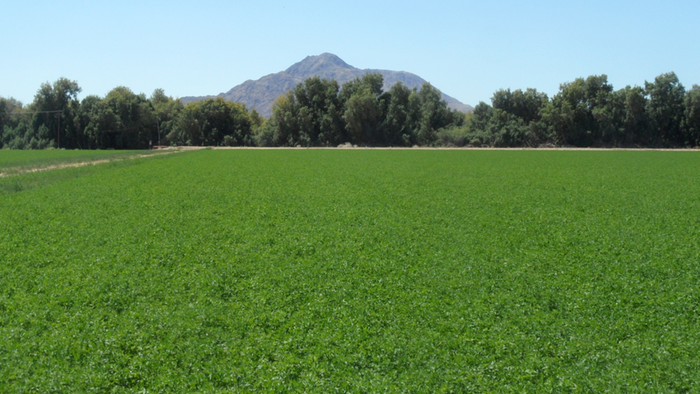
Rice fields progressed and were treated with herbicides. Alfalfa was cut and baled for hay. Safflower fields bloomed and formed seed heads in the San Joaquin Valley (SJV).

Lygus treatments continued in cotton fields. Corn silage was harvested in southern areas of California. Forages and other small grains were harvested for hay and silage.

Wheat, oat, rye, and barley harvests continued. Garbanzo bean fields dried down.

Harvested small grain fields were disked. Field operations included irrigating; spraying fertilizer, herbicides, and pesticides; planting; and cultivating.

Fruit crops

The SJV blueberry, blackberry, and strawberry harvests neared completion. The apricot, plum, peach, and nectarine harvests were ongoing.

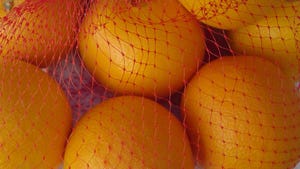
The picking of Valencia oranges continued normally in the Central Valley and along the southern coast. Lemons were picked along the coastal region. The fig harvest was ongoing at a normal pace. Trees were pruned in cherry orchards.

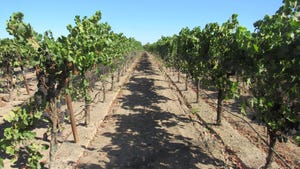
The early SJV grape harvest continued as leaves and bunches were thinned in vineyards to increase light exposure for color and maturity.

SJV raisin grapes showed good sugar level development.

Wine grapes in Napa County vineyards saw good development, while sulfur applications were ongoing. Maintenance to orchards, groves, and vineyards continued with pruning, and the spraying of fungicides, fertilizers, pesticides, and herbicides as necessary.

Nut crops

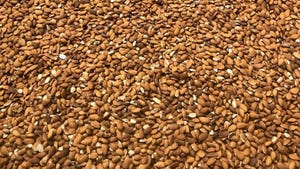
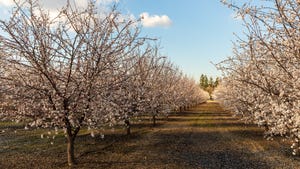
Hull splitting occurred in almond orchards across the state as hull split spray applications were ongoing. Growers focused sprays on the control of peach twig borer (PTB) as PTB hatching in almond orchards is coinciding with hull split this year, causing increased risk to nut quality.

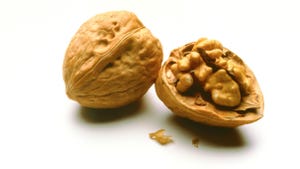
Walnut, pistachio, and pecan nuts showed good size development.

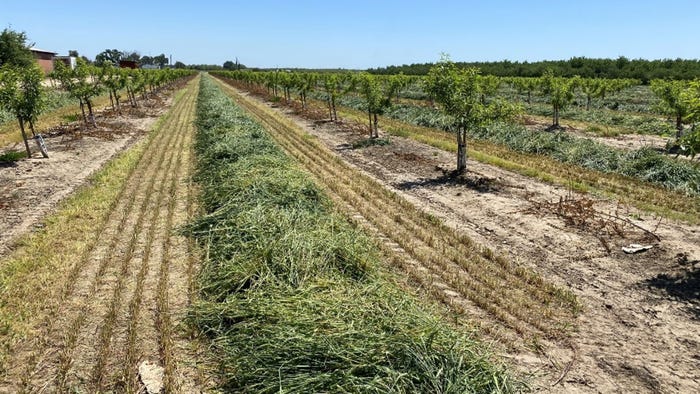
Weed control was ongoing in nut orchards in the Central Valley.

Vegetable crops

Summer vegetable harvest was ongoing throughout California.

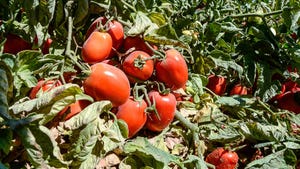
In Tulare County, the harvest included peppers, squash, eggplant, cucumbers and tomatoes. In Merced County, the planting of bell pepper, cantaloupe, honeydew and tomatoes continued. Harvests continued for tomato, cantaloupe, watermelon and parsley. The squash harvest is complete.

Stanislaus County operators prepared for the cantaloupe and tomato harvests. Fresh tomatoes and cucumbers were harvested and processed in San Joaquin County. Tomatoes were treated for worms and some powdery mildew.

In Fresno County, the onion harvest continued with good quality and yield reported. Garlic was readied for harvest. Carrot harvest began with fair quality reported. Fields were prepared for fall carrot planting. The harvest began for processing tomatoes.

In Sutter County, field work and ground preparation continued. Colusa County prepared for the processing tomato harvest.

Discuss this article 0

Post new comment

Sign in or Register to use your Western Farm Press ID
(optional)
CAPTCHA
This question is for testing whether you are a human visitor and to prevent automated spam submissions.
Incorrect please try again
Enter the words above: Enter the numbers you hear:
Sign Up
Sign Up!

For the Western Farm Press Newsletter
Keep up with the latest news with our daily newsletter

Continuing Education Courses
New Course

Copper has long been a key tool in disease control in a many crops. This course details how best to use copper to maximize its disease management potential.

New Course

This covers managing Lepidopterous pests in a wide array of crops and there is a second section on pesticide safety.

New Course

California groundwater regulations and their impact on pesticide recommendations and applications are covered in this course.

New Course

Healthy plants have a greater ability to resist soil pathogens and insect damage. This course details how to utilize organic acids to improve plant health and therefore crop production.