Biomass conversion to crude oil takes aim at pig manure

What is in this article?:

  • Researchers are preparing to develop an educational and research facility that will be used to demonstrate the process of converting swine manure and algae into crude oil.

Researchers at the University of Illinois are preparing to develop an educational and research facility that will be used to demonstrate the process of converting swine manure and algae into crude oil.

Lance Schideman, a professor in the Department of Agricultural and Biological Engineering (ABE) at Illinois, has done significant research in the area of integrated algae systems for water purification and biomass production. Yuanhui Zhang, also a professor in ABE, has spent almost a decade researching the conversion of swine manure into crude oil. Now they have combined their efforts to develop a system that will use biowastes such as swine manure to grow algal biomass, purify wastewater, recycle nutrients, capture carbon dioxide and produce biofuels.

"With this system, we will first convert swine manure into crude oil in a hydrothermal liquefaction (HTL) reactor," Schideman said. "The resultant wastewater contains nutrients, such as nitrogen and phosphorus, which can be used to grow algae. These fast-growing algae will remove the excess nutrients and capture carbon dioxide. Finally, the algae will be fed back into the HTL reactor to be converted into additional biocrude oil." Schideman said that the first stage of the project should allow them to produce up to two gallons of crude oil per day, using manure and algae grown on site. A second phase is also being planned that will produce up to two barrels of oil per day.

Schideman said that while they have shown that all parts of this process are viable, "we haven't brought them together in one continuous process, so that's the main goal of the current project."

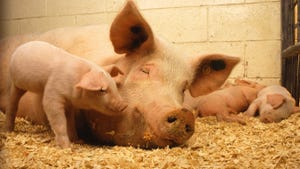
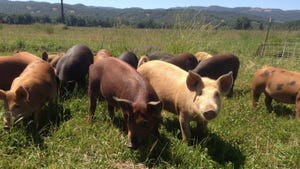
The facility will be located at the Swine Research Center (SRC) on the U of I South Farms, and developed in collaboration with the Department of Animal Sciences. "They have about 3,000 pigs at the SRC, and right now the manure lagoon is currently discharged to the local sanitary sewer at significant expense," said Schideman. "One immediate benefit for them would be a substantial reduction in their sewer bill, but hopefully, the longer term benefit would be value-added co-products from their residuals management system."

Discuss this article 2

We are have great sucess using hydraulic turbines to separate the solids of Swine, Milk Cows and Human Waste.
The Damp NO SMELL coffee like is sent by heated conveyer to a burner and fuel conversion to high BioSynGas.
The water is then processed with Sea Water Membranes into high quality water. Back to the animals for drinking.

Robert S. Bosko P.E.
ro_bosko@msn.com
1-250-804-8828

By Robert Bosko (not verified)  on Jan 27, 2012

We at Vortec Water Solutions Inc. would like to lend expertise and success to this project.

I have patented methods and systems that are mounted into 20 and 40 foot containers which remove 98% of TSS in real time.
Another auto cleaning (RO) membrane system sends 85% of the water back to the animals as high quality drinking water.
All in real time.

Lance and Yuanhui are definitely the kind of people I like to work with.

Robert Bosko Inventor and P.E.
President and Chief Technology Officer
Vortec Water Solutions Inc.
1-250-804-8828

By Robert Bosko (not verified)  on Jan 27, 2012
Post new comment
Sign In or register to use your Western Farm Press ID
(optional)

Continuing Education Courses
New Course
The 2,000-member Weed Science Society of America’s (WSSA) Herbicide Resistance Action...
New Course

The course details six of the primary diseases affecting citrus: Huanglongbing (Citrus...

Get the latest info on almond insect pest management.
Farmer-to-Farmer Used Equipment