Trees and vines need weed resistance care

Jun 5, 2004 12:00 PM

Herbicide-resistant weeds are not the exclusive domain of biotech, herbicide-resistant row crops.

University of California farm advisors and California pest control advisors say that herbicide-resistant and tolerant weeds in California's tree and vine crops should be a wake-up call for growers to use proven management practices that stop or delay development of resistance in these weeds.

California already has 18 herbicide-resistant weeds in crops ranging from almonds and asparagus to barley, onions and wheat, as well as non-crop areas of railways and roadsides. The first, atrazine-resistant groundsel, was found in asparagus in 1981, the most recent, 2002's find of quinclorac-resistant smooth crabgrass in rice. Glyphosate-resistant rigid ryegrass in almonds earned a place on the list in 1998.

And that's just the plant pests that meet the California weed scientists' definition of herbicide-resistant: “the inherited ability of a plant to survive and reproduce following exposure to a dose of herbicide that would normally be lethal to the wild type.”

Then there are the herbicide-tolerant weeds that don't meet the resistance test, but are becoming tougher to control.

Weed shifts

“We are certainly seeing increasing Roundup tolerance from certain weed species,” states Fresno County Farm Advisor Kurt Hembree. “Growers are finding that it now takes higher rates of Roundup or a tank mix of Roundup and Goal to get good control of some tough weeds.”

Scott Severson, a PCA with Hughson Chemical in Hughson, Calif., delivers a similar report. “We really started to see a weed shift in recent years,” he says.

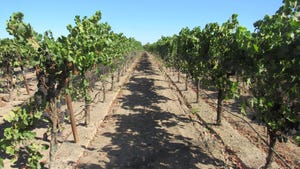
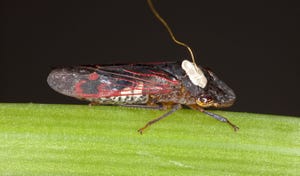
Marestail or horseweed and hairy fleabane are the most-frequently cited tougher-to-control weeds shifting in orchards and vineyards. Neither weed has been confirmed as herbicide-resistant in California, but other states report marestail showing resistance to several herbicides including glyphosate, paraquat and atrazine. And, marestail poses a dual threat: besides competing in vineyards for nutrients, water and light, it can host the glassy-winged sharpshooter.

Herbicide-resistant and tolerant weeds develop because of continued use of herbicides that work on a single mode of action. Relying on any single chemistry kills susceptible weeds but allows weeds that are naturally tolerant or resistant to the herbicide's mode of action to create a resistant weed population within five or six years. So, management that attacks weeds with multiple tools can stop or delay resistance and tolerance development.

The first step is to understand the potential consequences of using only one type of herbicide and to know what weeds you're facing, notes Hembree. “A lot of guys don't know the weeds they have. If you start seeing a change in the weed flora, consider changing your herbicides to control them.”

Hembree also advises against the common practice of waiting to kill the most, and frequently the biggest, weeds, especially with reduced rates of herbicides. “You need to get out there on time to knock out weeds. And, use the highest rate necessary to kill weeds. Don't cut the rate just to save a couple of bucks an acre.”

Adds Chris Morgner, a PCA and owner of Agri-Valley Consulting of Merced, Calif., “If a weed is not as susceptible or not at the right stage for control, it's going to go to seed.”

Another option is to use residual, pre-emergence products in your weed control program. “We don't have a lot of choices for residual herbicides, but it's worth consideration,” Morgner says.

Then there's herbicide rotation, within the season as well as from season-to-season. “We've known for years that resistance and tolerance occur, but it was too easy to use glyphosate,” Morgner says. “Now we're forced to change. Everyone's recognizing weed problems and people are willing to rotate.”

Do homework

Alternating chemistry means reading product labels and knowing differences among crop protection products. Products with different brand names can still have the same chemistry. “There are a number of glyphosate formulations. But glyphosate that's not Roundup brand doesn't mean it's not glyphosate,” points out Ron Vargas, Madera County farm advisor.

One rotation choice is Rely herbicide, glufosinate-ammonium. This is a non-selective contact material whose active ingredient, glufosinate, was originally isolated from a naturally occurring soil bacteria.

“Rely is a different mode of action than glyphosate and does a better job on horseweed and hairy fleabane,” Vargas says.

Hembree says, “Rely is especially effective on those tough weeds that Roundup misses, including filaree, malva, fleabane and nettles.”

He has nearly 10 years of field trials showing that Rely performed as well as the standard Roundup/Goal tank mix or Roundup-only program. In fact, Rely knocks down dozens of tough grasses and broadleaves, including fleabane, marestail, clover, nightshade, lambsquarters, nettle, nutsedge, and bindweed in almonds, grapes, and apples.

Morgner adds, “Rely works really well. We're held back economically but you have to look at its effectiveness as well as economics.”

In those situations where cost is vital, spot spraying or new sprayer technology to pinpoint application of effective herbicides to control weed escapes are alternatives.

Besides rotating single herbicides, consider rotating tank mixes of products with different chemistries. For fleabane or marestail in almonds, Morgner cites a tank mix of 2, 4-D plus Gramoxone or glyphosate. “If we can't use 2, 4-D, then we'll use maximum rates of Gramoxone with a high volume of water or, we'll substitute Goal for the 2, 4-D,” he says.

“We like that Rely is a non-restricted material,” states Severson. “It makes it much easier to use and apply.”

Weed experts conclude that while herbicide resistant and tolerant weeds threaten California tree and vines, proven management practices such as these will delay development and preserve the effectiveness of current control tools.

Get Copyright ClearanceWant to use this article? Click here for options!
© 2009 Penton Media, Inc.


Latest Jobs

resources

events icon events

product info icon tradeshows

tradeshow icon digests

research icon photos

Continuing Education

Accredited for California, Arizona and CCA hours:


(New Course)
Biopesticides -- Effective Use in Pest Management Programs

Biopesticides are increasingly being recommended as components of Integrated Pest Management (IPM) programs in the production of non-organic high-value specialty crops such as fruit, nut, vegetable, vine, ornamental and turf. This online, accredited course, sponsored by Marrone Bio Innovations, details some of the 245 registered biopesticide active ingredients used in a wide array pest management products.

Accredited in California and Arizona:


(New Course)
Agronomic Principles and Efficient Chemigation and Fertigation Using Center Pivot/Linear Sprinkler Systems

This online CE course details sound mechanical irrigation design and management practices to allow efficient chemigation and fertigation. It is accredited for Certified Crop Adviser CE units and is approved for credit hours in California and Arizona.


(New Course)
Pome, Stone Fruit Pest Management Using New Mode of Action Chemistry

New chemistry Rynaxypyr has proven effective against a wide range of economically important Lepidoptera species. Marketed under the trade name Altacor for use in grapes, pome and stone fruit, details on how to use this new chemistry are in this online Continuing Education course that is accredited in California, Pennsylvania, and New Jersey with CE applications pending in Oregon and Washington.


(New Course)
Vegetable Pest Management Using New Mode of Action

Integration of a new mode of action compound like Coragen into IPM and IRM programs to control Lepidoptera in leafy greens, fruiting vegetables, peppers and brassica or cole crops is always welcome. This online CE accredited details how best to use this new mode of action in intensive vegetable production. It is accredited in California, Arizona, Texas, Georgia, New Jersey and Pennsylvania. Application for credit is pending in Florida and Washington.

Accredited by Accredited in California and Washington:


(New Course)
Utilizing Calcium as Nutrient That Protects Against Disease Organisms

This online accredited course focus on Calcium, an important plant nutrient in fertilizer management for maximum, healthy plant development as well as disease and pest prevention. It is accredited in California, Georgia,: Pennsylvania and New Jersey. Credit pending in Florida, South Carolina, Tennessee, Virginia, West Virginia and Washington.


Accredited by California DPR and California and Arizona Certified Crop Advisers:


(New Course)

Nutrient Management in Key California Crops


This online CEU course offers a detailed look at the nutrient management in key California crops. It is sponsored online by Western Plant Health Association and funded by a grant from the California Department of Food and Agriculture Fertilizer Research and Education Program (FREP). It is accredited for one (1)-hour of credit by the California Department of Pesticide Regulation for California Pest Control Advisers (PCA), Private Applicators, Qualified Applicators and Aerial Applicators. The course is also accredited for 3 units in Nutrient Management (NM) for California and Arizona Certified Crop Advisers (CCAs).

Accredited in California, Arizona, Idaho, Oregon and Washington and for Certified Crop Advisers:


(New Course)
Organic/Sustainable Agricultural Production in the West

Organic/sustainable agriculture is expanding rapidly in the U.S. with an average annual increase of 20% during the last 15 years. This course covers a wide range of pests and organic control strategies. It is accredited for up to 4 continuing education hours for PCAs and Applicator Licensees in California, Arizona, Idaho, Oregon and Washington. It is also approved for Certified Crop Adviser credit.


ACCREDITED IN CALIFORNIA ONLY:


Almond Pest Management

Get the latest info on almond insect pest management and earn 2 hrs. CE DPR and CCA credit in California.

California Groundwater Protection Regulations

Earn 2 hrs. in California laws and regs CE and learn how to protect California groundwater supplies.


Disease Management in California Almonds

Managing diseases in California almond production is a year-long process. This course provides the latest information on controlling these diseases with management practices and fungicides. The course is approved for 2 CEUs by DPR for PCAs and all applicator categories and California CCAs.

Powdery Mildew Control in California Grapevines

Learn about the No. 1 grape disease in California; earn 2 California CE hours.

ACCREDITED IN CALIFORNIA AND ARIZONA:


The Role of Copper in Disease Control

Copper has long been a key tool in disease control in a many crops. This 2-CEU course accredited California PCAs and all DPR applicator categories and Arizona applicators details how best to use copper to maximize its potential.

Insecticide Resistance Management in Agronomic and Row Crops

A 3-hr. CE approved for California and Arizona licensees and CCAs in both states.

Agronomic Weed Resistance Management in Row Crops, Trees Nuts and Vines

Weeds Resistance Management is approved for 3 hours of CE credit for all California and Arizona licensees and Certified Crop Advisers.

Lepidopterous Pest Management/ Pesticide Safety

This course is approved for 2 hours in Arizona and California (1 hr. of laws/regs; 1 hour Other) and for CCAs.

ACCREDITED IN CALIFORNIA, ARIZONA, OREGON, AND WASHINGTON:

Managing Spray Drift to Minimize Problems

This online CEU on managing spray drift to minimize problems is accredited for 2-hours in California (Laws and Regs); Arizona, Oregon and Washington.

Back to Top

Browse Print Issues

Additional Resources

subscribe to Farm Press Daily Southeast Farm Press Southwest Farm Press Delta Farm Press