Process tomato industry malaise not going away

Feb 7, 2004 12:00 PM, By Harry Cline Farm Press Editorial Staff

The half century old California Tomato Growers Association (CTGA) has newness about it.

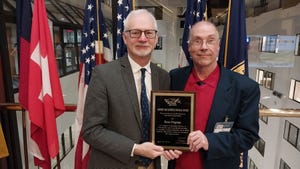
There is a new president and CEO, Ross Siragusa. CTGA also has a consultant's recent evaluation of the association and the industry that suggests it to be a kinder, gentler grower bargaining association in representing the interest of growers who produce 60 percent of California's tomato crop.

Unfortunately, the newness look stops about there for its members and other California processing tomato producers when it comes to the industry's economic outlook short term and long range. It the same old story of too much production, not enough consumption and low prices for growers.

No price has been established in negotiations between processors and CTGA, but interim CEO Ron Schuler told CTGA members at its 57th annual meeting in Modesto recently that prices will not be much better than last year, despite a 2003 crop 13 percent smaller than 2002 and seemingly tight world supplies.

“We are that close to an agreement,” Schuler said, his thumb and forefinger almost touching. He had hoped to announce an agreement at the annual meeting. He didn't, but he told growers not to expect more than $51.50 per ton with a $3 to $5 late season premium as Southern San Joaquin Valley producers in Kern County began dropping seed in late January.

About the only difference between this year's price and last season's is that the 2004 price will most certainly be established earlier.

Not this year

A long-term contract, spelled-out industry wide delivery standards and several other contract criteria CTGA hoped to get into a new processor contract for growers, will not happen this year, said Schuler. It will be a one-year deal, and growers are on their own in negotiating delivery standards with processors, Schuler said.

And, those, according to Schuler, are far more important than price.

Schuler, former long time president of the California Canning Peach Association, went back into retirement after the meeting.

CTGA hired Schuler as interim CEO in September after the previous president resigned. Since then the association has undertaken an association evaluation while searching for a permanent CEO.

The agribusiness strategic consulting firm, The Hale Group, recommended CTGA be a kinder, gentler negotiator with processors; recognize regional differences in its price negotiations; adopt a CTGA grower board code of conduct; work closer with processor and negotiate a price more consistent with industry supplies/demands.

Ken McCorkle, Wells Fargo senior vice president, agribusiness industries and luncheon speaker, went even further.

“The days of union mentality…of banding together to bargain for higher than marketing price are over,” he said. “All this does is encourage excess production and does not serve the industry.”

Growers, he said, are not in competition with processors but in business with them. An adversarial relationship is counter productive, he added.

“CTGA protects the high cost tomato producer,” said McCorkle.

Wants negotiation

Nevertheless, according to CTGA chairman, Don Cameron of Helm, Calif., said CTGA's membership wants it to negotiate prices, and that is what it will continue to do.

“The tomato growers in our state need a strong association to bargain,” said Cameron, calling for all growers to join CTGA. Currently 40 percent of the state's production is out of the association.

Cameron said when non-association producers agree to a price less than CTGA, “you undercut your neighbor. You (also) left money on the table that might mean the difference between your financial success and failure,” he said.

While Schuler was not optimistic prices will improve significantly this season, despite a short 2003 crop and shortages of tomato products worldwide, Cameron and Schuyler said processors may be surprised at the state's tomato production this year.

Schuler said it may be difficult for it to reach the 11 million tons that are being projected early.

One reason it may come up short is because of profitable alternatives like cotton and rice.

“All commodities are moving toward a long-term bull market,” said Cameron. “We have been accepting low prices only with the help of the Farm Program to keep us in business these last three to four years. I now see prices improving for all commodities, including specialty crops in California,” he said.

Cameron believes growers will move to crops like cotton, rice and wheat because they cost less to produce, lowers risks and are profitable. “These crops will take away from higher risk, higher capital and lower priced crops” like tomatoes.

Crops are changing

Plus, crops like almonds are taking good ground permanently away from tomatoes. Wineries are once again offering long term contracts. And, urbanization continues to take farmland out of production.

This all should translate to better prices to processing tomato growers.

Cameron called for growers to unite behind CTGA.

“What we ask is for a fair and reasonable price for our crop. A price that both the grower and the processor can profit from,” said Cameron, adding that unity is also necessary to support product promotion.

“We need to find new and improved markets for our tomatoes and…avoid the Wal-Mart Syndrome. For every time you hear prices falling in Wal-Mart, you should also hear another grower or processor falling as well.”

Cameron followed McCorkle and it was a tough act to follow. The banker had nothing but a gloomy assessment of the processing tomato industry. He said despite a weather-shortened 2003 crop not only in California, but China and Italy as well, a “protracted four-year slump will only continue.

“While prices for both tomato paste and raw tomatoes could rise in 2004, the basic structural issues plaguing the domestic processing industry since 1999 have not changed,” he said. These include:

  • Excess total bulk paste production capacity that exceeds its ability to market products.

  • The transition from fresh pack canning to two-stage bulk paste re-manufacturing has reached it practical maximum.

  • Paste re-manufacturers are getting more product from a pound of raw product, so much more that that alone drives modest increases in consumption.

  • Two key processing tomato markets, the pizza and pasta industries, are not growing, primarily because of America's infatuation with the low carb Atkins diet.

  • Export markets are small, and competition from China will not allow that to change.

McCorkle does not expect the current class of well-capitalized processors to disappear. They will work harder to increase capacity and lower paste costs. This downward pressure on bulk paste prices could drive branded processors out of the processing business and into the bulk market to meet their demands.

With little hope for better prices, McCorkle said growers who want to continue growing processing tomatoes must cut costs by adopting more efficient precision farming methods; convert to drip tape if they have not already done so; get rid of unnecessary assets and be more “customer oriented” with their processors to give them a better market niche.

“And, you have to look at diversifying to avoid concentrated processing tomato acreage,” he said.

e-mail: hcline@primediabusiness.com

Get Copyright ClearanceWant to use this article? Click here for options!
© 2009 Penton Media, Inc.


Latest Jobs

resources

events icon events

product info icon tradeshows

tradeshow icon digests

research icon photos

Continuing Education

Accredited for California, Arizona and CCA hours:


(New Course)
Biopesticides -- Effective Use in Pest Management Programs

Biopesticides are increasingly being recommended as components of Integrated Pest Management (IPM) programs in the production of non-organic high-value specialty crops such as fruit, nut, vegetable, vine, ornamental and turf. This online, accredited course, sponsored by Marrone Bio Innovations, details some of the 245 registered biopesticide active ingredients used in a wide array pest management products.

Accredited in California and Arizona:


(New Course)
Agronomic Principles and Efficient Chemigation and Fertigation Using Center Pivot/Linear Sprinkler Systems

This online CE course details sound mechanical irrigation design and management practices to allow efficient chemigation and fertigation. It is accredited for Certified Crop Adviser CE units and is approved for credit hours in California and Arizona.


(New Course)
Pome, Stone Fruit Pest Management Using New Mode of Action Chemistry

New chemistry Rynaxypyr has proven effective against a wide range of economically important Lepidoptera species. Marketed under the trade name Altacor for use in grapes, pome and stone fruit, details on how to use this new chemistry are in this online Continuing Education course that is accredited in California, Pennsylvania, and New Jersey with CE applications pending in Oregon and Washington.


(New Course)
Vegetable Pest Management Using New Mode of Action

Integration of a new mode of action compound like Coragen into IPM and IRM programs to control Lepidoptera in leafy greens, fruiting vegetables, peppers and brassica or cole crops is always welcome. This online CE accredited details how best to use this new mode of action in intensive vegetable production. It is accredited in California, Arizona, Texas, Georgia, New Jersey and Pennsylvania. Application for credit is pending in Florida and Washington.

Accredited by Accredited in California and Washington:


(New Course)
Utilizing Calcium as Nutrient That Protects Against Disease Organisms

This online accredited course focus on Calcium, an important plant nutrient in fertilizer management for maximum, healthy plant development as well as disease and pest prevention. It is accredited in California, Georgia,: Pennsylvania and New Jersey. Credit pending in Florida, South Carolina, Tennessee, Virginia, West Virginia and Washington.


Accredited by California DPR and California and Arizona Certified Crop Advisers:


(New Course)

Nutrient Management in Key California Crops


This online CEU course offers a detailed look at the nutrient management in key California crops. It is sponsored online by Western Plant Health Association and funded by a grant from the California Department of Food and Agriculture Fertilizer Research and Education Program (FREP). It is accredited for one (1)-hour of credit by the California Department of Pesticide Regulation for California Pest Control Advisers (PCA), Private Applicators, Qualified Applicators and Aerial Applicators. The course is also accredited for 3 units in Nutrient Management (NM) for California and Arizona Certified Crop Advisers (CCAs).

Accredited in California, Arizona, Idaho, Oregon and Washington and for Certified Crop Advisers:


(New Course)
Organic/Sustainable Agricultural Production in the West

Organic/sustainable agriculture is expanding rapidly in the U.S. with an average annual increase of 20% during the last 15 years. This course covers a wide range of pests and organic control strategies. It is accredited for up to 4 continuing education hours for PCAs and Applicator Licensees in California, Arizona, Idaho, Oregon and Washington. It is also approved for Certified Crop Adviser credit.


ACCREDITED IN CALIFORNIA ONLY:


Almond Pest Management

Get the latest info on almond insect pest management and earn 2 hrs. CE DPR and CCA credit in California.

California Groundwater Protection Regulations

Earn 2 hrs. in California laws and regs CE and learn how to protect California groundwater supplies.


Disease Management in California Almonds

Managing diseases in California almond production is a year-long process. This course provides the latest information on controlling these diseases with management practices and fungicides. The course is approved for 2 CEUs by DPR for PCAs and all applicator categories and California CCAs.

Powdery Mildew Control in California Grapevines

Learn about the No. 1 grape disease in California; earn 2 California CE hours.

ACCREDITED IN CALIFORNIA AND ARIZONA:


The Role of Copper in Disease Control

Copper has long been a key tool in disease control in a many crops. This 2-CEU course accredited California PCAs and all DPR applicator categories and Arizona applicators details how best to use copper to maximize its potential.

Insecticide Resistance Management in Agronomic and Row Crops

A 3-hr. CE approved for California and Arizona licensees and CCAs in both states.

Agronomic Weed Resistance Management in Row Crops, Trees Nuts and Vines

Weeds Resistance Management is approved for 3 hours of CE credit for all California and Arizona licensees and Certified Crop Advisers.

Lepidopterous Pest Management/ Pesticide Safety

This course is approved for 2 hours in Arizona and California (1 hr. of laws/regs; 1 hour Other) and for CCAs.

ACCREDITED IN CALIFORNIA, ARIZONA, OREGON, AND WASHINGTON:

Managing Spray Drift to Minimize Problems

This online CEU on managing spray drift to minimize problems is accredited for 2-hours in California (Laws and Regs); Arizona, Oregon and Washington.

Back to Top

Browse Print Issues

Additional Resources

subscribe to Farm Press Daily Southeast Farm Press Southwest Farm Press Delta Farm Press