Methyl bromide replacement on track

Dec 21, 2002 12:00 PM, By Harry Cline Farm Press Editorial Staff

It will be at least early next year before the federal government takes action on registering iodomethane (methyl iodide), one of the more promising replacements for methyl bromide.

It will likely be later than that before the California Department of Pesticide Regulation makes a decision on whether to allow producers in California to use the compound.

Both of those time lines are later than Arvesta Corp. hoped for in getting its Midas brand of iodomethane on the market.

While going through the state and regulatory mazes, Arvesta is conducting extensive field trials to refine application technology to learn how best to apply the product on a wide array of crops as well as to mitigate its high cost. It is expected to be cost 20-50 percent more than methyl bromide.

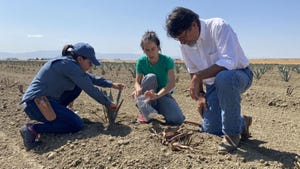
That is a major issue for strawberry growers like Pedro Casailles of Salinas, Calif., who now spends $1,300 per acre to fumigate with methyl bromide before planting his strawberry crop. Arvesta conducted trials on Casailles farm.

Alternatives search

Farmers expect to lose methyl bromide within two years as a long-effective tool to control diseases and weeds because if its ozone depleting properties. However, EPA has accepted more than 50 applications for exemptions from the phase-out rules for methyl bromide. Those are under review by EPA and USDA. In situations in which the loss of methyl bromide would create undue hardships (large-scale commodity market disruptions, lack of suitable alternatives) critical use exemptions (CUE's) may be granted. The exemption is for a period of three years, 2005-2007. If granted, the exemption amounts to a three-year extension of the Jan. 1, 2005 deadline when methyl bromide must be phased out in the United States.

An army of private and public scientists have been scrambling to find methyl bromide alternatives or replacements. A myriad of tactics have been investigated to find something or a combination of techniques that will control the same pathogens and weeds that methyl bromide has for decades. This involves a wide array of chemicals applied in a variety of ways over many soil types and crops using a rainbow of bed mulches.

It is a daunting task, and time is running out. As one group of researchers looking at methyl bromide alternatives in strawberries said, “We need time — there is very little time to redo decades of work before methyl bromide is no longer available.”

While alternatives have been identified, no silver bullets have been found as yet. However, methyl iodide may come as close to it as any so far, according to Michael Allan, Arvesta product manager for fumigants.

He calls the Arvesta product Midas a “replacement” product rather than an “alternative” because it has proven to be at least as effective as methyl bromide. “Unlike some alternatives, Midas can control both diseases and weeds,” he said.

Researchers at the University of California, Riverside discovered methyl iodide was as effective as methyl bromide and safer for the ozone layer. UCR researchers found that methyl iodide remains in the atmosphere for four to eight days while methyl bromide may remain for two years.

Same kill spectrum

Methyl bromide has the same spectrum of kill as methyl bromide, according to researchers. In addition, the UCR scientists found that liquid methyl iodide is safer for workers to apply than methyl bromide, a gas when it hits the air.

Arvesta has bought licensing rights from UCR and is ferrying its product Midas through the registration process.

Hylon Kaufman, marketing communications manager for Arvesta, said the company had hoped federal registration would be awarded by last September, but that did not prove possible.

However, the submission of the registration packet did not “expose any issues with the registration process and data package. Everything remains on track and is processing quite well with EPA,” she said.

EPA and DPR are sharing evaluation responsibilities for the compound, but California requires more data for registration than EPA. Specifically, this involves long-term chronic health toxicity studies.

According to Arvesta, DPR could issue conditional registrations of iodomethane products provided that DPR is given interim reports that ongoing long-term studies and that these studies support registration of the products.

“Arvesta is actively and diligently fulfilling these studies. We hope this will streamline and thus expedite the review of the Midas registration package,” said Kaufman.

More effective

Hussein Ajwa, associate specialist, vegetable crops, University of California Cooperative Extension, has tested iodomethane for use on strawberries for three years and says “pound for pound is it more effective than methyl bromide.

“It is a true fumigant” that moves through the soil at 10 times higher pressure than methyl bromide. Iodomethane would be used much like methyl bromide to propel chloropicrin, another fumigant, through the soil to control diseases.

“I think strawberry growers can get by with much less methyl iodide than with methyl bromide,” he added, suggesting the rate for methyl iodide could be 150 pounds per acre vs. 250 to 270 pounds for methyl bromide. Almost half of the methyl bromide now used in California is applied to strawberry acreage.

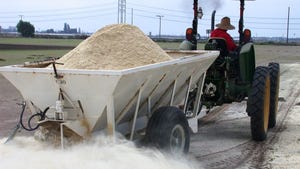
Along with the search for chemical alternatives have been efforts to change application techniques, focusing on applying fumigants via drip systems rather than injecting and tarping. This not only reduces the amount of chemical needed, but also reduces emissions, said Ajwa.

Most of the strawberries in the state are now irrigated with drip irrigation and the percentage fumigated using the drip irrigation system is growing.

e-mail: hcline@primediabusiness.com

Get Copyright ClearanceWant to use this article? Click here for options!
© 2009 Penton Media, Inc.


Latest Jobs

resources

events icon events

product info icon tradeshows

tradeshow icon digests

research icon photos

Continuing Education

Accredited for California, Arizona and CCA hours:


(New Course)
Biopesticides -- Effective Use in Pest Management Programs

Biopesticides are increasingly being recommended as components of Integrated Pest Management (IPM) programs in the production of non-organic high-value specialty crops such as fruit, nut, vegetable, vine, ornamental and turf. This online, accredited course, sponsored by Marrone Bio Innovations, details some of the 245 registered biopesticide active ingredients used in a wide array pest management products.

Accredited in California and Arizona:


(New Course)
Agronomic Principles and Efficient Chemigation and Fertigation Using Center Pivot/Linear Sprinkler Systems

This online CE course details sound mechanical irrigation design and management practices to allow efficient chemigation and fertigation. It is accredited for Certified Crop Adviser CE units and is approved for credit hours in California and Arizona.


(New Course)
Pome, Stone Fruit Pest Management Using New Mode of Action Chemistry

New chemistry Rynaxypyr has proven effective against a wide range of economically important Lepidoptera species. Marketed under the trade name Altacor for use in grapes, pome and stone fruit, details on how to use this new chemistry are in this online Continuing Education course that is accredited in California, Pennsylvania, and New Jersey with CE applications pending in Oregon and Washington.


(New Course)
Vegetable Pest Management Using New Mode of Action

Integration of a new mode of action compound like Coragen into IPM and IRM programs to control Lepidoptera in leafy greens, fruiting vegetables, peppers and brassica or cole crops is always welcome. This online CE accredited details how best to use this new mode of action in intensive vegetable production. It is accredited in California, Arizona, Texas, Georgia, New Jersey and Pennsylvania. Application for credit is pending in Florida and Washington.

Accredited by Accredited in California and Washington:


(New Course)
Utilizing Calcium as Nutrient That Protects Against Disease Organisms

This online accredited course focus on Calcium, an important plant nutrient in fertilizer management for maximum, healthy plant development as well as disease and pest prevention. It is accredited in California, Georgia,: Pennsylvania and New Jersey. Credit pending in Florida, South Carolina, Tennessee, Virginia, West Virginia and Washington.


Accredited by California DPR and California and Arizona Certified Crop Advisers:


(New Course)

Nutrient Management in Key California Crops


This online CEU course offers a detailed look at the nutrient management in key California crops. It is sponsored online by Western Plant Health Association and funded by a grant from the California Department of Food and Agriculture Fertilizer Research and Education Program (FREP). It is accredited for one (1)-hour of credit by the California Department of Pesticide Regulation for California Pest Control Advisers (PCA), Private Applicators, Qualified Applicators and Aerial Applicators. The course is also accredited for 3 units in Nutrient Management (NM) for California and Arizona Certified Crop Advisers (CCAs).

Accredited in California, Arizona, Idaho, Oregon and Washington and for Certified Crop Advisers:


(New Course)
Organic/Sustainable Agricultural Production in the West

Organic/sustainable agriculture is expanding rapidly in the U.S. with an average annual increase of 20% during the last 15 years. This course covers a wide range of pests and organic control strategies. It is accredited for up to 4 continuing education hours for PCAs and Applicator Licensees in California, Arizona, Idaho, Oregon and Washington. It is also approved for Certified Crop Adviser credit.


ACCREDITED IN CALIFORNIA ONLY:


Almond Pest Management

Get the latest info on almond insect pest management and earn 2 hrs. CE DPR and CCA credit in California.

California Groundwater Protection Regulations

Earn 2 hrs. in California laws and regs CE and learn how to protect California groundwater supplies.


Disease Management in California Almonds

Managing diseases in California almond production is a year-long process. This course provides the latest information on controlling these diseases with management practices and fungicides. The course is approved for 2 CEUs by DPR for PCAs and all applicator categories and California CCAs.

Powdery Mildew Control in California Grapevines

Learn about the No. 1 grape disease in California; earn 2 California CE hours.

ACCREDITED IN CALIFORNIA AND ARIZONA:


The Role of Copper in Disease Control

Copper has long been a key tool in disease control in a many crops. This 2-CEU course accredited California PCAs and all DPR applicator categories and Arizona applicators details how best to use copper to maximize its potential.

Insecticide Resistance Management in Agronomic and Row Crops

A 3-hr. CE approved for California and Arizona licensees and CCAs in both states.

Agronomic Weed Resistance Management in Row Crops, Trees Nuts and Vines

Weeds Resistance Management is approved for 3 hours of CE credit for all California and Arizona licensees and Certified Crop Advisers.

Lepidopterous Pest Management/ Pesticide Safety

This course is approved for 2 hours in Arizona and California (1 hr. of laws/regs; 1 hour Other) and for CCAs.

ACCREDITED IN CALIFORNIA, ARIZONA, OREGON, AND WASHINGTON:

Managing Spray Drift to Minimize Problems

This online CEU on managing spray drift to minimize problems is accredited for 2-hours in California (Laws and Regs); Arizona, Oregon and Washington.

Back to Top

Browse Print Issues

Additional Resources

subscribe to Farm Press Daily Southeast Farm Press Southwest Farm Press Delta Farm Press