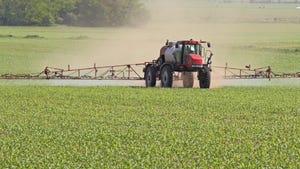
Water crisis in California, Texas threatens US food security

Western water scarcity issues becoming more severe

What is in this article?:

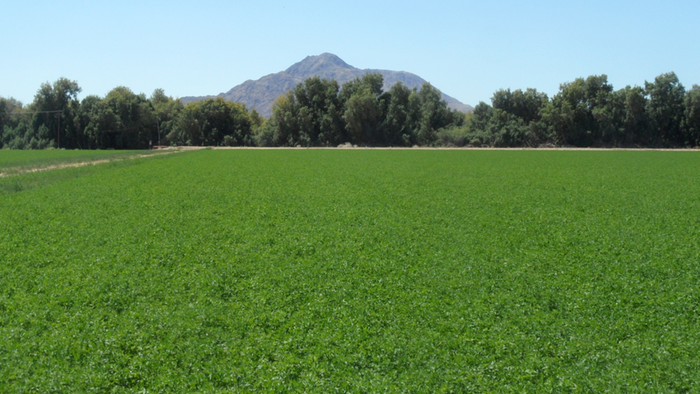
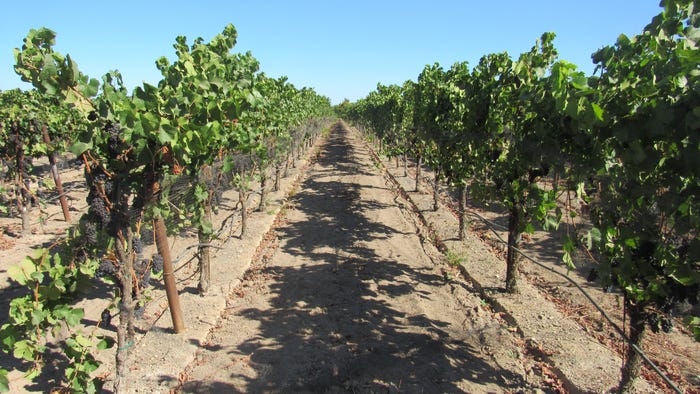
  • California and Texas produced agricultural products worth $56 billion in 2007, accounting for much of the nation's food production. They also account for half of all groundwater depletion in the U.S., mainly as a result of irrigating crops.

Groundwater banks

Scanlon and her colleagues at the U.S. Geological Survey and the Université de Rennes in France used water level records from thousands of wells, data from NASA's GRACE satellites, and computer models to study groundwater depletion in the two regions.

(For more, see: California readies for water banking)

GRACE satellites monitor changes in Earth’s gravity field which are controlled primarily by variations in water storage. Byron Tapley, director of the university's Center for Space Research, led the development of the GRACE satellites, which recently celebrated their 10th anniversary.

Scanlon and her colleagues suggested several ways to make irrigated agriculture in the Central Valley more sustainable: Replace flood irrigation systems (used on about half of crops) with more efficient sprinkle and drip systems and expand the practice of groundwater banking—storing excess surface water in times of plenty in the same natural aquifers that supply groundwater for irrigation. Groundwater banks currently store 2 to 3 cubic kilometers of water in California, similar to or greater than storage capacities of many of the large surface water reservoirs in the state. Groundwater banks provide a valuable approach for evening out water supplies during climate extremes ranging from droughts to floods.

For various reasons, Scanlon and other experts don't think these or other engineering approaches will solve the problem in the High Plains. When groundwater levels drop too low to support irrigated farming in some areas, farmers there will be forced to switch from irrigated crops such as corn to non-irrigated crops such as sorghum, or to rangeland. The transition could be economically challenging because non-irrigated crops generate about half the yield of irrigated crops and are far more vulnerable to droughts.

"Basically irrigated agriculture in much of the southern High Plains is unsustainable," said Scanlon.

For more information, contact: Marc Airhart, Geology Foundation, Jackson School of Geosciences, 512 471 2241.

Discuss this Article 52

riesty
on May 17, 2013

Nice blog, I am very impressed on knowing that this information is being shared here and actively discussed by these commentators here. I do want to know certain updates though. !!! click here

riesty
on May 17, 2013

Nice blog, I am very impressed on knowing that this information is being shared here and actively discussed by these commentators here. I do want to know certain updates though. !!! lucu brow

Post new comment
Sign In or register to use your Western Farm Press ID

(optional)

Continuing Education Courses
This accredited CE course focuses on choosing the correct variety alfalfa based on a number of...
New Course
The 2,000-member Weed Science Society of America’s (WSSA) Herbicide Resistance Action...

The course details six of the primary diseases affecting citrus: Huanglongbing (Citrus...

Newsletter Signup