Groundwater nitrate issue dumped in agriculture’s lap

What is in this article?:

  • In California, 250,000 people are at risk from nitrate contamination in their drinking water.
  • A recent study said 96 percent of the nitrates in groundwater are traceable to agriculture.
  • It is not surprising that the California groundwater nitrate issue was not just deposited on agriculture’s doorstep, it was heaped on agriculture’s back for blame and draconian mitigation recommendations to be paid for by agriculture.
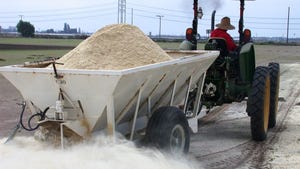
  • “With UN 32 at $442 per ton, I don’t think farmers are going to waste a lot of N,” said Kern County, Calif. pest control adviser Vern Crawford.

More About:

When Jim Sullins, director of Cooperative Extension for Tulare and Kings counties, asked for a show of hands of how many wanted the recent nitrogen workshop to continue after the appointed closing hour, the response was underwhelming.

Fewer than 10 raised their hands. It was obvious the packed meeting room had heard enough from the University of California experts reporting on their recent nitrate-in-groundwater findings.

What drew a crowd of about 200 to the UC Kearney Ag Center in Parlier, Calif., was a recently released UC study of nitrates in drinking water in the central San Joaquin Valley Tulare Lake Basin and the Salinas Valley in Monterey County.

The study has created a statewide media buzz since it says a quarter of a million Californians are hooked to unsafe drinking water wells and agriculture should pay for cleaning it up.

It’s no secret that nitrates in groundwater are a problem. As the study indicates, 250,000 people within the two basins are currently at risk from nitrate contamination in their drinking water. This is out of 2.6 million people who live in the four counties (Fresno, Kings, Tulare and Kern) Tulare Lake Basin and the Salinas Valley, the focal point of the study. Most of these people are on public water systems, not individual wells.

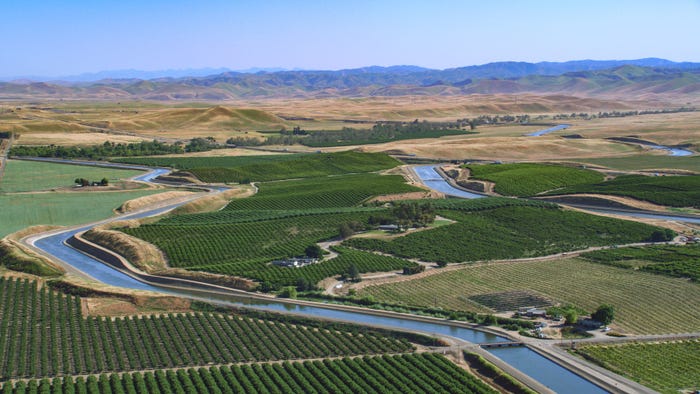
The population of the study area represents only about 7 percent of the state’s population; however, 40 percent of the state’s irrigated cropland is in the study area and over half the state’s dairy herds.

With those statistics, it is not surprising that the nitrate issue was not just deposited on agriculture’s doorstep, it was heaped on agriculture’s back for blame and draconian mitigation recommendations to be paid for by agriculture. Some of the regulatory measures researchers are recommending could reduce farming in the region and the production of food in two of the most productive farming areas in the world.

The study said 96 percent of the nitrates in groundwater are traceable to agriculture. Several in the audience challenged that, and principal investigator Thomas Harter, UC Davis groundwater hydrologist, acknowledged that figure may not be “precise.” However, chief investigator Jay Lund, director of the Center for Watershed Sciences at Davis, reiterated the overwhelming majority of the nitrates are from agriculture.

The study was ordered by the State Water Resources Control Board based on a legislative mandate in Senate Bill SBX2 passed in 2008 that ordered a study on nitrates in groundwater. Harter admitted that the two-year timeline for the study was a “relatively short research project.”

Discuss this Article 1

Anonymous (not verified)
on May 22, 2012

For those who have not had an opportunity to read our report or summaries...

In our report and presentations, we are careful to indicate important sources of nitrate other than agricultural activities. However, most of these are localized. Among these are septic tanks which are likely to be disproportionately important given their proximity to household wells in particular.

As our report points out, many state and local entities must be part of any solution to the nitrate problem. But any solution that ignores agriculture is unlikely to be credible.

For agriculture, this is an important opportunity to address a long-term concern in a practical way, before it grows in rancor and expense. Efforts to solve the problem purely by source control, as seems common in much public discussion, are likely to be ineffective and costly, as we show in our report. This is primarily a drinking water issue, in which agriculture has substantial (but by no means sole) involvement.

Jay Lund, UC Davis

Post new comment
Sign In or register to use your Western Farm Press ID

(optional)

Continuing Education Courses
This accredited CE course focuses on choosing the correct variety alfalfa based on a number of...
New Course
The 2,000-member Weed Science Society of America’s (WSSA) Herbicide Resistance Action...

The course details six of the primary diseases affecting citrus: Huanglongbing (Citrus...

Newsletter Signup