Drought always just a year away in California

What is in this article?:

  • Among the unknowns for the months ahead in California is whether this will, in fact, be a dry year.
  • Statewide, reservoirs are near 100 percent of average, but not at 100 percent of capacity.
  • Demands in the dairy industry for lower cost feeds have meant double and triple cropping on what had been cotton land.

Among the unknowns for the months ahead in California is whether this will, in fact, be a dry year.

Statewide, reservoirs are near 100 percent of average, but not at 100 percent of capacity.

Demands in the dairy industry for lower cost feeds have meant double and triple cropping on what had been cotton land.

A just-in-case workshop on drought in Fresno included topics that ranged from eye-in-the-sky satellites that feed images to water wonks and growers to the nitty-gritty of maintaining sand media filters.

Speakers early on made it clear that among the unknowns for the months ahead is whether this will, in fact, be a dry year.

The fact that it was raining just before the Drought Preparedness Workshop got underway at Fresno State University prompted a comment on that irony from one of the speakers.

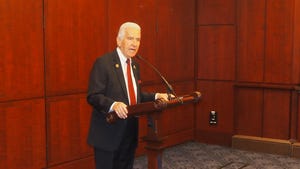
“I love to have a drought preparedness workshop because it always seems to rain when we hold these things; so that’s a good thing,” said Ron Jacobsma, general manager of the Friant Water Authority.

The event was sponsored by the California Department of Water Resources and the Center for Irrigation Technology at Fresno State.

Jeanine Jones, interstate resources manager for the Department of Water Resources, said that “no significant forecast” on how the water year will shape up will be available until the end of January, given that half the of the state’s precipitation falls between December and February.

Jones said a dozen storms – or storm projections that fizzle – can characterize the water year in California.

“Last year was dry, and we can’t say with any certainty what the new water year is going to be like,” she said, pointing out that storms in late November and early December, most notably in Northern California, “helped tip the balance between a wet and dry year.”

Jones said that, statewide, reservoirs are near 100 percent of average, but not at 100 percent of capacity, and the early storms helped replenish soil moisture, especially in Northern California.

A rain shortfall could have rangeland grazing impacts, she said.

 Jacobsma said, “We have a lot of room in the reservoirs, so let it rain, let it snow.”

The Friant Water Authority provides water to 30 irrigation districts in addition to municipalities that include Fresno, Orange Cove and Lindsay. It serves 15,000 farmers on 1.2 million acres of the east side of the valley.

Jacobsma said challenges include efforts to reestablish a San Joaquin River salmon fishery.

He said demands in the dairy industry for lower cost feeds have meant double and triple cropping on what had been cotton land, meaning a move from using 2.5 to 3 acre feet of water to “4, 5, maybe even 6” acre feet.

Discuss this Article 1

stuart
on May 8, 2013

I read this article. I think You put a lot of effort to create this article. I appreciate your work.
mattress reviews

Post new comment
Sign In or register to use your Western Farm Press ID
(optional)

Continuing Education Courses
This accredited CE course focuses on choosing the correct variety alfalfa based on a number of...
New Course
The 2,000-member Weed Science Society of America’s (WSSA) Herbicide Resistance Action...

The course details six of the primary diseases affecting citrus: Huanglongbing (Citrus...

Newsletter Signup