Drainage ditches help capture pesticide runoff

  • Drainage ditches can help capture pesticide and nutrient loads in agricultural field runoff.
  • Until recently, the primary function of many edge-of-field ditches was to provide a passage for channeling excess water from crop fields.

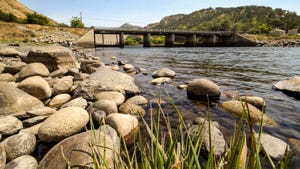
Vegetated drainage ditches can help capture pesticide and nutrient loads in field runoff, U.S. Department of Agriculture scientists report. These ditches—as common in the country as the fields they drain—give farmers a low-cost alternative for managing agricultural pollutants and protecting natural resources.

Agricultural Research Service (ARS) ecologist Matt Moore at the agency's National Sedimentation Laboratory in Oxford, Miss., and his colleagues conducted the research. ARS is USDA's chief intramural scientific research agency.

Until recently, the primary function of many edge-of-field ditches was to provide a passage for channeling excess water from crop fields. Many farmers controlled ditch vegetation with trimming or dredging to eliminate plant barriers that could impede the flow of runoff.

But in one of Moore's first studies, he evaluated the transport and capture of the herbicide atrazine and the insecticide lambda-cyhalothrin for 28 days in a 160-foot section of a vegetated agricultural drainage ditch in Mississippi. One hour after he started a simulated runoff event, 61 percent of the atrazine and 87 percent of the lambda-cyhalothrin had transferred from the water to the ditch vegetation. At the end of the ditch, runoff pesticide concentrations had decreased to levels that were generally non-toxic to downstream aquatic fauna.

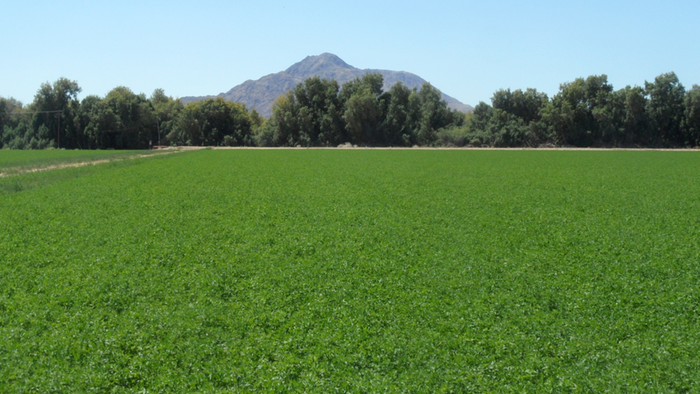
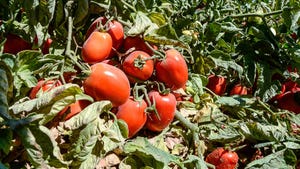
Moore also conducted work in California and determined that vegetated drainage ditches helped mitigate pesticide runoff from tomato and alfalfa fields. As a result, USDA's Natural Resources Conservation Service (NRCS) state office in California included vegetated agricultural drainage in their Environmental Quality Incentives Program (EQIP). This meant farmers who installed the ditches could be reimbursed for up to 50 percent of the cost. Moore's research also contributed to the decision by NRCS managers in Mississippi to include vegetated agricultural drainage ditches in the state's EQIP.

The research was published in Ecological Engineering, Environmental Pollution, Journal of Environmental Quality, and elsewhere.

Read more about Moore's studies in the January 2013 issue of Agricultural Research magazine.

Discuss this Article 1

riverok
on Jan 18, 2013

This study appears to neglect the fact that surface waters and ground waters are closely connected. If you contaminate surface water, you can also pollute ground water including water wells. All waters can thereby be connected through ground water contributions such as springs.

The statement that chemicals are reduced to "generally" safe levels does not relieve my concerns about agricultural pollution (...runoff pesticide concentrations had decreased to levels that were generally non-toxic to downstream aquatic fauna).

In addition, nutrients such as phosphorus just don't go away. When plants die, the phosphorus is released to the environment once again. Would dangerous chemicals also be released back into the environment?

Agricultural pollution of our nation's waters is a major problem leading to creation of a "dead zone" in the Gulf of Mexico as well as pollution of streams and lakes. Building more ditches does not look like a good solution to me. A better plan would seem to be the use of less toxic materials and best management practices such as permanent riparian zone along streams and ditches.

I'm sorry to see the U.S. Agriculture Department jump on this study by providing money for more and better ditches.

Ed Brocksmith
Oklahoma

Post new comment
Sign In or register to use your Western Farm Press ID
(optional)

Continuing Education Courses
This accredited CE course focuses on choosing the correct variety alfalfa based on a number of...
New Course
The 2,000-member Weed Science Society of America’s (WSSA) Herbicide Resistance Action...

The course details six of the primary diseases affecting citrus: Huanglongbing (Citrus...

Newsletter Signup