2008 wine grape prices highest in seven years

Jul 31, 2008 10:45 AM, By Harry Cline
Farm Press Editorial Staff

On the eve of this year’s California grape crush, the state’s largest wine grape grower cooperative still has grapes to sell.

This is not unusual for the Fresno, Calif.-based 600-member Allied Grape Growers that expects to sell 300,000 tons of grapes this season valued at more than $70 million. It has for a decade or longer had grapes without homes at harvest time because there were no buyers.

The difference this year is Allied wants prices to go even higher before committing all its member grapes to wineries. Wine grape buyers have aggressively returned to the market with the best prices in seven years.

The long-awaited and oft-predicted turnaround in California wine and concentrate demand is finally at hand.

Nat DiBuduo, president of Allied, told the cooperatives at two grower meetings this year in Fresno and Santa Rosa that wineries were wanting to buy grapes earlier than at any time during his decade-long tenure as Allied’s president. This initial demand was for quantities larger than in 2007.

“Wineries are offering better prices than any of the past seven years, and they are offering term contracts,” DiBuduo said.

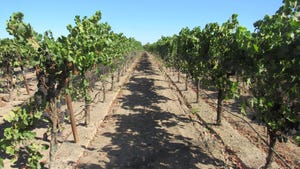
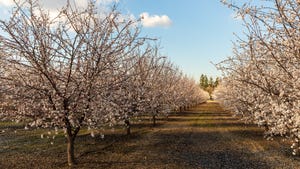
There are many reasons for the turnaround, including the point that supplies are down, primarily due to the fact that 135,000 acres of vineyards have been removed from the San Joaquin Valley since 1998 and replaced with almonds, pistachios and even pomegranates.

Drive from Bakersfield to Modesto, and there are a few new vineyards, but many new orchards. That is not the case on the coast where hundreds of acres of new vines are going in, especially on the Central Coast.

Even though wine grape prices are the best they’ve been in a decade, DiBuduo continues to raise the warning flag of not wanting the industry to repeat history. When the future looked bright in the past, over-planting and subsequent oversupplies resulted.

The “future thinkers,” DiBuduo warned, are again saying plant grapes to meet future demand or lose market share to imports.

Until now DiBuduo has resisted the call to plant more grapes. “My message (now) is plant with contracts,” to meet winery needs at an economic return equal to almonds. Grape growers are in the best position in a decade to do so, said DiBuduo, because:

– California wine sales are increasing.

– Exports continue strong.

– 2008 first quarter imports were down.

– The concentrate business has been bolstered by the highest price ever for Thompson Seedless ($225) per ton due to a long term contract between raisin packers and raisin producers.

– Bulk wine inventories are lower.

– Wineries that did not want grapes in the past are back in the market.

– Winery buying is statewide.

– Growers who crushed their own grapes for bulk sales are now more interested in selling the grapes rather than crushing them.

– Growers continue to deliver better quality grapes.

“Demand is good while the supply is short for the market,” he said.

This year’s crop will likely be smaller than last year due to an array of weather problems ranging from a dry spring, frosts, strong winds, and early heat waves along with a lack of irrigation water.

All this good news is being tempered by the fact that farming costs are going up, according to DiBuduo, faster than this new wave of higher grape prices.

“The costs of production will challenge even the best growers,” he said.

Regardless, DiBuduo predicts a “better year for the California wine grape grower in 2008 and our winery partners.”

email: hcline@farmpress.com

Get Copyright ClearanceWant to use this article? Click here for options!
© 2009 Penton Media, Inc.


Latest Jobs

resources

events icon events

product info icon tradeshows

tradeshow icon digests

research icon photos

Continuing Education

Accredited for California, Arizona and CCA hours:


(New Course)
Biopesticides -- Effective Use in Pest Management Programs

Biopesticides are increasingly being recommended as components of Integrated Pest Management (IPM) programs in the production of non-organic high-value specialty crops such as fruit, nut, vegetable, vine, ornamental and turf. This online, accredited course, sponsored by Marrone Bio Innovations, details some of the 245 registered biopesticide active ingredients used in a wide array pest management products.

Accredited in California and Arizona:


(New Course)
Agronomic Principles and Efficient Chemigation and Fertigation Using Center Pivot/Linear Sprinkler Systems

This online CE course details sound mechanical irrigation design and management practices to allow efficient chemigation and fertigation. It is accredited for Certified Crop Adviser CE units and is approved for credit hours in California and Arizona.


(New Course)
Pome, Stone Fruit Pest Management Using New Mode of Action Chemistry

New chemistry Rynaxypyr has proven effective against a wide range of economically important Lepidoptera species. Marketed under the trade name Altacor for use in grapes, pome and stone fruit, details on how to use this new chemistry are in this online Continuing Education course that is accredited in California, Pennsylvania, and New Jersey with CE applications pending in Oregon and Washington.


(New Course)
Vegetable Pest Management Using New Mode of Action

Integration of a new mode of action compound like Coragen into IPM and IRM programs to control Lepidoptera in leafy greens, fruiting vegetables, peppers and brassica or cole crops is always welcome. This online CE accredited details how best to use this new mode of action in intensive vegetable production. It is accredited in California, Arizona, Texas, Georgia, New Jersey and Pennsylvania. Application for credit is pending in Florida and Washington.

Accredited by Accredited in California and Washington:


(New Course)
Utilizing Calcium as Nutrient That Protects Against Disease Organisms

This online accredited course focus on Calcium, an important plant nutrient in fertilizer management for maximum, healthy plant development as well as disease and pest prevention. It is accredited in California, Georgia,: Pennsylvania and New Jersey. Credit pending in Florida, South Carolina, Tennessee, Virginia, West Virginia and Washington.


Accredited by California DPR and California and Arizona Certified Crop Advisers:


(New Course)

Nutrient Management in Key California Crops


This online CEU course offers a detailed look at the nutrient management in key California crops. It is sponsored online by Western Plant Health Association and funded by a grant from the California Department of Food and Agriculture Fertilizer Research and Education Program (FREP). It is accredited for one (1)-hour of credit by the California Department of Pesticide Regulation for California Pest Control Advisers (PCA), Private Applicators, Qualified Applicators and Aerial Applicators. The course is also accredited for 3 units in Nutrient Management (NM) for California and Arizona Certified Crop Advisers (CCAs).

Accredited in California, Arizona, Idaho, Oregon and Washington and for Certified Crop Advisers:


(New Course)
Organic/Sustainable Agricultural Production in the West

Organic/sustainable agriculture is expanding rapidly in the U.S. with an average annual increase of 20% during the last 15 years. This course covers a wide range of pests and organic control strategies. It is accredited for up to 4 continuing education hours for PCAs and Applicator Licensees in California, Arizona, Idaho, Oregon and Washington. It is also approved for Certified Crop Adviser credit.


ACCREDITED IN CALIFORNIA ONLY:


Almond Pest Management

Get the latest info on almond insect pest management and earn 2 hrs. CE DPR and CCA credit in California.

California Groundwater Protection Regulations

Earn 2 hrs. in California laws and regs CE and learn how to protect California groundwater supplies.


Disease Management in California Almonds

Managing diseases in California almond production is a year-long process. This course provides the latest information on controlling these diseases with management practices and fungicides. The course is approved for 2 CEUs by DPR for PCAs and all applicator categories and California CCAs.

Powdery Mildew Control in California Grapevines

Learn about the No. 1 grape disease in California; earn 2 California CE hours.

ACCREDITED IN CALIFORNIA AND ARIZONA:


The Role of Copper in Disease Control

Copper has long been a key tool in disease control in a many crops. This 2-CEU course accredited California PCAs and all DPR applicator categories and Arizona applicators details how best to use copper to maximize its potential.

Insecticide Resistance Management in Agronomic and Row Crops

A 3-hr. CE approved for California and Arizona licensees and CCAs in both states.

Agronomic Weed Resistance Management in Row Crops, Trees Nuts and Vines

Weeds Resistance Management is approved for 3 hours of CE credit for all California and Arizona licensees and Certified Crop Advisers.

Lepidopterous Pest Management/ Pesticide Safety

This course is approved for 2 hours in Arizona and California (1 hr. of laws/regs; 1 hour Other) and for CCAs.

ACCREDITED IN CALIFORNIA, ARIZONA, OREGON, AND WASHINGTON:

Managing Spray Drift to Minimize Problems

This online CEU on managing spray drift to minimize problems is accredited for 2-hours in California (Laws and Regs); Arizona, Oregon and Washington.

Back to Top

Browse Print Issues

Additional Resources

subscribe to Farm Press Daily Southeast Farm Press Southwest Farm Press Delta Farm Press