Smaller raisin crop promises to end a supply glut

Production of California raisins last year was down an estimated 20 percent to 30 percent from the 2008 crop, reports Gerald Chooljian, president of Del Rey Packing Company, Del Rey, Calif., and chairman of the Reserve, Sales and Marketing Committee of the Raisin Administrative Committee.

However, lower bunch counts helped boost raisin quality, he notes. So did a season of very favorable weather.

“I’m very much pleased with our latest crop,” says Chooljian, whose family has been growing raisins for more than eight decades. “Mother Nature treated us well in 2009 — it was like a vintage year. We had good, timely rains during the season and great-tasting raisins that were easy to handle in the packing plant. The result was just a really good raisin.”

In addition, prices growers have received for their 2009 raisins are up slightly from 2008 and could go up more in future crop years, he says. “Still, growers are not getting what they need.”

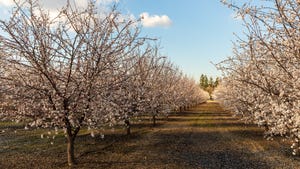
The smaller 2009 crop brought supply in balance with demand, eliminating the surplus of raisins in the market over the past five years or so. In fact, several factors may help limit any excess production of California raisins, at least for many acres of Thompsons. They have been replaced by almond orchards or citrus groves.

Also, says Chooljian, as the world supply of raisins has come in line with demand, the weak U.S. dollar has added to the attractiveness of California raisins overseas. Exports, mostly to Europe and the Far East, account for 35 percent to 40 percent of California’s annual raisin shipments.

“The international market is where the growth opportunities are for California raisins,” Chooljian says. “Turkey, another major raisin producer, has suffered some weather-related crop shortages the last few years. As a result, California growers have been able to secure a bigger share of the international market.”

Packers and handlers should have substantially less tonnage of raisins to market this year than last. For example, as of the week ending Jan. 2, California growers had delivered 288,602 tons of all raisins this crop year. That compares to the 309,240 tons of all varieties they had delivered by the same time last season.

Chooljian expects that all of the 2009 California raisin crop will be sold during the current crop year.

“Because we won’t have a new raisin crop until October, we need enough raisins to carry through to November,” he says. “The way I’m looking at the numbers, all of the 2009 crop may not be shipped by the first of August (end of the marketing year), but all will be committed to customers, if not actually sold, by that time.”

Discuss this article 0

Post new comment

Sign in or Register to use your Western Farm Press ID

(optional)
CAPTCHA
This question is for testing whether you are a human visitor and to prevent automated spam submissions.
Incorrect please try again
Enter the words above: Enter the numbers you hear:
Sign Up
Sign Up!

For the Western Farm Press Newsletter
Keep up with the latest news with our daily newsletter

Continuing Education Courses
New Course

Integrated weed management (IWM) programs and orchard cultural practices have been developed for specific orchard and vineyard crops. This accredited CEU provides information on economically and environmentally sound IWM practices.

New Course

American agriculture exports 20 to 30 percent of its production annually. For specific commodities, the percentage is much higher. When recommending and applying pest management products for crops, license Pest Control Advisers (PCAs) and applicators and farmers must be aware of which products applied are in compliance with Maximum Residue Levels (MRLs) established by foreign customers

New Course

This online accredited course focus on Calcium, an important plant nutrient in fertilizer management for maximum, healthy plant development as well as disease and pest prevention.