California fruit and nut review

Jul 23, 2008 10:01 AM


June crop comments

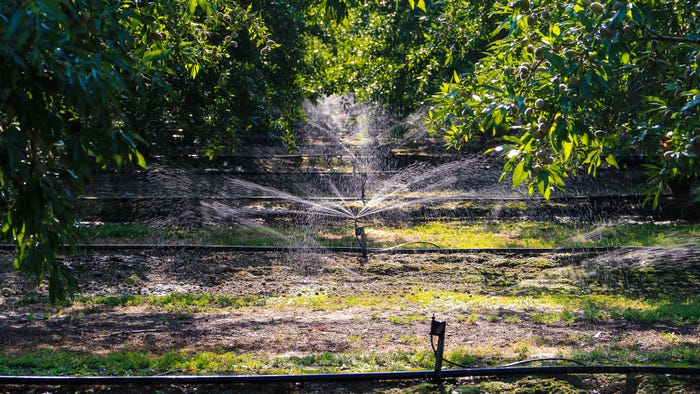
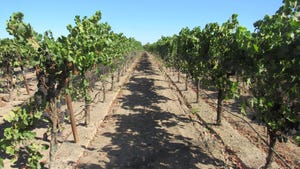
California grape vines formed bunches while irrigation in orchards and vineyards continued due to the dry conditions. Grape producers managed irrigation closely given the water shortage. Sulfur dusting and thinning of bunches on table grapes was ongoing. Stone fruit and pomegranate growers irrigated and sprayed to control weeds, diseases, and insects.

Thinning of stone fruit was still taking place in some areas. The stone fruits harvested during June included cherries, apricots, apriums, peaches, plums, pluots, Flavorella plumcots, and nectarines. Spring blackberry, blueberry, boysenberry, raspberry, and strawberry harvests continued.

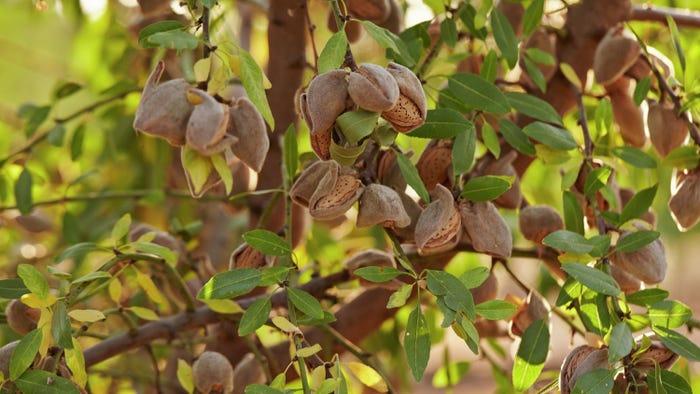
Pomegranate and persimmon bloom was winding down. Figs were harvested in Merced County. Olive bloom was ending and trees were forming fruit. Olive growers evaluated fruit set. Irrigation in nut groves continued due to dry conditions and walnuts were treated for codling moth. Limb breakage was observed on some walnut trees due to the heavy set. Almonds also showed a heavy set. Almonds were sprayed for hull split and treated for mites.

Citrus growers worked to control diseases, insects, and weeds. Groves were irrigated and foliar nutrients were applied. Some growers treated groves for thrips. Fruit drop occurred as a result of the recent high temperatures. Some citrus growers planted new trees. Navel orange harvest was winding down and quality was good, though more fruit was destined for the processing market. Valencia oranges, lemons, and grapefruit were also harvested.

Non-citrus fruit

Grapes - The California all grape forecast on 789 thousand bearing acres is 6.05 million tons, down 3 percent from last year’s crop. Specifically, the wine grape forecast on 480 thousand bearing acres is 3.20 million tons, down 3 percent from last season. The expected table grape production on 82.0 thousand acres is 800 thousand tons, 1 percent higher than 2007, while the raisin grape production on 227 thousand bearing acres is forecast at 2.05 million tons, a decrease of 4 percent from last year’s crop.

The 2008 California grape crop is shaping up to be an average crop despite frost damage that occurred when unusually cold temperatures hit California during the middle of April. Bunch counts were reported to be good and comparable to last year. Crop development was about six to ten days behind normal. Lack of water was also a concern for many growers in the southern San Joaquin Valley. Raisin and table-type grapes for fresh use continued to be harvested in the Coachella Valley in early July.

Peaches - The 2008 California Freestone peach crop forecast is 430 thousand tons, unchanged from the June forecast, but 4 percent below the 2007 crop. Bearing acres are estimated at 36.0 thousand. California experienced an adequate number of chilling hours, thus benefiting the Freestone crop.

Weather during the bloom period was very accommodating, although cooler spring temperatures slowed maturity. The crop is reported to be of excellent quality, with good sizes. Harvest continued during July with the July Flame, Sierra Rich, Ice Princess, Rich Lady, and Galaxy varieties.

The 2008 California Clingstone peach crop forecast is 380 thousand tons, unchanged from the June forecast, but 24 percent lower than the 2007 crop. Bearing acres are estimated at 25.3 thousand. California experienced an adequate number of chilling hours, thus benefitting the Clingstone crop.

Weather during the bloom period was also favorable. However, unusually cold temperatures on April 19 and 20 have resulted in significant frost damage to the crop. The largest impact of the frost damage is in the northern growing areas, with some growers reporting 100 percent damage.

There were also a large number of growers with loss in the Modesto area. However, fruit in the southern growing areas was not affected. During June, growers thinned and irrigated their orchards and took measures to control weeds, disease, and insects. The 2008 peach harvest began in Kingsburg on June 18, four days later than last year. Quality was reported to be very good for these initial deliveries.

Citrus fruit

Grapefruit - The 2007-2008 California grapefruit forecast is 11.2 million cartons, up 12 percent from the April forecast, and up 2 percent from last season. The Star Ruby variety grapefruit harvest continued with over half of the crop picked as of the end of June. Harvest of the Star Ruby variety is expected to continue through late July.

Lemons - The 2007-2008 California lemon forecast is 35.0 million cartons, up 3 percent from the April forecast, but down 5 percent from last season’s crop. Harvest continues in the south coastal areas. Some south coast growers had been delaying harvest to make gains on growth. As a result, supplies were tight for some time. Demand remains strong and growers are now harvesting to keep up with demand. Fruit is of good quality.

Oranges - The 2007-2008 California Navel orange forecast is 99.0 million cartons, unchanged from the April forecast, but up 43 percent from the 2006-2007 production. The California Navel orange season has come to a close. Harvest continued through the end of June with more picking than usual for that time of the season.

Growers had an excellent year. Yield and quality were good to excellent. The Valencia orange forecast is 32.0 million cartons, unchanged from the April forecast, but up 39 percent from last season’s crop. The Valencia season got off to an early but slow start, with the bulk of early picking going to the export market.

As the Navel season came to a close, more demand shifted to Valencias. Picking for domestic sales has subsequently been on the rise. Fruit has been of good quality.

California almond objective measurement forecast, 2008

California's 2008 almond production is forecast at a record 1.50 billion meat pounds, up 3 percent from May's subjective forecast and 8 percent above last year's crop. The forecast is based on 660 thousand bearing acres. Production for the Nonpareil variety is forecast at 538 million meat pounds, 3 percent above last year’s deliveries. The Nonpareil variety represents 36 percent of California’s total almond production.

The California 2008 almond set is very strong, and a record high yield per acre and production is forecast. This year’s bloom arrived three weeks later than normal, but was nearly perfect. It progressed quickly, lasting only 10 days as opposed to the average three weeks. Overlapping bloom between varieties was outstanding, resulting in good cross-pollination, and there was an adequate supply of bees to pollinate the crop. Almond tree limbs in many locations are bowing under the weight of the heavy crop.

Get Copyright ClearanceWant to use this article? Click here for options!
© 2008 Penton Media, Inc.


Latest Jobs

resources

events icon events

product info icon tradeshows

tradeshow icon digests

research icon photos

Continuing Education

Accredited in California, Arizona, Idaho, Oregon and Washington and for Certified Crop Advisers:


(New Course)
Organic/Sustainable Agricultural Production in the West

Organic/sustainable agriculture is expanding rapidly in the U.S. with an average annual increase of 20% during the last 15 years. This course covers a wide range of pests and organic control strategies. It is accredited for up to 4 continuing education hours for PCAs and Applicator Licensees in California, Arizona, Idaho, Oregon and Washington. It is also approved for Certified Crop Adviser credit.

ACCREDITED IN OREGON AND WASHINGTON:


(New Course)
Managing Spray Drift to Minimize Problems

This online spray drift management course has been certified by the Oregon Department of Agriculture and the Washington Department of Agriculture for 2 hours of credit for licensed Applicators and Consultants in Oregon and Washington.

ACCREDITED IN CALIFORNIA ONLY:


Almond Pest Management

Get the latest info on almond insect pest management and earn 2 hrs. CE DPR and CCA credit in California.

California Groundwater Protection Regulations

Earn 2 hrs. in California laws and regs CE and learn how to protect California groundwater supplies.


Disease Management in California Almonds

Managing diseases in California almond production is a year-long process. This course provides the latest information on controlling these diseases with management practices and fungicides. The course is approved for 2 CEUs by DPR for PCAs and all applicator categories and California CCAs.

Powdery Mildew Control in California Grapevines

Learn about the No. 1 grape disease in California; earn 2 California CE hours.

ACCREDITED IN CALIFORNIA AND ARIZONA:


The Role of Copper in Disease Control

Copper has long been a key tool in disease control in a many crops. This 2-CEU course accredited California PCAs and all DPR applicator categories and Arizona applicators details how best to use copper to maximize its potential.

Insecticide Resistance Management in Agronomic and Row Crops

A 3-hr. CE approved for California and Arizona licensees and CCAs in both states.

Agronomic Weed Resistance Management in Row Crops, Trees Nuts and Vines

Weeds Resistance Management is approved for 3 hours of CE credit for all California and Arizona licensees and Certified Crop Advisers.

Lepidopterous Pest Management/ Pesticide Safety

This course is approved for 2 hours in Arizona and California (1 hr. of laws/regs; 1 hour Other) and for CCAs.

Managing Spray Drift to Minimize Problems

2-hrs laws and regs for California licensees; 2 hours in Arizona and for CCAs.

Back to Top

Browse Print Issues

Additional Resources

subscribe to Farm Press Daily Southeast Farm Press Southwest Farm Press Delta Farm Press