Williamson Act cuts threaten ranchland, conservation areas

What is in this article?:

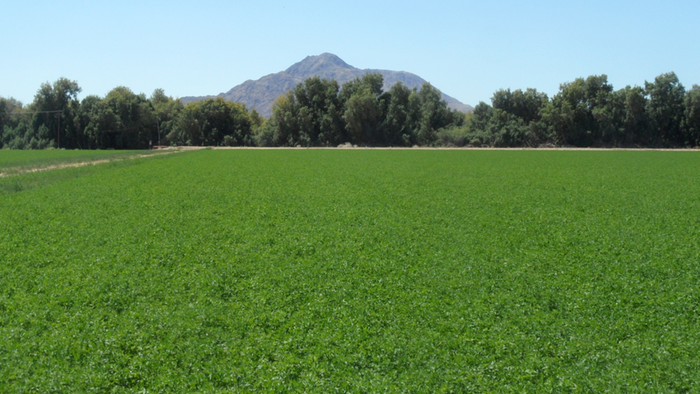
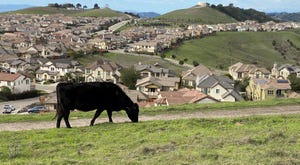
  • Budget cuts have dramatically reduced funding for the Williamson Act, California's conservation law that provides property tax relief for the owners of 15 million acres of rangeland and farms — preserving California's prized open space.

State budget cuts have dramatically reduced funding for the Williamson Act, California's conservation law that provides property tax relief for the owners of 15 million acres of rangeland and farms — preserving California's prized open space.

New research reveals that if cuts continue and the act is eliminated, owners of ranchland plan to sell 20 percent of their total acres, according to William Wetzel and his co-investigators. Wetzel is a doctoral candidate in the UC Davis Department of Evolution and Ecology. The findings appear in the October–December 2012 California Agriculture, UC's peer-reviewed research journal.

"In all, 37 percent of ranchers predicted they would sell some or all of their rangeland without support from the act,” Wetzel said. "Of those who would sell, 76 percent predicted buyers would develop the land for nonagricultural uses — suggesting that a significant amount of California's open space could be lost.”

For smaller ranchers, tax relief often means the difference between a small profit and a loss, he and his colleagues found. They surveyed 700 ranchers who have Williamson Act contracts, randomly selected from act participants whose land comprises 15 million acres of working ranches and farms. Researchers asked ranchers for plans under a hypothetical elimination scenario.

Under the 1965 act, landowners promise to keep their property in agricultural use for set periods (originally, 10 years at a time). In exchange, they receive significant reductions in property taxes. The state reimbursed counties for most of the lost tax revenue until 2009, when the state virtually eliminated its contribution.

The scientists used both a written questionnaire and geospatial analysis to assess the impacts of eliminating the act. The geospatial analysis revealed that 72 percent of rangeland parcels enrolled in Williamson Act contracts contained habitat "important” or "critical” for statewide conservation goals, as defined by the California Rangeland Conservation Coalition. The Coalition designates 43 percent of enrolled parcels as "critical” for statewide conservation goals.

"Thousands of farmers and ranchers in 53 of California's 58 counties have participated in Williamson contracts,” said Iara Lacher, co-author and UC Davis doctoral candidate. "California rangelands not only provide forage for cattle, they encompass unique ecosystems that provide habitat for threatened and endangered species. They also form most of the major drainage basins of the state, constantly filtering and purifying the water supply.”

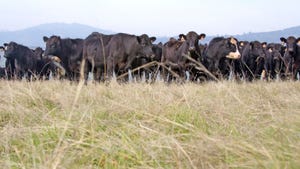
Almost all of California's surface water, including drinking water for millions of people, passes through rangeland. This land -- grasslands, oak woodlands, wetlands, shrublands and desert -- accounts for 57 million of the state's 101 million acres, according to the California Department of Forestry and Fire Protection. Of that, most is used for grazing, 34 million acres. Grazed land itself consists of 18 million privately owned, and 16 million publicly owned, acres (the latter leased for grazing).

Discuss this Article 1

Steve West (not verified)
on Oct 31, 2012

The entire premise of this research is frustrating, as is the ag preserve / Williamson Act.... so let's look at this again... Goverment decides to give us the gift of not unfairly taxing us... rather than making us pay high rates because we could use the land for something else instead of what we have used it for over the past century or longer, they will be nice guys and pay the counties for the "lost" revenues. Excuse me? Somehow government feels they are entitled to tax us unfairly and then make a bid damn deal out of their program to not do so? And this crew of researchers buys right in to the concept? And what groundbreaking research... when the government goes back to unfair taxation, many of those unfairly taxed will have to sell out.... Excuse me, but I am not impressed...

Post new comment
Sign In or register to use your Western Farm Press ID

(optional)

Continuing Education Courses
This accredited CE course focuses on choosing the correct variety alfalfa based on a number of...
New Course
The 2,000-member Weed Science Society of America’s (WSSA) Herbicide Resistance Action...

The course details six of the primary diseases affecting citrus: Huanglongbing (Citrus...

Newsletter Signup