Texas takes water rustling war to Supreme Court

What is in this article?:

  • Texas and New Mexico have been squabbling over the water of the Rio Grande since 2008.
  • Texas is charging New Mexico water officials with failure to control groundwater pumping in the Rio Grande River basin, preventing farmers and municipalities from receiving their allocated rights.
  • Officials from the New Mexico Attorney General’s Office have responded by accusing Texas of what they term “water rustling.”

Mexico controversy

Concerns over water rights have also been flamed in recent years after Mexico and the United States have both argued over international rights to water from the river. The long standing international water dispute was responsible for the forming of the International Boundary and Water Commission (IBWC) in 1948, a bi-national organization charged with developingbi-national solutions to issues that arise during the application of United States-Mexico treaties regarding boundary demarcation and national ownership of waters. In recent years, the two nations have seen heightened tensions over water ownership and methods of withdrawing, resupplying and storing water.

Last year Mexican water officials requested an early delivery of their legal allotment of water from Elephant Butte Reservoir, a development that Texas and New Mexico officials claimed caused U.S. water stakeholders to lose significant water rights in the process.

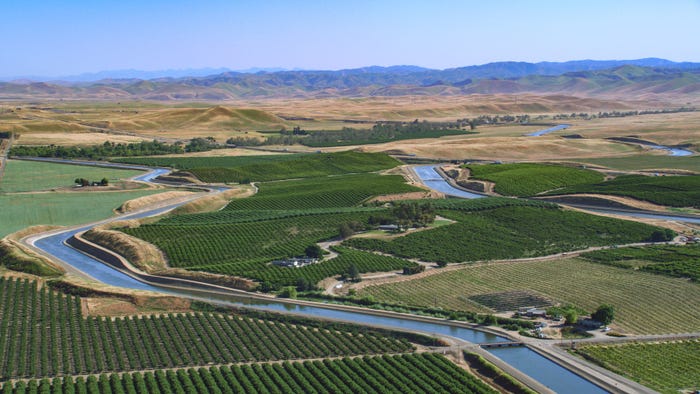
Water shortages in both states have resulted in hardships for agricultural interests and also for cities like Las Cruces and El Paso. Even farmers in distant South Texas, home to Texas’ diminishing but lucrative citrus industry, have felt the strain of less available water for irrigation.

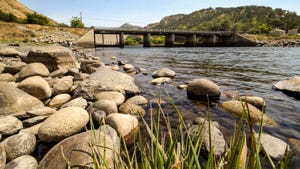
Also adding to water woes across the Southwest is the ongoing drought across the region and its recharge zone as far north as Colorado’s Rocky Mountain range, a problem that has intensified current water shortages. The latest forecast projects lower than average water runoff from snow accumulation in New Mexico in 2013.

In addition, forecasters with the federal Natural Resources Conservation Service project flows on the Rio Grande at a measuring point between Santa Fe and Los Alamos to be just under half the average over the last 30 years this year, and forecasters are calling for runoff of only 22 percent of the average at Santa Rosa Lake in Eastern New Mexico. These runoffs are necessary, according to state officials, to replenish reservoir levels to provide adequate water resources not only for farmers but also for New Mexico cities over the dry spring and summer season.

Further evidence of the growing water crisis is a dispute from a coalition of New Mexico ranchers who filed a legal complaint against the State of New Mexico over a state-national water protection measure that provides special designation to hundreds of miles of New Mexico rivers and streams and provides protection to lakes and wetlands in federal wilderness areas within the state. The legal complaint, filed by the New Mexico Cattle Growers Association (NMCGA), charges the agreement did not allow sufficient public input before terms were worked out, agreed upon and signed into law back in 2010. Officials at the NMCGA say they are concerned that the agreement to designate water resources in the wilderness areas is too broad and could lead to lawsuits over grazing on public lands.

The fight for water rights in the Southwest is not an isolated incident. More and more news is filtering out about water disputes and legal battles over water rights in many states and extends across international borders into Mexico and across Central and South America as well. In fact, water is becoming a more contested resource in large areas across the world, reminding us that population growth and industrial and agricultural expansion will continue to drive the issue into further crisis in the years ahead. Undoubtedly, water will prove to be a prevailing issue in the news headlines of tomorrow and for years to come.

Discuss this Article 0

Post new comment
Sign In or register to use your Western Farm Press ID

(optional)

Continuing Education Courses
This accredited CE course focuses on choosing the correct variety alfalfa based on a number of...
New Course
The 2,000-member Weed Science Society of America’s (WSSA) Herbicide Resistance Action...

The course details six of the primary diseases affecting citrus: Huanglongbing (Citrus...

Newsletter Signup