New labor rules target young farm workers

What is in this article?:

  • For the first time since the 1970’s, the U.S. Department of Labor is proposing amendments and additions to the Fair Labor Standards Act in an attempt to increase safety requirements for young workers employed in agriculture.

By Erin Herbold-Swalwell, Center for Agricultural Law and Taxation, Iowa State University; and Roger A. McEowen, Director of the ISU Center for Agricultural Law and Taxation

For the first time since the 1970’s, the U.S. Department of Labor (DOL) is proposing amendments and additions to the Fair Labor Standards Act (FLSA)(1) in an attempt to increase safety requirements for young workers employed in agriculture.(2) The proposed rules do not attempt to make changes or limit the current exemption for youth workers employed on farms owned or operated by parents — the new rules would only apply to hired workers.

The FLSA currently bars young workers from certain tasks, but the rules have traditionally allowed more flexibility with respect to the employment of young workers employed in agriculture. According to the DOL, the proposed rules would “increase parity between agricultural and nonagricultural child labor provisions.” According to the Secretary of Labor, “children employed in agriculture are some of the most vulnerable workers in America.”

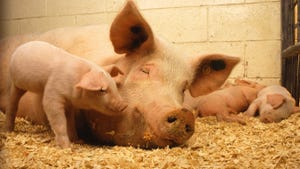
The DOL is proposing rules prohibiting hired workers (under age 16) from working with certain animals, handling pesticides, working in timber operations, and working in or around manure pits and storage bins.

Further, the new rules would prohibit farm workers under the age of 16 from participating in the cultivation, harvesting and curing of tobacco and from using electronic devices while operating powerdriven equipment. The department is also proposing a new non-ag hazardous occupations (non-ag HO) order that would prevent children under the age of 18 from working in grain elevators, feed lots, stockyards, and livestock exchanges and auctions.

FLSA Rules – The Ag Exemption

The child labor provisions of the FLSA establish a minimum age of 16 years for employment of hired workers in nonagricultural and agricultural occupations. However, some exemptions do apply. The U.S. Secretary of Labor is authorized to provide regulations for 14 and 15-year olds allowing those young workers to work in “suitable occupations” (other than manufacturing or mining) as long as the work does not interfere with health, wellbeing, or schooling. 16 to 17- year old hired workers are allowed to work in the ag and non-ag sector without hour or time limitations except in “certain occupations found and declared by the Secretary to be particularly hazardous.”

These situations are addressed in the Non Ag and Ag Hazardous Occupations Orders.(3) There is a limited parental exemption contained in §3(l) of the FLSA that applies to young people working in the non-ag and ag sectors permitting a parent or “person standing in the place of a parent” to employ his or her child in his or her custody under the age of 16 years in any occupation other than manufacturing, mining or designated hazardous occupation.

The FLSA defines agriculture as farming including cultivation and tilling of soil, dairying, production, cultivation, growing, and harvesting of agricultural commodities, raising of livestock, bees, fur-bearing animals, or poultry and any practices performed by a farmer that is incident to or in conjunction with farming operations (i.e., delivery of commodities to storage or market).(4)

The FLSA specifies that the exemption from the child labor provisions for youth under 16 applies to those youth employed in agriculture. Under the exemption, the FLSA provisions do not apply to youth under the age of 16 employed in agriculture if they are not legally required to attend school in the district where they worked.

Discuss this Article 3

Anonymous (not verified)
on Oct 30, 2011

some of us can't run our farms with out the help of our grand children to help. If you raise them on the farm they are more responable then some adults raised in the towns. They know what is expected of them. They know that the tractors and big machinery are not toys, and they are dangerous but they have learn from being around us how to use them properly and proper. I'll bet the president's girls don't have to clean up their rooms but yet he is trying to tell us how to raise our kids. If we don't keep them busy on the farm their will be more in trouble with the law and then we will have to build more prisons . Don't make any sence to me.

Courtney (not verified)
on Nov 3, 2011

I have lived and worked on our family farm as well as other farms since I was old enough to drive a tractor. I learded resposibility and manners! I understand that agriculture hosts some of the most dangerous jobs, but understanding the tasks and completing them properly makes them less risky. Also, I believe I speak for many young farmers and farm hands when I say I am involved in farming by choice, not because I had to. It is a way of life for us, I mean who doesn't like going out and working on tractors with grandpa or going to the barn to work with our 4-H and FFA projects?

Anonymous (not verified)
on Dec 5, 2012

ive worked on my family farm since as far back as i can remember. Ive helped neighbors and family run large equipment. it was not a choice it was a lifestyle. putting these laws in effect make it harder on family farms to keep up with the work. so is it right to take someones lifestyle away ? the answer is no.

Post new comment
Sign In or register to use your Western Farm Press ID
(optional)

Continuing Education Courses
This accredited CE course focuses on choosing the correct variety alfalfa based on a number of...
New Course
The 2,000-member Weed Science Society of America’s (WSSA) Herbicide Resistance Action...

The course details six of the primary diseases affecting citrus: Huanglongbing (Citrus...

Newsletter Signup