Hemp farming nears historic return to American agriculture

What is in this article?:

  • U.S. farmers may soon see the return of hemp as a viable crop alternative, the first time since 1957 the plant could be legally grown.
  • The hemp industry flourished between 1840 and 1860 because of the strong demand for sailcloth and cordage.

"Hemp is of first necessity to the wealth and protection of the country." - Thomas Jefferson

Amercian farmers may soon see the return of hemp as a viable crop alternative, the first time since 1957 the plant could be legally grown.

H.R. 525, a House resolution that would amend the Controlled Substances Act to exclude industrial hemp from the definition of marijuana, was introduced by Representatives Thomas Massie (R-Ky.) and Kurt Schrader (D-Ore.). The Industrial Hemp Farming Act of 2013, as the resolution is titled, carries with it the signatures of twenty-eight original co-sponsors.

The measure has been referred to House Committee, the Committee on Energy and Commerce, and in addition to the Committee on the Judiciary, for a period to be subsequently determined by the Speaker of the House.

Senators Ron Wyden (D-Ore.) and Rand Paul (R-Ky.) are expected to introduce a Senate companion bill to H.R. 525 later this month. If passed, the bills would remove federal restrictions on the cultivation of industrial hemp, the non-drug oilseed and fiber varieties of Cannabis, a plant most often associated with marijuana. Supporters of the bill are quick to point out that industrial hemp and marijuana plants are not one and the same.

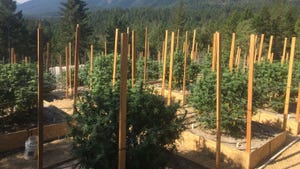
Hemp refers primarily to Cannabis sativa L. (Cannabaceae), although the term has been applied to dozens of species representing at least 22 genera, often prominent fiber crops. Hemp is one of the oldest sources of textile fiber with remains of hemp cloth dating back nearly 6,000 years. Hemp supporters point out there is a great deal of difference between hemp varieties used for industrial purposes and Cannabis varieties used for cultivation and harvesting of illegal resins, such as marijuana plants.

(See related: California’s growing marijuana business impacting agriculture)

In recent years, new processing technologies have arisen to commercialize "cottonized" hemp, hemp concrete, high-tech hemp composites and other novel hemp applications.

If the bill submitted last week is passed by Congress, it would strike down a 1957 decision by the U.S. Justice Department that lumped industrial hemp with marijuana as a drug. But whether the bill passes or not, it won’t be the first time the federal government has been involved with hemp issues.

Discuss this Article 1

Anonymous (not verified)
on Mar 5, 2013

YES! Please god and government, make this through. There is no reason why we import a fantastic product for both food and fiber like hemp, but are forbidden by our own laws to grow it ourselves. It's about time the USA got back on the side of education and not ignorance... many people including myself would love to see hemp in production for paper and other fiber products like clothes (sorry cotton, hemp is likely to make you look second rate someday soon). Also, hempseed is one of the most nutritious foods on the planet and even contains a full human amino-acid cylce - meaning we can actually sustain life on it alone! Corn, our biggest crop, sees many uses but cannot be used solo for life sustenance (due to a lack of tryptophan and lysine) but hempseed (like quinoa, amaranth, and others) are a 'complete' protein and hempseed has nearly the same protein content as soy! (33% vs 35%) which makes it the second most protein-concentrated vegetable. It is pure ignorance to keep something as valuable, historically important, and plain common-sense to grow as hemp out of our hands. This really needs to happen.

Post new comment
Sign In or register to use your Western Farm Press ID
(optional)

Continuing Education Courses
This accredited CE course focuses on choosing the correct variety alfalfa based on a number of...
New Course
The 2,000-member Weed Science Society of America’s (WSSA) Herbicide Resistance Action...

The course details six of the primary diseases affecting citrus: Huanglongbing (Citrus...

Newsletter Signup