GMOs, biotechnology offer agricultural blessings

What is in this article?:

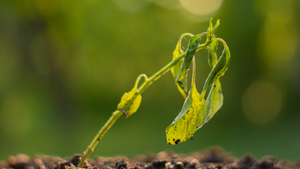
  • The fundamental misunderstanding of the plight of agricultural producers stems from the idea that farming is, or should be, natural. Farming is not natural. It is, in fact, a struggle against nature.

Editor’s note: R.N.  Hopper raises cotton, grain, cattle and various other crops near Petersburg, Texas. The following is a response he and his neighbor developed to counter negative claims in a recent social media post. We thought the essay more than worthy of sharing with Farm Press readers.

I am writing in response to the negative comments written about biotechnology in agriculture. Randy McGee, a close friend and neighbor, came by recently and showed me his Facebook page in an attempt to get me to participate in social media. Our farm is about 25 miles from his, but around here, there are so few young farm families, this proximity still constitutes a neighbor.

I do not have a Facebook account, something I intend to remedy, so Randy was kind enough to allow me to post on his. My name is R. N. Hopper. I am a 33-year old agricultural producer who grows white food corn, cotton, wheat, grain sorghum, black-eyed peas, and stocker cattle. I live and work on the farm with my wife and three children.

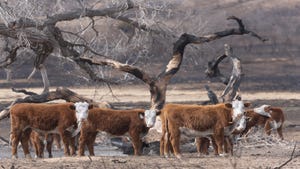
This year has been the most difficult of my career because of the most severe drought in the last 100 years of recorded history. Not only have we had just two inches of rainfall in the last 12 months, but we have also set new records for heat and average wind speed. Our irrigation and production systems are not designed to operate in these unprecedented conditions.

Of all of the natural disasters that can hurt our crops, drought is by far the most painful. While harsh storms or plagues of insects can sometimes bring immediate destruction, drought is like death from a thousand cuts. Each new day brings hope of rain and each new night brings disappointment as we struggle with Mother Nature and watch our crops suffer.

Adversity is nothing new for a farm family. This struggle against nature has been our story since the fall of man, recorded in Genesis: “cursed is the ground for thy sake; in sorrow shalt thou eat of it all the days of thy life; thorns also and thistles shall it bring forth to thee; and thou shalt eat the herb of the field; In the sweat of thy face shalt thou eat bread, till thou return unto the ground; for out of it wast thou taken: for dust thou art, and unto dust shalt thou return. – Gen 3:17-19.

 But just as our merciful God made Adam and Eve coats of skins and clothing before he sent them out of the garden, He has not left us alone to fend for ourselves against Mother Nature. He has clothed us with the ability to learn from our mistakes, to develop better production practices, to use the scientific knowledge to better utilize our given resources, and to employ technology.

Discuss this Article 2

Tim Gieseke (not verified)
on Oct 9, 2011

I farm, and I don't struggle against nature, I struggle with nature. Sure I use GMOs, fertilizers and chemistries to sprout the plant and carry it to harvest, but that is just a small fraction of what happens on the farm. Nature does most of the work, has granted us more [natural] capital than we ever could afford, or man could ever make. We like to think that we overcome nature, because that makes a lot of humans feel superior. I can do and make a lot of things, but I am not foolish enough to think I am the one growing the stalks of corn. I humble stand by and wait. The fundamental misunderstanding that creates the plight of agricultural producers stems from the idea that farming is a struggle against nature and that each and every day we must conquer it.

F.J. Bonilla (not verified)
on Oct 15, 2012

Living in the city but having an ag background gives me the opportunity to educate people of how our food is grown. It is really gratifying to help people understand and steer them away from extremist positions. Great reading and everyone who is involved in agriculture needs to take every opportunity to educate fellow citizens on how our food is grown and embrace that opportunity to teach with energy.

Post new comment
Sign In or register to use your Western Farm Press ID

(optional)

Continuing Education Courses
This accredited CE course focuses on choosing the correct variety alfalfa based on a number of...
New Course
The 2,000-member Weed Science Society of America’s (WSSA) Herbicide Resistance Action...

The course details six of the primary diseases affecting citrus: Huanglongbing (Citrus...

Newsletter Signup