Farm bill moves toward one-year extension

  • House Republican leaders shifted course toward possible consideration of a one-year extension of current farm programs.

As the agronomic and political impacts of the nation’s growing drought came into clearer focus this week, House Republican leaders shifted course toward possible consideration of a one-year extension of current farm programs.

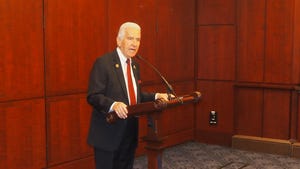
At a House Agriculture Committee Members meeting Wednesday, Committee Chairman Frank Lucas (R-Okla.) pitched the idea, which would also include an extension of disaster relief programs, especially vital for livestock producers who cannot buy crop insurance and do not participate in Title I.

By Thursday, Republican leaders were whipping votes and planning for floor consideration next week, the last week before the month-long August recess.

Lucas, who has the unenviable job of convincing his leadership to bring any farm legislation to the floor, told members of the press at mid-week that an extension was possible and even logical with drought effects worsening by the day.

His Democratic counterpart, Ranking Member Collin Peterson, and Senate Agriculture Committee Chairwoman Debbie Stabenow (D-Mich.), first voiced opposition to an extension. However, if Stabenow seeks to move a bill to conference committee following a successful House vote, the way could be paved for Congress to pass a full farm bill before current law expires on Sept. 30.

Questions about the potential plan abound. It’s not yet clear how direct payments, which were eliminated in both House Committee- and Senate-passed versions of the bill, will be treated under a possible extension.

The effect of an extension on the law’s baseline – which has already been reduced dramatically in recent years and could take another hit with coming sequestration cuts in 2013 – is unknown.

Another concern is how Members in both chambers will react to a hopeful but unconventional path toward farm bill passage.

NAWG’s priority continues to be achievement of a new, five-year farm bill before current law expires this fall. A short-term extension doesn’t give farmers the certainty that they need and would likely not incorporate reforms that have been essential to gaining support for new farm and food policy in both chambers.

NAWG will continue to closely follow the process and report to members as appropriate. More on NAWG’s farm bill work is available at www.wheatworld.org/farmbill.

Discuss this Article 2

Anonymous (not verified)
on Jul 30, 2012

Another welfare program. This one for the "poor" farmers.

Anonymous (not verified)
on Jul 30, 2012

You would be poor too, if you lost everything to drought. You have no concept of what it is like to farm when there is no water to use. Family Farming is labor and capital intensive. One does not grow rich on farming, most today have side jobs to live. Not many family farms have the opportunity to irrigate and must rely on mother nature and that is few and far between.

Post new comment
Sign In or register to use your Western Farm Press ID
(optional)

Continuing Education Courses
This accredited CE course focuses on choosing the correct variety alfalfa based on a number of...
New Course
The 2,000-member Weed Science Society of America’s (WSSA) Herbicide Resistance Action...

The course details six of the primary diseases affecting citrus: Huanglongbing (Citrus...

Newsletter Signup