EPA proposal threatens irrigated agriculture in central Arizona

  • An Environmental Protection Agency proposal for the coal-fired Navajo Generating Station near Page, Ariz., could hike water costs and threaten the economic viability of irrigated agriculture in central Arizona;
  • A $1 billion system to further reduce nitrous oxide emissions could drive up water costs for agriculture by 33 percent;
  • Arizona farmer Ron Rayner, who opposes the EPA plan, says, “Farmers need to contact their congressmen and convince them to use a bridle and bit on EPA and pull on the cinch strap.”

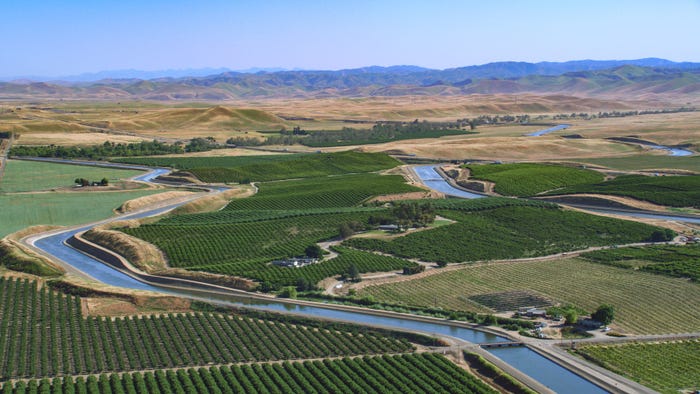
Surface water is a lifeline for irrigated agriculture in central Arizona and a decision expected by year end from the Environmental Protection Agency (EPA) could sever the cord.

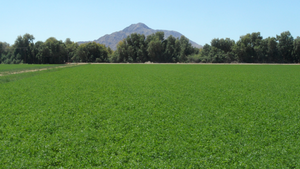
At stake are thousands of acres of central Arizona farm land and potentially mammoth increases in surface water rates which could fallow farm ground and place farmers in the unemployment line.

The potential increase in water rates is tied to the EPA decision on possible new mandatory emission control improvements at the coal-fired Navajo Generating Station (NGS) located on the Navajo Indian Reservation near Page, Ariz.

EPA is weighing a requirement to mandate the installation of selected catalytic reduction (SCR) and baghouse technology at the NGS to further reduce nitrogen oxide (NOx) emissions. SCR, with the aid of a catalyst, coverts NOx into nitrogen and water. The baghouse disposes of the emissions.

The SCR process is designed to reduce haze in the air at about a dozen surrounding national parks, monuments, and wilderness areas including the Grand Canyon through the regional haze rule under the Clean Air Act.

Opponents argue NGS generates little haze nearby since the prevailing wind blows from the plant in the opposite direction of tourist sites.

NGS is powered by low sulfur bituminous coal from the Peabody Western Coal Company's Kayenta Mine. NGS generates 2,250 megawatts of energy for customers in Arizona, California, and Nevada.

NGS is owned by the U.S. Bureau of Reclamation, Salt River Project (SRP), Los Angeles Department of Water and Power, Arizona Public Service Company, Nevada Power, and Tucson Electric Company.

Implementing the SCR-baghouse technology could cost $1 billion-plus, according to SRP which operates the NGS.

If EPA requires the SCR installation, the increased costs would be passed to customers including the Central Arizona Project (CAP), which uses 2.8 million megawatt hours from NGS to deliver CAP water to agriculture, industrial, and municipal users in central Arizona.

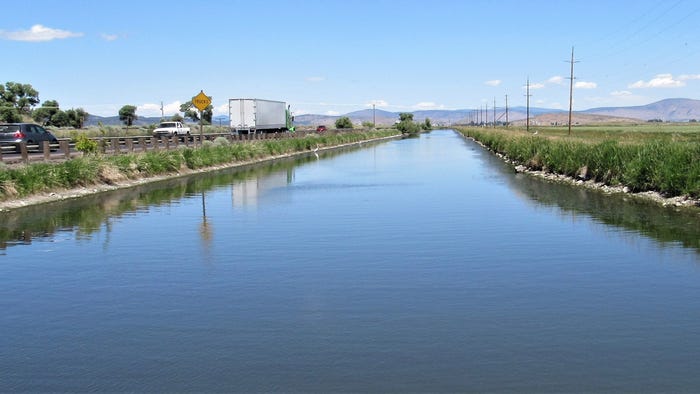
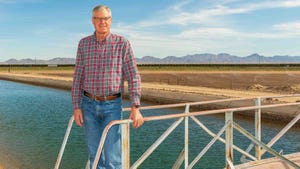
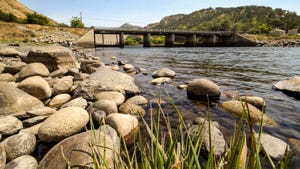
CAP, the largest end energy user in Arizona, pumps and delivers more than 1.5 million acre feet of CAP water from the Colorado River annually over 336 miles and nearly 3,000 feet uphill to farms and other businesses. CAP delivers water to 80 percent of Arizona’s population, located in Maricopa, Pinal, and Pima counties.

Central Arizona agriculture uses about half of the water CAP delivers annually – about 400,000 acre feet for agriculture.

EPA was planning to make its decision on the SCR proposal this summer. In a letter to the U.S. Department of the Interior, the EPA announced a delay in its proposed ruling to gain more information on the impact of the proposal on the CAP, water users, and tribal issues, according to CAP General Manager David Modeer.

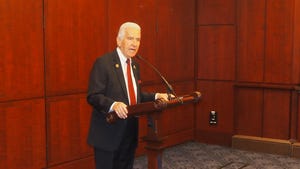
The increased water costs could force central Arizona farmers out of business. Farmer Dan Thelander took his bucket load of concerns to Washington, D.C. this spring where he spoke bluntly to the U.S. House of Representatives Subcommittees on Water and Power and Indian and Alaska Native Affairs.

Dan Thelander is a partner in Tempe Farming Company and serves on the board of the Maricopa–Stanfield Irrigation and Drainage District (MSIDD). Thelander farms 2,500 acres of cotton, alfalfa, wheat, barley, and guayule. His water use includes about 6,700 acre feet of CAP water annually at a cost of about $3,300.

“This billion dollar cost at NGS translates into an increase in water rates to our (MSIDD water) district to the tune of about $16 per acre foot,” Thelander testified. “When you do the math on that for 6,700 acre feet of water that our farm buys, it equals about $107,000 every year.”

Power companies can spread out increased water costs to hundreds of thousands of customers, Thelander told the Congressmen. The Tempe Farming Company cannot.

“Our cotton and wheat are sold on a world market and there is no way that I can just raise my prices just because my costs go up,” Thelander said. “Local dairies that buy our alfalfa won’t be able to raise their milk prices to pay for a huge increase in feed costs.”

If EPA mandates SCR and CAP water rates skyrocket, Thelander said: up to one-third of the farm land in the MSIDD could be fallowed due to the lack of affordable water; many farmers would go out of business; and farmers who survive would make less money.

“The reduction in farming would have a snowball effect with less money to buy tractors, fertilizer, seeds, and provide less labor opportunities; all leading to higher unemployment.”

Thelander added, “Sometimes there is a limit to what a business can absorb in increased costs of government regulations and this is one of those times. Pinal County agriculture cannot absorb the huge increase in water costs that the SCRs would cause.”

Speaking at the 2011 Agri-Business Council of Arizona annual meeting in Phoenix in May, Paul Orme said the SCR and baghouse requirements would increase CAP water costs by 33 percent.

Orme is a 4thgeneration rancher and Of Counsel with the law firm Salmon, Lewis, and Weldon in Phoenix, Ariz. Orme’s own legal firm, Paul R. Orme PC, serves as general counsel to five Pinal County irrigation and electrical districts including the MSIDD, Central Arizona Irrigation and Drainage District, New Magma Irrigation and Drainage District, and Electrical Districts 3 and 4.

The three water districts are principally CAP districts which rely heavily on water from the Colorado River. The districts combined provide CAP water to irrigate over 200,000 acres of farm land. Orme says the breakdown between CAP water and groundwater use in the districts is 60 to 90 percent CAP water and 40 to 10 percent groundwater.

Orme said the SCR emission process is not necessary since SRP recently completed the installation of a low-NOx burner system at NGS at a $45 million price.

The CAP says recent research suggests little difference in visibility improvements between the SCR-baghouse and low-NOx burner technologies; invisible differences to the human eye.

As the nation continues its quest to utilize renewable fuels to power the country, is coal-fired energy dead in the water? Could the NGS-SCR issue raise the spectre of a possible NGS closure?

“The NGS owners will have to make a hard decision on whether to invest $1 billion into a coal-fired power plant with an uncertain future,” Orme said. “They could walk away from the plant and say it doesn’t work for them. That would be the worst possible result for Arizona.”

If the NGS was decommissioned, Orme says replacement power could increase CAP water costs by 50 to 300 percent. This could render CAP water completely unaffordable for agricultural use on any scale.

Closure of the NGS could jeopardize existing and future Indian water rights settlements. The settlements depend on NGS for a revenue stream for funding Indian water deliveries and the construction of systems on current and future settlements.

“The closure of NGS would result in a loss of over 1,000 jobs for the Navajo Nation and the loss of revenues to the Navajo and Hopi Reservations of about $250 million annually,” Orme said. “This includes 88 percent of the annual operating budget of the Hopi tribe.”

Arizona farmer Ron Rayner is a former board member of the CAP. Rayner operates A Tumbling T Ranches in Goodyear just west of Phoenix. The 2,500-acre operation includes alfalfa plus cotton double cropped after wheat and barley.

Western Farm Presscontacted Rayner for comment on the EPA-NGS issue. Rayner was on the road headed north on vacation and ironically had just driven by the NGS. He was amazed by the clean air surrounding the facility.

“I saw small plumes of vapor, not smoke, coming out of the stacks,” Rayner said. “It was as clean as it could be.”

Rayner says the newly installed low NOx burners eliminate nearly the same percentage of NOx than the more expensive system under EPA consideration.

Rayner says most people support a clean environment but sound science and reasonable solutions must be considered to keep from destroying the economic viability of business.

“Farmers need to contact their Congressmen and convince them to use a bridle and bit on EPA and pull on the cinch strap,” Rayner said. “EPA is operating beyond what most people believe the agency has the authority to do.”

cblake@farmpress.com

Discuss this article 3

Wow, 6700af for $3,300?! That's less than 50c per acre-foot. I'm jealous.

By Anonymous (not verified)  on Jul 6, 2011

WATER!!! All the floods allow the water to run down-hill ,similar to our economy. With a little WPA forethought, we might divert the flood-waters from running wild, and wasteful .If we can PIPE oil-gas from anywhere , why cant we PIPE, Divert, Channel , some of that wasted water into the States that could benefit from our ingenuity, invested capital, and EMPLOYMENT for 10 s of thousands of AMERICANS who CARE where we are going in this 21 st Century. Government holds the purse strings as well as the runnof of needed Engineers, planners, politicians and farmers . J moody

By Anonymous (not verified)  on Jul 6, 2011

The issue nobody is raising is the most fundamental one -- to realize that farming in this area is only feasible due to inexpensive energy and the transportation of water over long distances. Both of these practices are unsustainable. When full costs of this water -- accounting for the cost of cleaning up the air pollution -- come to bear, everyone complains that farming is no longer feasible. Yes, this is exactly the point -- farming in this area is not naturally feasible and can be done only by propping it up with artificially cheap water. The arguments made by the farmers exemplify the agonizing situation we find ourselves in -- that we have gone in the unsustainable direction as far as we can go, and now it will be very painful to backtrack and get back to something that is sustainable in the big picture.

By D. Garen (not verified)  on Jul 11, 2011
Post new comment
Sign In or register to use your Western Farm Press ID

(optional)

Continuing Education Courses
New Course
The 2,000-member Weed Science Society of America’s (WSSA) Herbicide Resistance Action...
New Course

The course details six of the primary diseases affecting citrus: Huanglongbing (Citrus...

Get the latest info on almond insect pest management.
Farmer-to-Farmer Used Equipment