California farm workers a vital asset to be protected

  • Firebaugh, Calif., melon grower Joe L. Del Bosque is the son of a migrant farm worker; he earned his way through college as a farm worker, and his wife Maria Gloria Del Bosque is a former migrant worker who immigrated to this country with her family.
  • As many as 750,000 seasonal farm workers work from planting to harvest each year in California just like the Del Bosque family did.
  • California is regulatory purgatory for many businesses, agriculture particularly. Laws and agencies oversee just about everything Del Bosque does on his farm. Labor is no different.

Valued workforce

“Everyone in agriculture values people who work in our industry,” said Del Bosque. “We want to do all we can to give them a good life with a safe and comfortable place to work. We’d be foolish to abuse this valuable resource.”

AgSafe is the only state organization of its kind in the nation, largely because of the many crops in California requiring extensive hand labor. “I think every state could benefit from having an AgSafe organization because the issues we face are spreading across the nation,” says Wolfe.

Joe said some of his workers are homemakers who work in the summer to help support their families through the fall and winter. Others are migrant workers from Mexico who earn money here to send home or take back with them. Some work mostly for him. Others move from crop to corp.

“It can be very competitive during the various harvest seasons,” he says.

Joe and Marie understand the goals of the people who work for them because they are shared dreams.

“We are very proud of the fact 70 percent or more of the people who work for us want to come back each year,” he said. “We have second generations of families who work for us. We have supervisors who started working for us in the fields in the 1990s.”

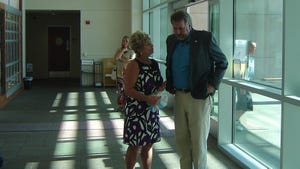
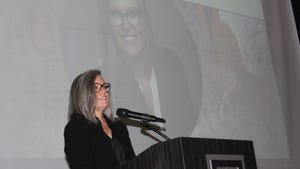
Properly maintaining a valued work force is one reason 1,100 gather for the annual AgSafe conference. It is one of the largest agricultural gathers in the state. AgSafe conducts many seminars for companies and labor contractors during the year.

Wolfe said the annual conference, held this year in Monterey, addresses “critical” labor issues in a multitude of forums covering several days.

The conference is unique, she says, because it brings together employers with all the various state and government agencies which regulate farm labor.

The conference is “neutral ground” where agencies are not out to write tickets, but to share a common goal of creating a safe, healthy environment for farm workers.

It is also an opportunity to network. “People learn how to work smarter rather than harder,” he said.

“What I see at these conferences and workshops is that some AgSafe sponsors are not aware of all state and federal regulations that they have to be in compliance with. It is an opportunity to get your head around all the legalese,” he said.

Del Bosque cites the AgSafe education program for labor contractors. “As a labor contractor who harvests crops for other people, this is a great program. We have many small and beginning licensed contractors in the business. To be honest, many do not have a strong educational background. It really helps everyone, contractor and worker, to keep current on laws and regulations,” he says.

There are about 1,200 licensed ag labor contractors in the state. “Some have crews numbering in the thousands and some have maybe 20 or 30 on a crew,” said Del Bosque.

Like his peers, Del Bosque feels overregulated. “I will admit things are 1,000 percent different than when my dad hired braceros. A lot of the regulations today are beneficial, but regulators can make things more stringent than necessary. Sometimes they do not understand what goes in the field and the packing shed. Nevertheless, we try to live within the rules.”

Complying with labor laws is only part of the labor issue for farmers like Del Bosque. Availability is an ongoing concern. This year he does not expect a problem, although he is seeing fewer immigrants crossing the Mexican border. “However, I see labor shortages in the future,” he says.

“Last year we even had about 20 people who had not worked on farms working for us because they could not find jobs elsewhere,” he says.

“E-Verify really concerns me. The lack of an updated immigration policy and a guest worker program that works also concerns me. However, for whatever the reason, the country does not seem in the mood to work things out so we can have a stable labor force.”

Discuss this Article 3

Anonymous (not verified)
on May 16, 2012

He is telling the truth. The workers are skilled and have knowledge of the crops they work with. They need to be respected and given more credit for helping make California what it is today. I am so tried of hearing people say, "unemployment is up to 17% we do not need the seasonal workers here taking our jobs." Let us face it, the people on unemployment will not take the jobs in the field. They can not do that type of work. They do not even want to take a job that offers them $2.00 less per hour that they were making before the lost their job. They are getting lazy. Let us respect the field workers and allow them to come and work for all of us in ag. We need the labor.

Anonymous (not verified)
on May 16, 2012

Here's the thing. American workers do a lot of hard jobs, it's just that they want to be compensated fairly for their work. If farmers had to hire American citizens they would have to pay more, and I think they should. Chavez knew migrant labor was going to undermine the ability of ag workers in this country to demand good compensation. I think for $15-17/hr and benefits Americans would do these jobs, and it would put people back to work. The problem of course, is that farmers will get squeezed and pass these costs along to the consumer. I for one would be willing to pay a little extra to employ American citizens, but I'm not sure most people would agree with me, so I guess we continue with the status quo, jobs for migrants, not for Americans.

JuanRay (not verified)
on Sep 6, 2012

I were in school and old enough, my mother took us out to experience work in the fields.Also she had us try picking cotton, apricots, and prunes. But her intention wasn’t to give us a bad experience from farm work, but to learn that there were rewards by working for it.

Post new comment
Sign In or register to use your Western Farm Press ID
(optional)

Continuing Education Courses
This accredited CE course focuses on choosing the correct variety alfalfa based on a number of...
New Course
The 2,000-member Weed Science Society of America’s (WSSA) Herbicide Resistance Action...

The course details six of the primary diseases affecting citrus: Huanglongbing (Citrus...

Newsletter Signup