Biotech crop barriers must fall in Africa

What is in this article?:

  • If Africa is ever going to feed itself, it will to have to beat the odds–and adopt the same tools that are taken for granted in so much of the developed world. That means access to seeds improved with biotechnology.

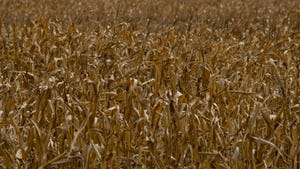
Back in the dark days of apartheid, many South African farmers like myself were forced to drive our tractors through fields full of landmines as we worked hard to grow maize and other vegetables.

That’s now a part of history, thank goodness. Yet farmers in today’s Africa continue to face landmines of the metaphorical variety: As we try to obtain access to the latest agricultural technology, we see hazardous obstacles everywhere. They must be removed.

If our continent is ever going to feed itself, we’re going to have to beat the odds–and adopt the same tools that are taken for granted in so much of the developed world. That means we must have access to seeds improved with biotechnology.

I’ve seen the benefits of GM crops firsthand. Just south of Johannesburg, I own several acres of land and rent more. For the last eight years, I’ve grown genetically modified corn and soybeans. They are outstanding crops. My yields have improved by more than one-third, meaning that the economics of farming never have been better. Agriculture doesn’t have to be a subsistence occupation. It can be a sustainable profession.

Economics are only a part of it. GM crops are more sustainable for the environment and human health as well. The biotech variety I planted protects maize from stalk boring insects, so I don’t have to apply nearly as much chemical spray as in the past. That’s a huge benefit for field laborers, especially children.

The enemies of biotechnology sometimes claim that GM food is harmful to eat. This is sheer nonsense. Ever since I’ve grown it, I’ve eaten it. There are no bad side effects. This is perfectly good food.

Africans everywhere must come to this realization. We don’t grow nearly enough food. Our production is simply too low. And so we face a stark choice: Do we accept the bleak prospect of permanent dependence, in which we rely upon the wealthy nations of the world to feed us, out of pity? Or do we want to stand on our own and take care of ourselves?

Discuss this Article 1

Anonymous (not verified)
on Dec 10, 2012

Very funny. GMOs are not safe and most counters have actually banned GMOs from their countries, most have moratoriums for 10nyears and more. Africa can feed itself we don't need to be tied to corporations apron strings of corporations. Besides we want to eat what we are used to not some engineered Frankenstein foods from Monsato's lab. to borrow your words "we want to We want to stand on our own and take care of ourselves, by defining what we eat and how we want to eat it. We say NOOOOOO to GMOs!

Post new comment
Sign In or register to use your Western Farm Press ID
(optional)

Continuing Education Courses
This accredited CE course focuses on choosing the correct variety alfalfa based on a number of...
New Course
The 2,000-member Weed Science Society of America’s (WSSA) Herbicide Resistance Action...

The course details six of the primary diseases affecting citrus: Huanglongbing (Citrus...

Newsletter Signup