Newcomers trying to put green tint on next farm bill

Feb 2, 2007 3:12 PM, By Forrest Laws
Farm Press Editorial Staff

The halls of Congress are likely to be a bit more crowded when lobbyists for traditional farm organizations begin making their rounds on the new farm bill later this year.

Livestock and specialty crop producers have been saying, “They want a place at the table” when the House and Senate Agriculture Committees begin writing the new legislation next month.

But those groups have been on the periphery for the last few farm bills, primarily to keep their ox from being gored, if you’ll pardon the pun. This time a lot of new faces are demanding not only a seat but also a major role in writing the law.

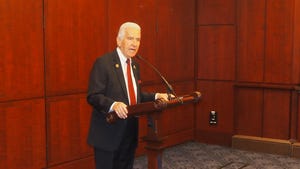
At this writing, the Farm & Food Policy Project, a “broad coalition of agriculture, anti-hunger, faith-based, public health, rural and conservation groups, was scheduled to release a report – “Seeking Balance in U.S. Farm and Food Policy – at a Washington press conference Jan. 22.

“As the 110th Congress gets under way, it will write a new farm bill that addresses such critical issues as agricultural production, food and nutrition assistance, rural development, renewable energy, equity and conservation,” the groups said.

The Farm and Food Policy Project (FFPP) is a “collaboration of diverse organizations united by a common vision of a more sustainable food and agriculture system for the United States.” The FFPP, it said, has written a joint farm bill declaration that has been endorsed by 200 organizations.

Other groups expected to participate included the Society for Nutrition Education, Environmental Defense, American Farmland Trust, Sustainable Agriculture Coalition and the Land Loss Prevention Project.

The Sustainable Agriculture Coalition had a hand in two earlier events, releasing a report titled “Hidden Treasures: The Conservation Security Program and Wildlife,” and a letter urging Congress to pass a comprehensive “Competition Title” in the new farm bill.

Duane Hovorka, farm bill outreach coordinator for the National Wildlife Federation, was the author of the “Treasures” report, which said the 2002 farm bill’s Conservation Security Program has provided substantial wildlife benefits, but could provide even more with changes in the next farm bill.

Hovorka testified at a Senate Agriculture Committee hearing Jan. 17. The fact the hearing was convened by Committee Chairman Tom Harkin, the author of the Conservation Security Program, wasn’t lost on farm bill lobbyists.

The letter, signed by the Sustainable Agriculture Coalition and 210 other groups, said the new farm bill should have specific measures to limit packer and processor control and manipulation of livestock markets.

Should mainline farm organizations be worried about the newcomers trying to muscle in on their turf? They definitely bring a different take on the issues, one farmers initially may find a bit green, either too naïve or too tree-huggerish.

But they may also find they have more in common with the groups than they expect, and they may be glad to have them in their corner when it comes time to start counting the votes for the new legislation.

email: flaws@farmpress.com

Get Copyright ClearanceWant to use this article? Click here for options!
© 2009 Penton Media, Inc.


Latest Jobs

resources

events icon events

product info icon tradeshows

tradeshow icon digests

research icon photos

Continuing Education


*View the entire list of courses offered.


Accredited for California, Arizona and CCA hours:


New Course
Using Organic Acids to Improve Plant Production

Healthy plants have a greater ability to resist soil pathogens and insect damage. This course details how organic acids can enhance plant health. It is accredited for 1 unit in nutrients for CCAs and .5 hours for Arizona licensees. Credit is pending at California Department of Pesticide Regulation


New Course

The ABCs of MRLs

American agriculture exports 20 to 30 percent of its production annually. For specific commodities, the percentage is much higher. When recommending and applying pest management products for crops, license Pest Control Advisers (PCAs)  and applicators and farmers must be aware of which products applied are in compliance with Maximum Residue Limits (MRLs) established by foreign customers. This CE course details the MRL issue and why compliance is critical to marketing into world trade.

Back to Top

Browse Print Issues

Additional Resources

subscribe to Farm Press Daily Southeast Farm Press Southwest Farm Press Delta Farm Press