Glyphosate resistance changes Arizona cotton industry

What is in this article?:

  • University of Arizona greenhouse assays confirm Palmer amaranth resistance to glyphosate (Roundup) herbicide in cotton in a Buckeye, Ariz., field.
  • For the 2013 cotton season, UA weed scientist Bill McCloskey urges Arizona growers to follow new production practices to reduce the spread of resistance.

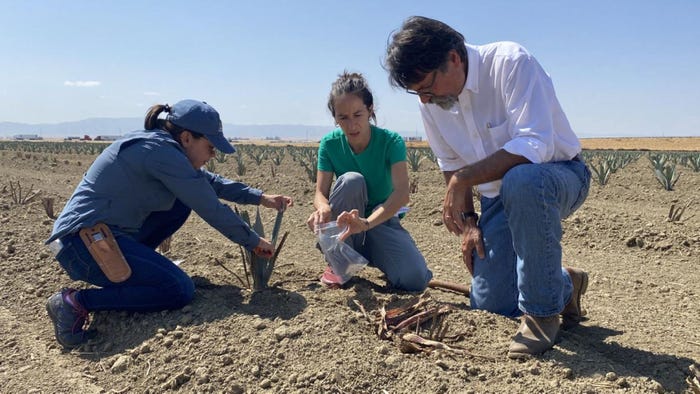
Bill McCloskey, University of Arizona Extension weed scientist, confirms Palmer amaranth resistance to glyphosate (Roundup) herbicide in cotton in a Buckeye, Ariz., field. 2008 file photo.

It is official: Arizona has its first documented case of herbicide resistance to a weed — Palmer amaranth — and the state’s cotton growers should implement production changes this season.

Bill McCloskey, University of Arizona Extension weed specialist, confirmed the first case of resistance of Palmer amaranth (pigweed), Amaranthus Palmeri, to the herbicide glyphosate (Roundup).

McCloskey made the conclusive finding after a series of UA greenhouse tests with pigweed seed conducted last fall in Tucson.

“I am not surprised that glyphosate resistance was found in Arizona,” McCloskey told a crowd of cotton growers gathered for a UA Extension agronomic workshop in Yuma, Ariz., in January.

“It was only a matter of when,” McCloskey said. “Glyphosate is the predominant weed-management strategy used by Arizona cotton growers year after year.”

Yet McCloskey is surprised that the first Arizona case of resistance was found in cotton. He expected resistance first in tree crops since glyphosate can be applied up to eight times annually for weed control.

The resistance alarm first sounded last summer when a Buckeye cotton grower and several pest control advisers (PCAs) contacted McCloskey. The concern was an 80-acre cotton field with a severe pigweed infestation after several applications of glyphosate.

McCloskey visited the field — plus another suspect field farmed by the same grower about a mile down the road.

McCloskey’s greenhouse tests from December confirmed glyphosate resistance in the first field. In fact, the resistance levels were among the worst found in the U.S.

“It seems to be endemic in the Buckeye area in a wheat-cotton double crop scenario without tillage and pre-emergence herbicides,” McCloskey said. “Roundup was the only herbicide applied during the warm times of the cotton season.”

McCloskey received a call several weeks later from a PCA in Glendale with a problem related to pigweed control with glyphosate. UA greenhouse results were negative for glyphosate resistance.

Buckeye and Glendale are located in Maricopa County in central Arizona, just west of Phoenix.

As the 2013 Arizona cotton planting nears, McCloskey says the spread of the resistance gene depends on production practices utilized by growers. He urges growers to implement production changes to minimize the spread of resistance.

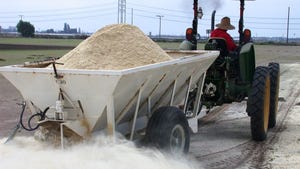
First, start with a clean field. Utilize mechanical tillage at preplant, in-crop cultivation, and post harvest. Hand rogue before seed set. Use multiple herbicides with different modes of action. “The top preseason pigweed control option I recommend is a dinitroaniline (DNA) herbicide application of Prowl, Treflan, or generics,” McCloskey said. “The best way to apply a DNA herbicide is on the flat with a boom on a disk or field cultivator to incorporate the product.”

Discuss this Article 4

John Dangereaux (not verified)
on Feb 22, 2013

Well, when Hemp is finally legalized, we won't have a need for that most wasteful crop of all-cotton! I heard HALF of all farm chemicals are put on the cotton crop. Now that's efficiency for you!

Anonymous (not verified)
on Feb 24, 2013

We Had to Destroy the Village to Save It.

Anonymous Supreme (not verified)
on Feb 23, 2013

Go organic, Arizona!

When you dance with the Devil (Monsanto), that is what you get. But I sure wish everyone well in the transition. GMO cotton (GMO anything) is bad news.

Becky Person (not verified)
on Feb 25, 2013

The bees are dying off because of pesticide and herbicide use on fields and forests. In China, because of the mortality of the bee population from pesticide, herbicide use, millions of fruit trees are having to be pollinated by hand. In the US and Canada, farmers are losing their farms because of Monsanto lawsuits when non-Monsanto farmers' fields show genetic drift for Monsanto genetics. These two facts alone are a grim testimony to the ill effects of herbicide use anywhere.

Post new comment
Sign In or register to use your Western Farm Press ID
(optional)

Continuing Education Courses
This accredited CE course focuses on choosing the correct variety alfalfa based on a number of...
New Course
The 2,000-member Weed Science Society of America’s (WSSA) Herbicide Resistance Action...

The course details six of the primary diseases affecting citrus: Huanglongbing (Citrus...

Newsletter Signup