Arizona cotton industry awaits glyphosate-resistance test results

Findings expected by Thanksgiving

What is in this article?:

  • Two suspected cases of glyphosate herbicide resistance to Palmer amaranth found in central Arizona.
  • If resistance is proven, glyphosate would be the first weed-resistant herbicide in Arizona.
  • Greenhouse tests conducted by University of Arizona weed specialist Bill McCloskey will determine if the pigweed is glyphosate resistant.

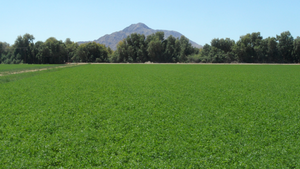
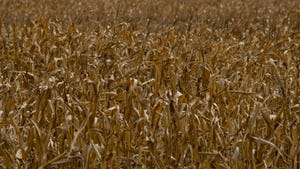
This Buckeye, Ariz., cotton field has suspected glyphosate herbicide resistance to pigweed.

Arizona cotton growers should know by Thanksgiving whether two suspected cases of glyphosate herbicide resistance to Palmer amaranth (pigweed) test positive or negative.

Greenhouse tests under way by University of Arizona weed specialist Bill McCloskey, Tucson, will prove whether pigweed is resistant to glyphosate, and if so whether the resistance level is moderate or high.

“It is resistant pending greenhouse confirm studies,” McCloskey said.

McCloskey believes test results will come back positive.

If resistance is proven, glyphosate would be the first weed-resistant herbicide in Arizona. Glyphosate is the active ingredient in Roundup herbicide and many generic products.

“If the test results are positive, this will be the largest challenge facing Arizona cotton growers,” McCloskey said.

McCloskey discussed the issue during a UA field crops workshop in Marana, Ariz., in late September.

Both suspect locations in Arizona are in the western Greater Phoenix area in Maricopa County.

The first suspect find was reported in Buckeye in early July in two fields located about a mile apart. The first field was a no-till field in a double crop rotation with Roundup Ready Flex cotton and wheat.

Half of the field contained very high numbers of Palmer amaranth, Amaranthus palmeri. The grower had sprayed Roundup exclusively over the last several years.

After two, 44-ounce-per-acre Roundup applications early this season, the herbicide provided less pigweed control. After the suspect find was reported, a custom applicator hired by Monsanto applied another 44-ounce-per-acre Roundup application. The result was minimum pigweed control.

Monsanto’s Arizona sales representative Paul Sawyer sprayed a 5 percent Roundup solution on the pigweed which also provided little weed control.

About half of the field was disked down. A hand crew chopped down and removed the remaining pigweed.

A nearby field in Buckeye, about 20 acres in size, included about one pigweed per acre. McCloskey believes glyphosate resistance was present in the field for about one year.

The second suspect area, located in Glendale, included a less-infested pigweed field than the Buckeye locations. Sawyer applied a 5 percent Roundup solution which killed most of the pigweed.

McCloskey and Arizona Cotton Growers Association executive vice-president Rick Lavis are working closely to disseminate key information to growers.

“This is an issue at the top of our priority list in the Arizona cotton industry,” Lavis said. “It’s not a crisis at this point. We are taking every step to prevent it from becoming a serious problem.”

One of those steps is the ACGA’s creation of a resistance-management committee which includes industry leaders. A series of letters mailed to the association’s grower members emphasize how to best prepare for and manage glyphosate resistance.

“This is a profitability issue,” Lavis said. “It requires more costly chemical applications to control it which boils down to increased costs.”

Discuss this Article 1

jones88
on May 14, 2013

The cotton industry is depending on this so much here. There is so much more research that has to be done on this. So much damage has happened and needs to stop before the cotton industry is destroyed.Cord blood banking Canada

Post new comment
Sign In or register to use your Western Farm Press ID
(optional)

Continuing Education Courses
This accredited CE course focuses on choosing the correct variety alfalfa based on a number of...
New Course
The 2,000-member Weed Science Society of America’s (WSSA) Herbicide Resistance Action...

The course details six of the primary diseases affecting citrus: Huanglongbing (Citrus...

Newsletter Signup