Apiary study shows U.S. honey bee situation remains in perilous state

Jun 24, 2008 11:16 AM, By David Bennett
Farm Press Editorial Staff

In 2006, after honey bees abandoned hives in massive numbers, beekeepers began sounding an alarm that gained volume in 2007 when the mass exodus and die-off of bees picked up speed. Researchers named the mysterious malady colony collapse disorder (CCD).

“Unfortunately, beekeepers have struggled over the last few years from colonies dying from introduced parasitic mites and other things,” said Jerry Hayes, then president of the Apiary Inspectors of America from his Gainesville, Fla., office last spring. “They’re already kind of numb because of all the problems. But in (the summer of 2006), beekeepers began losing colonies for reasons that weren’t quite in line with the other problems.

“With affected hives, there are no dead or dying bees on the ground as we see with pesticide exposures or other diseases. No one can explain this behavior.”

The few bees left in CCD-hit hives appear to suffer from an immune system collapse, susceptible to bacteria and fungi that normally would cause little bother.

“That, too, is highly unusual, and we’ve been trying to find the cause for several months. It seems to indicate some sort of mass immune deficiency. There are some very smart people looking for an answer, but we still haven’t come up with something we can combat through management practices or something else. It’s quite frustrating.”

Time not a healer

With solutions to CCD in short supply, many were hoping the disorder would run out of steam and the key pollinators of U.S. crops would be back to full health in 2008. That hasn’t happened.

“The AAIA did another survey looking at CCD,” said Hayes, assistant chief of Apiary Inspection at the Florida Department of Agriculture, on May 15. “This year, there’s been an additional 36 percent loss in honey bee colonies over the winter coming into 2008.”

There has also been a shift in the region suffering most from CCD.

“East Coast beekeepers — especially Florida beekeepers who travel up and down the East Coast — took a dramatic hit in the 2006-07 period. Tens of thousands of colonies were lost.”

This year, the problem has largely moved to the West Coast. Beekeepers there “lost tens of thousands of colonies last winter.”

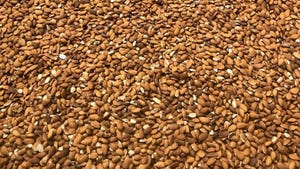
It seemed to have happened just before, during or after they moved bees into almond pollination in California. A lot of colonies were empty and had to be transported back to the beekeepers’ homes after almond pollination.

“These bees are being impacted by something that’s mysterious, but consistent. We just have to figure out the (offending) combination of viruses, microsporidians, chemicals and pollutants.”

Are crops already being impacted by the dearth of bees or have beekeepers been able to keep up so far?

“For the most part, they’ve been able to keep up. The good thing about honeybees is keepers can use management techniques — utilizing honeybee biology — to split healthy colonies into two. That’s one way to recover some losses. Artificial feed and other things can also build up colonies.

“If cattle or poultry (perish), it takes a long time to replace the animal and production. Honey bees are a bit different and that’s a good thing.”

But the ability to recover quickly can disguise deeper problems.

“People sometimes assume beekeepers are crying wolf about losses while there are just enough honey bees to get by. But that’s because keepers are doing what they must to survive by splitting colonies and using other management techniques.”

Asked about a rumored push to bring Mexican bees into the United States to pollinate crops, Hayes confirms such a possibility. “One of the scenarios being considered involves almond pollination. Because of increased almond acreage due to prices, beekeepers are being paid a premium to bring in their colonies. The almond industry absolutely requires honeybees to carry pollen from point A to point B.”

In the event U.S. bee numbers come up short, “Mexico — being involved in NAFTA and GATT — could petition the U.S. to allow its honey bees and keepers across the border. My guess is because of the scope and range and how lucrative almonds are, that could certainly happen.”

U.S. almond producers won’t be denied the opportunity to produce a crop. However, that could deepen U.S. beekeeper problems.

By allowing in Mexican bees, “the Africanized bee issue would gain additional concern. But it isn’t just that. There could be more pests, predators and other concerns — things that aren’t in the United States now.

“If anything like that happens, it would further weaken and, possibly decimate, the U.S. beekeeping industry.”

On the other hand, points out Hayes, such worries are all predicated on the idea “that people care where their food comes from. I think USDA already projects that some 40 percent of our vegetables will be imported by 2015, or thereabouts. And the prediction is the U.S. will be a net food importer in 50 years. If people don’t care about that, they probably won’t care about U.S. bee health either.”

Hayes stresses that the public needs to understand that commercial beekeeping — where hundreds, thousands, or even tens of thousands of colonies are tended — is an enterprise as agricultural as raising livestock or row crops. Too often, commercial beekeeping is seen as a “bucolic activity in the backyard.”

That is a false perception. Beekeeping is hard work, not a weekend hobby.

Currently, so many products are being systemically applied to U.S. crops “that we’re pushing honey bees very hard. As a result of all the things we’ve mentioned — as well as factors we haven’t yet considered — the bees have reached a tipping point. With CCD, it appears something finally pushed them over. The bees said ‘We can’t keep this up.’ And that’s why we’re seeing these dramatic losses.”

Meanwhile, aggressive Africanized bees are moving through the lower half of the country. “They’re now in areas of Louisiana, Arkansas and Oklahoma. They’ll probably be crossing the Mississippi River in the next year, or so.

“Depending on who you believe, these bees have been responsible for three to 11 deaths in Texas. In Florida, we had the first human fatality due to them in April.”

Hayes is keen to separate the honey bees from their “killer” cousins. “We don’t want people thinking bees in the white boxes are part of the problem when they’re actually part of the solution.”

Asked to prognosticate on honey bee health, Hayes doesn’t see a dramatic improvement anytime soon. “But it could get worse if we have another invasive pest, virus or disease added to the current list.

“It’s interesting that honey prices are on the rise a little. Some keepers on the East Coast are saying if honey prices are up, there is less reason to travel west for almond pollination.”

It costs about $9,000 one-way to drive a loaded semi from Florida to California. If honey prices stay up, beekeepers “can save that transportation cost and stay afloat and keep their bees from being so stressed. That, of course, would take pollinators away from a growing almond crop. And that’s another reasons why Mexican bees could be an option.”

email: dbennett@farmpress.com

Get Copyright ClearanceWant to use this article? Click here for options!
© 2009 Penton Media, Inc.


Latest Jobs

resources

events icon events

product info icon tradeshows

tradeshow icon digests

research icon photos

Continuing Education

Accredited for California, Arizona and CCA hours:


(New Course)
Biopesticides -- Effective Use in Pest Management Programs

Biopesticides are increasingly being recommended as components of Integrated Pest Management (IPM) programs in the production of non-organic high-value specialty crops such as fruit, nut, vegetable, vine, ornamental and turf. This online, accredited course, sponsored by Marrone Bio Innovations, details some of the 245 registered biopesticide active ingredients used in a wide array pest management products.

Accredited in California and Arizona:


(New Course)
Agronomic Principles and Efficient Chemigation and Fertigation Using Center Pivot/Linear Sprinkler Systems

This online CE course details sound mechanical irrigation design and management practices to allow efficient chemigation and fertigation. It is accredited for Certified Crop Adviser CE units and is approved for credit hours in California and Arizona.


(New Course)
Pome, Stone Fruit Pest Management Using New Mode of Action Chemistry

New chemistry Rynaxypyr has proven effective against a wide range of economically important Lepidoptera species. Marketed under the trade name Altacor for use in grapes, pome and stone fruit, details on how to use this new chemistry are in this online Continuing Education course that is accredited in California, Pennsylvania, and New Jersey with CE applications pending in Oregon and Washington.


(New Course)
Vegetable Pest Management Using New Mode of Action

Integration of a new mode of action compound like Coragen into IPM and IRM programs to control Lepidoptera in leafy greens, fruiting vegetables, peppers and brassica or cole crops is always welcome. This online CE accredited details how best to use this new mode of action in intensive vegetable production. It is accredited in California, Arizona, Texas, Georgia, New Jersey and Pennsylvania. Application for credit is pending in Florida and Washington.

Accredited by Accredited in California and Washington:


(New Course)
Utilizing Calcium as Nutrient That Protects Against Disease Organisms

This online accredited course focus on Calcium, an important plant nutrient in fertilizer management for maximum, healthy plant development as well as disease and pest prevention. It is accredited in California, Georgia,: Pennsylvania and New Jersey. Credit pending in Florida, South Carolina, Tennessee, Virginia, West Virginia and Washington.


Accredited by California DPR and California and Arizona Certified Crop Advisers:


(New Course)

Nutrient Management in Key California Crops


This online CEU course offers a detailed look at the nutrient management in key California crops. It is sponsored online by Western Plant Health Association and funded by a grant from the California Department of Food and Agriculture Fertilizer Research and Education Program (FREP). It is accredited for one (1)-hour of credit by the California Department of Pesticide Regulation for California Pest Control Advisers (PCA), Private Applicators, Qualified Applicators and Aerial Applicators. The course is also accredited for 3 units in Nutrient Management (NM) for California and Arizona Certified Crop Advisers (CCAs).

Accredited in California, Arizona, Idaho, Oregon and Washington and for Certified Crop Advisers:


(New Course)
Organic/Sustainable Agricultural Production in the West

Organic/sustainable agriculture is expanding rapidly in the U.S. with an average annual increase of 20% during the last 15 years. This course covers a wide range of pests and organic control strategies. It is accredited for up to 4 continuing education hours for PCAs and Applicator Licensees in California, Arizona, Idaho, Oregon and Washington. It is also approved for Certified Crop Adviser credit.


ACCREDITED IN CALIFORNIA ONLY:


Almond Pest Management

Get the latest info on almond insect pest management and earn 2 hrs. CE DPR and CCA credit in California.

California Groundwater Protection Regulations

Earn 2 hrs. in California laws and regs CE and learn how to protect California groundwater supplies.


Disease Management in California Almonds

Managing diseases in California almond production is a year-long process. This course provides the latest information on controlling these diseases with management practices and fungicides. The course is approved for 2 CEUs by DPR for PCAs and all applicator categories and California CCAs.

Powdery Mildew Control in California Grapevines

Learn about the No. 1 grape disease in California; earn 2 California CE hours.

ACCREDITED IN CALIFORNIA AND ARIZONA:


The Role of Copper in Disease Control

Copper has long been a key tool in disease control in a many crops. This 2-CEU course accredited California PCAs and all DPR applicator categories and Arizona applicators details how best to use copper to maximize its potential.

Insecticide Resistance Management in Agronomic and Row Crops

A 3-hr. CE approved for California and Arizona licensees and CCAs in both states.

Agronomic Weed Resistance Management in Row Crops, Trees Nuts and Vines

Weeds Resistance Management is approved for 3 hours of CE credit for all California and Arizona licensees and Certified Crop Advisers.

Lepidopterous Pest Management/ Pesticide Safety

This course is approved for 2 hours in Arizona and California (1 hr. of laws/regs; 1 hour Other) and for CCAs.

ACCREDITED IN CALIFORNIA, ARIZONA, OREGON, AND WASHINGTON:

Managing Spray Drift to Minimize Problems

This online CEU on managing spray drift to minimize problems is accredited for 2-hours in California (Laws and Regs); Arizona, Oregon and Washington.

Back to Top

Browse Print Issues

Additional Resources

subscribe to Farm Press Daily Southeast Farm Press Southwest Farm Press Delta Farm Press