Information available on Asian citrus psyllid discovered in Tijuana

Jul 3, 2008 12:28 PM

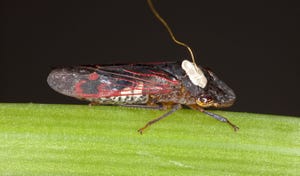
Efforts have been ramped up on the California-Mexico border to keep out a citrus pest known as the Asian citrus psyllid. The insect was trapped in Tijuana, less than two miles from the California border.

The psyllid can carry a bacterial disease called citrus greening, which renders the fruit bitter tasting and can kill citrus trees. Neither the disease nor the insect has been found in California.

Extensive surveys of citrus in California are being conducted by the California Department of Food and Agriculture near the border, and so far the pest has not been found on the California side.

The pest is originally from Asia. Previously, this pest had been known to be established in central Mexico, the Caribbean islands, and throughout Florida since its introduction there in 1998. More recent psyllid infestations include Texas since 2001, Hawaii in 2007 and coastal Louisiana in May 2008.

The psyllid is an efficient carrier of the bacterium that causes the disease called Huanglongbing (HLB), or citrus greening because the fruit does not color properly. Symptoms of HLB include yellow shoots and mottling and yellowing of leaves due to lack of the green pigment chlorophyll. Infected trees are stunted, sparsely foliated and may bloom off-season. In addition, there is twig dieback, leaf and fruit drop, production of small, lopsided, hard fruit, and small, dark aborted seeds. There is no cure for HLB, and diseased trees must be removed as quickly as possible to prevent spread of the disease.

In 2006, entomologist Beth Grafton-Cardwell of UC Riverside organized a team of researchers from the University of Florida and CDFA to develop a brochure, Web site and slide presentation to educate California citrus growers, the ornamental nursery industry and regulatory agency staff about Asian citrus psyllid and greening disease. The UC Exotic/Invasive Pests and Diseases Research Program funded the project.

"The Asian citrus psyllid was first discovered in Florida in 1998 and in three years, the psyllid was found statewide," Grafton-Cardwell said. "The psyllid infests certain ornamentals such as orange jasmine (Murray paniculata) and in Florida was spread by distribution of those plants by the big-box stores. This aspect is often overlooked by personnel only monitoring citrus and not closely related ornamentals. Also, fruit and plants that are trucked or flown into California from Mexico, Texas, Louisiana, Florida and Hawaii could carry the insect."

The HLB disease was found in 2005 in Florida and is spreading throughout the state. HLB is transmitted by the psyllid, by grafting infected plant material, and possibly by citrus seed. The disease could arrive in infected citrus trees, infected budwood or infected psyllids. The best prevention for the disease is to use only certified budwood in commercial and homeowner plantings, and for people to follow quarantine rules and not import citrus illegally.

CDFA and the Citrus Research Board have an HLB Task Force that has developed an action plan to respond to this pest and disease situation. If Asian citrus psyllid or HLB were to be found in California, an eradication program would go into effect.

For more information, visit the UC citrus entomology Web site at http://citrusent.uckac.edu

Get Copyright ClearanceWant to use this article? Click here for options!
© 2008 Penton Media, Inc.


Latest Jobs

resources

events icon events

product info icon tradeshows

tradeshow icon digests

research icon photos

Continuing Education

Accredited by California DPR and California and Arizona Certified Crop Advisers:


(New Course)

Nutrient Management in Key California Crops


This online CEU course offers a detailed look at the nutrient management in key California crops. It is sponsored online by Western Plant Health Association and funded by a grant from the California Department of Food and Agriculture Fertilizer Research and Protection Program (FREP). It is accredited for one (1)-hour of credit by the California Department of Pesticide Regulation for California Pest Control Advisers (PCA), Private Applicators, Qualified Applicators and Aerial Applicators. The course is also accredited for 3 units in Nutrient Management (NM) for California and Arizona Certified Crop Advisers (CCAs).

Accredited in California, Arizona, Idaho, Oregon and Washington and for Certified Crop Advisers:


(New Course)
Organic/Sustainable Agricultural Production in the West

Organic/sustainable agriculture is expanding rapidly in the U.S. with an average annual increase of 20% during the last 15 years. This course covers a wide range of pests and organic control strategies. It is accredited for up to 4 continuing education hours for PCAs and Applicator Licensees in California, Arizona, Idaho, Oregon and Washington. It is also approved for Certified Crop Adviser credit.

ACCREDITED IN OREGON AND WASHINGTON:


(New Course)
Managing Spray Drift to Minimize Problems

This online spray drift management course has been certified by the Oregon Department of Agriculture and the Washington Department of Agriculture for 2 hours of credit for licensed Applicators and Consultants in Oregon and Washington.

ACCREDITED IN CALIFORNIA ONLY:


Almond Pest Management

Get the latest info on almond insect pest management and earn 2 hrs. CE DPR and CCA credit in California.

California Groundwater Protection Regulations

Earn 2 hrs. in California laws and regs CE and learn how to protect California groundwater supplies.


Disease Management in California Almonds

Managing diseases in California almond production is a year-long process. This course provides the latest information on controlling these diseases with management practices and fungicides. The course is approved for 2 CEUs by DPR for PCAs and all applicator categories and California CCAs.

Powdery Mildew Control in California Grapevines

Learn about the No. 1 grape disease in California; earn 2 California CE hours.

ACCREDITED IN CALIFORNIA AND ARIZONA:


The Role of Copper in Disease Control

Copper has long been a key tool in disease control in a many crops. This 2-CEU course accredited California PCAs and all DPR applicator categories and Arizona applicators details how best to use copper to maximize its potential.

Insecticide Resistance Management in Agronomic and Row Crops

A 3-hr. CE approved for California and Arizona licensees and CCAs in both states.

Agronomic Weed Resistance Management in Row Crops, Trees Nuts and Vines

Weeds Resistance Management is approved for 3 hours of CE credit for all California and Arizona licensees and Certified Crop Advisers.

Lepidopterous Pest Management/ Pesticide Safety

This course is approved for 2 hours in Arizona and California (1 hr. of laws/regs; 1 hour Other) and for CCAs.

Managing Spray Drift to Minimize Problems

2-hrs laws and regs for California licensees; 2 hours in Arizona and for CCAs.

Back to Top

Browse Print Issues

Additional Resources

subscribe to Farm Press Daily Southeast Farm Press Southwest Farm Press Delta Farm Press