Dangerous citrus pest discovered in San Diego County

Sep 4, 2008 10:48 AM

Asian Citrus Psyllid threatens California Citrus; Homeowners encouraged to inspect for pest

The Labor Day weekend discovery of several populations of the dangerous Asian citrus psyllid in San Diego County – 11 miles north of the U.S.-Mexico border near Sweetwater Reservoir – is causing further alarm within California’s citrus industry.

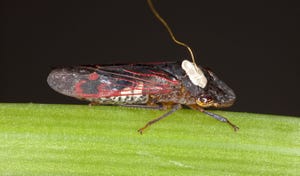
The Asian citrus psyllid – an aphid-like insect that feeds on the leaves of citrus trees and other citrus-like plants – can be a carrier of the fatal citrus tree disease, Huanglongbing, also known as HLB and citrus greening disease. The pest and the disease have already caused devastation in Asia, India, parts of the Middle East, and South and Central America. The pest and the disease have been found domestically in Hawaii, Texas, Louisiana and Florida. In Florida, the psyllid and HLB are ravaging the citrus industry, destroying acres of trees and putting the state’s $9.3 billion citrus industry at risk.

“This has the potential to be the death sentence for citrus trees in California,” said Ted Batkin, president of the California Citrus Research Board, which is augmenting state and federal regulators’ survey teams and laboratory analysis capabilities. “The mere presence of the psyllid is a sign of danger to the state’s citrus industry.”

Huanglongbing, or citrus greening disease, is a bacterial plant disease that – while not harmful to human health – destroys production, appearance and value of citrus trees, and the taste of their fruit and juice. Once a tree is infected with the disease, there is no cure and the tree will eventually die.

Samples of the psyllids found in San Diego by the USDA and California Department of Food and Agriculture are undergoing laboratory tests to determine whether the invasive pests carry the citrus greening disease.

The recent discovery comes on the heels of finding the dangerous Asian citrus psyllid earlier this summer just four blocks south of the San Diego-Tijuana border. Immediately following that find, the California Citrus Research Board and representatives from the USDA, California Department of Food and Agriculture, the University of California and the San Diego County Agricultural Commissioner’s office met with citrus growers and other citrus industry leaders to discuss the discovery and the threat it poses, as well as the industry and regulators’ plan of action. The Citrus Research Board is planning a briefing in Coachella, Calif., Sept. 4 and another meeting Sept. 25 in San Diego. In addition to the series of grower and industry meetings, the Citrus Research Board is also urging consumers to visually inspect their citrus plants for the Asian citrus psyllid. The board developed a consumer-oriented Web site – CaliforniaCitrusThreat.org – that reminds consumers to inspect for the psyllid monthly or whenever watering, spraying, pruning or tending trees and especially during times of active growth. It also offers photos and tips for visual inspection for the pest.

“It wasn’t a matter of if the psyllid would jump the border from Mexico but when,” said Batkin, who notes that California produces 26 percent of the nation’s citrus, following only Florida in production. “That time has come, and we – industry, consumers, growers and regulators alike – must be vigilant in protecting the future of California’s citrus trees.”

Visit CaliforniaCitrusThreat.org for tips on how to identify the Asian citrus psyllid and to find your local Agricultural Commissioner’s office. Alternatively, consumers can contact the California Department of Food and Agriculture hotline at 800/491-1899.

Get Copyright ClearanceWant to use this article? Click here for options!
© 2008 Penton Media, Inc.


Latest Jobs

resources

events icon events

product info icon tradeshows

tradeshow icon digests

research icon photos

Continuing Education

Accredited by California DPR and California and Arizona Certified Crop Advisers:


(New Course)

Nutrient Management in Key California Crops


This online CEU course offers a detailed look at the nutrient management in key California crops. It is sponsored online by Western Plant Health Association and funded by a grant from the California Department of Food and Agriculture Fertilizer Research and Protection Program (FREP). It is accredited for one (1)-hour of credit by the California Department of Pesticide Regulation for California Pest Control Advisers (PCA), Private Applicators, Qualified Applicators and Aerial Applicators. The course is also accredited for 3 units in Nutrient Management (NM) for California and Arizona Certified Crop Advisers (CCAs).

Accredited in California, Arizona, Idaho, Oregon and Washington and for Certified Crop Advisers:


(New Course)
Organic/Sustainable Agricultural Production in the West

Organic/sustainable agriculture is expanding rapidly in the U.S. with an average annual increase of 20% during the last 15 years. This course covers a wide range of pests and organic control strategies. It is accredited for up to 4 continuing education hours for PCAs and Applicator Licensees in California, Arizona, Idaho, Oregon and Washington. It is also approved for Certified Crop Adviser credit.

ACCREDITED IN OREGON AND WASHINGTON:


(New Course)
Managing Spray Drift to Minimize Problems

This online spray drift management course has been certified by the Oregon Department of Agriculture and the Washington Department of Agriculture for 2 hours of credit for licensed Applicators and Consultants in Oregon and Washington.

ACCREDITED IN CALIFORNIA ONLY:


Almond Pest Management

Get the latest info on almond insect pest management and earn 2 hrs. CE DPR and CCA credit in California.

California Groundwater Protection Regulations

Earn 2 hrs. in California laws and regs CE and learn how to protect California groundwater supplies.


Disease Management in California Almonds

Managing diseases in California almond production is a year-long process. This course provides the latest information on controlling these diseases with management practices and fungicides. The course is approved for 2 CEUs by DPR for PCAs and all applicator categories and California CCAs.

Powdery Mildew Control in California Grapevines

Learn about the No. 1 grape disease in California; earn 2 California CE hours.

ACCREDITED IN CALIFORNIA AND ARIZONA:


The Role of Copper in Disease Control

Copper has long been a key tool in disease control in a many crops. This 2-CEU course accredited California PCAs and all DPR applicator categories and Arizona applicators details how best to use copper to maximize its potential.

Insecticide Resistance Management in Agronomic and Row Crops

A 3-hr. CE approved for California and Arizona licensees and CCAs in both states.

Agronomic Weed Resistance Management in Row Crops, Trees Nuts and Vines

Weeds Resistance Management is approved for 3 hours of CE credit for all California and Arizona licensees and Certified Crop Advisers.

Lepidopterous Pest Management/ Pesticide Safety

This course is approved for 2 hours in Arizona and California (1 hr. of laws/regs; 1 hour Other) and for CCAs.

Managing Spray Drift to Minimize Problems

2-hrs laws and regs for California licensees; 2 hours in Arizona and for CCAs.

Back to Top

Browse Print Issues

Additional Resources

subscribe to Farm Press Daily Southeast Farm Press Southwest Farm Press Delta Farm Press