Asian citrus psyllids detected in Imperial County

Oct 20, 2008 10:33 AM

The California Department of Food and Agriculture (CDFA) is announcing the detection of Asian citrus psyllids in Imperial County.

The insects have been found at several locations: at a residence in the community of Ocotillo, at a residence west of the community of Seeley, and at a citrus orchard due south of Seeley along the international border with Mexico.

A single detection of this pest triggers a quarantine, so the detection of multiple psyllids has set that process in motion. In the interim, CDFA will restrict movement of host plants at wholesale and retail nurseries within five miles of the find sites.

Additionally, CDFA is preparing to treat the two residences with Tempo, a product used for household pest control, both indoors and outdoors, for the control of common pests such as ants, cockroaches, flies, and fleas; and imidacloprid, a soil drench that will protect infested plants over time. At the citrus orchard, there are ongoing discussions between the grower and the Imperial County Department of Agriculture to evaluate treatment options.

“These latest detections reinforce that Asian citrus psyllid is a dangerous pest of citrus,” said CDFA Secretary A.G. Kawamura. “We are moving quickly to try to limit the risk and protect our state’s citrus industry.”

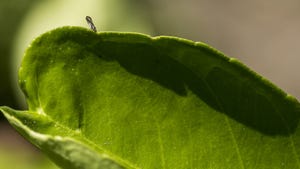
The Asian citrus psyllid is of grave concern because it can carry the disease huanglongbing (HLB). All citrus and closely related species are susceptible hosts for both the insect and the disease. There is no cure once a tree becomes infected. The diseased tree will decline in health until it dies.

The state of Florida first detected the pest in 1998 and the disease in 2005, and the two have now been detected in all 30 citrus producing counties in that state. The pest and the disease are also present in Louisiana. The states of Texas, Georgia, Mississippi, South Carolina and Alabama have detected the pest but not the disease. In California, psyllids have also been detected in San Diego County.

There is no indication that the psyllids detected in California to date carried HLB. A population of the pest just south of the international border, in Tijuana, is not carrying the disease.

Get Copyright ClearanceWant to use this article? Click here for options!
© 2010 Penton Media, Inc.


Latest Jobs

resources

events icon events

product info icon tradeshows

tradeshow icon digests

research icon photos

Continuing Education

*View the entire list of courses offered.


Accredited for California, Arizona and CCA hours:


New Course
Using Organic Acids to Improve Plant Production

Healthy plants have a greater ability to resist soil pathogens and insect damage. This course details how organic acids can enhance plant health. It is accredited for 1 unit in nutrients for CCAs and .5 hours for Arizona licensees. Credit is pending at California Department of Pesticide Regulation

New Course
The ABCs of MRLs

American agriculture exports 20 to 30 percent of its production annually. For specific commodities, the percentage is much higher. When recommending and applying pest management products for crops, license Pest Control Advisers (PCAs)  and applicators and farmers must be aware of which products applied are in compliance with Maximum Residue Limits (MRLs) established by foreign customers. This CE course details the MRL issue and why compliance is critical to marketing into world trade.

Back to Top

Browse Print Issues

Additional Resources

subscribe to Farm Press Daily Southeast Farm Press Southwest Farm Press Delta Farm Press