MegaBee nourishes beleaguered honey bees

Feb 15, 2008 3:13 PM

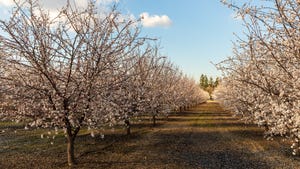
Bees busily ferrying pollen from one cream-white almond blossom to another in California orchards this winter might get some of their zip from a new food called MegaBee: The Tucson Diet.

Agricultural Research Service (ARS) entomologist Gloria DeGrandi-Hoffman created the research and development agreement that led to this new, convenient source of proteins, vitamins and minerals that bees need for good health. Bees can eat MegaBee as a meal or snack when days are too cold for venturing outside of their warm hive, for example, or when flowers — bearing pollen and nectar, the staple foods for adult bees — aren't yet in bloom.

Better nutrition might be a key to reversing the decline of honey bees, Apis mellifera, in the United States. A mostly mysterious colony collapse disorder is blamed for losses of once-thriving colonies, as are problems caused by mites, beetles, Africanized honey bees, diseases and pesticides.

DeGrandi-Hoffman, at the ARS Carl Hayden Bee Research Center in Tucson, Ariz., sought the expertise of Gordon I. Wardell, entomologist and owner of S.A.F.E. R & D, LLC, in Tucson, to develop a new, nutritious food for bees. The resulting MegaBee has now been on the market for about six months. It's manufactured by Castle Dome Solutions, LLC, in Yuma, Ariz., and sold by Dadant & Sons, Inc., of Hamilton, Ill., which supplies honey producers, beekeepers and candlemakers.

Tests conducted in California by Wardell and ARS scientists in the winter of 2007 showed that bees ate MegaBee at about the same rate as natural pollen. But MegaBee-fed bees helped produce more brood, or young, than did their pollen-fed hivemates.

Ongoing research, in orchards and in laboratories at the Carl Hayden center, should reveal even more about bees' year-round nutrition needs.

Nutrition investigations, a special emphasis at the Carl Hayden laboratory, are part of a new, nationwide program of ARS-led scientific research on honey bee health.

Get Copyright ClearanceWant to use this article? Click here for options!
© 2009 Penton Media, Inc.


Latest Jobs

resources

events icon events

product info icon tradeshows

tradeshow icon digests

research icon photos

Continuing Education


*View the entire list of courses offered.


Accredited for California, Arizona and CCA hours:


New Course
Using Organic Acids to Improve Plant Production

Healthy plants have a greater ability to resist soil pathogens and insect damage. This course details how organic acids can enhance plant health. It is accredited for 1 unit in nutrients for CCAs and .5 hours for Arizona licensees. Credit is pending at California Department of Pesticide Regulation


New Course

The ABCs of MRLs

American agriculture exports 20 to 30 percent of its production annually. For specific commodities, the percentage is much higher. When recommending and applying pest management products for crops, license Pest Control Advisers (PCAs)  and applicators and farmers must be aware of which products applied are in compliance with Maximum Residue Limits (MRLs) established by foreign customers. This CE course details the MRL issue and why compliance is critical to marketing into world trade.

Back to Top

Browse Print Issues

Additional Resources

subscribe to Farm Press Daily Southeast Farm Press Southwest Farm Press Delta Farm Press