CAST releases special publication on gene flow in U.S. alfalfa

Sep 19, 2008 10:20 AM

U.S. alfalfa growers produce for various markets. Access to new technologies — including genetically engineered (GE) herbicide, disease, and drought resistance and low-fiber crops — enables growers to address changing global market situations and remain competitive.

At the same time, certain markets are sensitive to GE crops and the potential for gene flow, the exchange of genes from one population to another.

CAST is pleased to release a new Special Publication — Gene Flow in Alfalfa: Biology, Mitigation, and Potential Impact on Production — to provide an overview of agronomic practices and biology to be considered in developing strategies that allow producers of conventional, organic, and biotechnology-derived alfalfa to coexist in the marketplace.

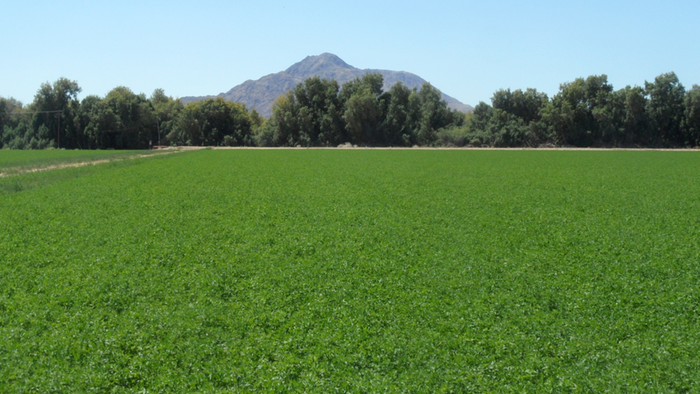
Alfalfa is an introduced, cultivated species in North America and the fourth largest U.S. crop by land area.

Although the majority of the domestic market is not sensitive to GE alfalfa, portions of the domestic hay and seed markets and much of the export hay and seed markets are sensitive to adventitious presence — the unintended low level occurrence of seed or plant materials in a crop or crop products. As in all biological systems, and especially in field-scale agriculture, 100-percent purity of any constituent is very difficult to achieve and may not be possible economically.

"Understanding potential gene flow in alfalfa hay and seed production is an important first step in developing management strategies designed to mitigate gene flow," says Task Force Chair Allen Van Deynze, Seed Biotechnology Center, University of California-Davis. "Sufficient scientific data are available to design these strategies and, as outlined in this document, those strategies can be successful in managing gene flow from GE to conventional alfalfa hay and seed production."

"This paper was written and reviewed by a 12-member task force of scientific experts," says CAST Executive Vice President John M. Bonner. "CAST is pleased to present this Special Publication as a timely overview of current developments and a preview of future applications in the study of gene flow in production crops."

The full text of Gene Flow in Alfalfa: Biology, Mitigation, and Potential Impact on Production (Special Publication No. 28) is available in hardcopy ($18.00, plus shipping) and electronically ($10.00), along with many of CAST's other scientific publications, by contacting the CAST Office at 515-292-2125. CAST is an international consortium of 37 scientific and professional societies. It assembles, interprets, and communicates credible science-based information regionally, nationally, and internationally to legislators, regulators, policymakers, the media, the private sector, and the public.

Get Copyright ClearanceWant to use this article? Click here for options!
© 2009 Penton Media, Inc.


Latest Jobs

resources

events icon events

product info icon tradeshows

tradeshow icon digests

research icon photos

Continuing Education


*View the entire list of courses offered.


Accredited for California, Arizona and CCA hours:


New Course
Using Organic Acids to Improve Plant Production

Healthy plants have a greater ability to resist soil pathogens and insect damage. This course details how organic acids can enhance plant health. It is accredited for 1 unit in nutrients for CCAs and .5 hours for Arizona licensees. Credit is pending at California Department of Pesticide Regulation


New Course

The ABCs of MRLs

American agriculture exports 20 to 30 percent of its production annually. For specific commodities, the percentage is much higher. When recommending and applying pest management products for crops, license Pest Control Advisers (PCAs)  and applicators and farmers must be aware of which products applied are in compliance with Maximum Residue Limits (MRLs) established by foreign customers. This CE course details the MRL issue and why compliance is critical to marketing into world trade.

Back to Top

Browse Print Issues

Additional Resources

subscribe to Farm Press Daily Southeast Farm Press Southwest Farm Press Delta Farm Press