California crop weather report

Dec 10, 2008 10:59 AM

The following is the latest California crop weather update from the National Agricultural Statistics Service’s Sacramento office released on Dec. 8, 2008.

At the start of the week, a high pressure ridge lay over California. This, combined with a light offshore flow at the surface, resulted in unusually warm temperatures in southern California, where some locations reported high temperatures in the 90s.

It was not as warm in Northern California, where cool air trapped under an inversion led to widespread fog in the early morning hours. At the start of the week, this fog was light and burned off quickly, allowing temperatures to warm slightly above normal levels.

As the week progressed, though, the fog grew denser and more persistent. In some areas of the San Joaquin and southern Sacramento Valleys, it would not burn off at all, resulting in very cool daytime temperatures.

By the end of the week, a low pressure trough moved through Southern California, bringing scattered showers to that part of the state. This system had little effect on Northern California, where widespread fog and low clouds persisted.

Field crops

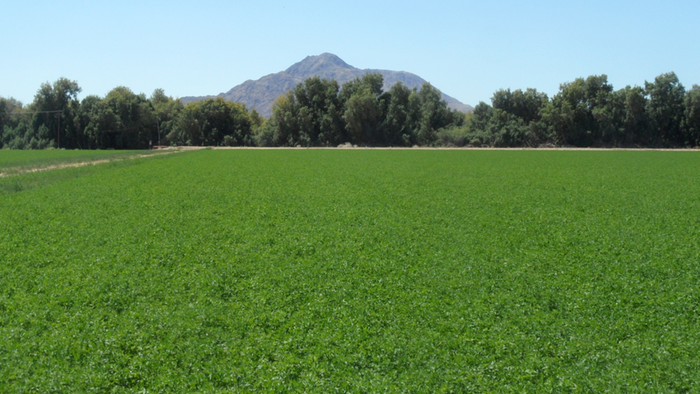
Cutting, windrowing, raking, and baling for alfalfa hay was complete. New alfalfa fields continued to be planted. Cotton defoliation and harvest activities were winding down. Sudan hay and sorghum harvests were essentially complete. Harvest of corn for silage was complete in many counties. Rice growers continued to reshape berms and level paddies.

Fruit crops

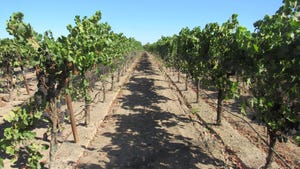
Grape growers continued to prune, irrigate, cultivate, and remove old vineyards. Limited volumes of table grapes were being harvested.

Pomegranate harvest ended in Fresno County. Post-harvest activities such as pruning and irrigation were underway in stone-fruit orchards. A few persimmons remained to be picked and kiwifruit season was wrapping up. Jujubes were still being picked.

Fall strawberries were being sold and new blueberry bushes were being planted. Raspberry nursery stock harvest had begun.

Navel oranges were harvested but picking was slow in some areas due to moist weather. Growers were still waiting to make gains on color. Thrips were being monitored. Lemons, pummelos and mandarins were also being harvested. Olives were still being picked.

Nut crops

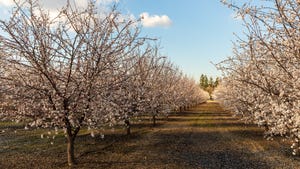
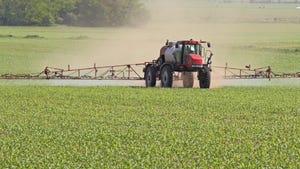
Almond and walnut pruning remained underway. Weed spraying was winding down. Some pre-plant fumigation was underway for new nut orchards in Merced County.

Vegetable crops

Warm temperatures encouraged significant growth of broccoli, cauliflower, and lettuce. However, as temperatures dropped in some areas, winter vegetables began to flourish.

The radicchio harvest continued. Fresh onion harvest was halfway finished and exhibited a lower-than-expected yield, but spinach showed strong potential. Carrots, cauliflower, and fall broccoli also continued their harvests.

Lemongrass fields were covered and groundwork continued as fields were irrigated, weeded, fertilized, and treated to control pests.

Get Copyright ClearanceWant to use this article? Click here for options!
© 2009 Penton Media, Inc.


Latest Jobs

resources

events icon events

product info icon tradeshows

tradeshow icon digests

research icon photos

Continuing Education

Accredited for California, Arizona and CCA hours:


(New Course)
Biopesticides -- Effective Use in Pest Management Programs

Biopesticides are increasingly being recommended as components of Integrated Pest Management (IPM) programs in the production of non-organic high-value specialty crops such as fruit, nut, vegetable, vine, ornamental and turf. This online, accredited course, sponsored by Marrone Bio Innovations, details some of the 245 registered biopesticide active ingredients used in a wide array pest management products.

Accredited in California and Arizona:


(New Course)
Agronomic Principles and Efficient Chemigation and Fertigation Using Center Pivot/Linear Sprinkler Systems

This online CE course details sound mechanical irrigation design and management practices to allow efficient chemigation and fertigation. It is accredited for Certified Crop Adviser CE units and is approved for credit hours in California and Arizona.


(New Course)
Pome, Stone Fruit Pest Management Using New Mode of Action Chemistry

New chemistry Rynaxypyr has proven effective against a wide range of economically important Lepidoptera species. Marketed under the trade name Altacor for use in grapes, pome and stone fruit, details on how to use this new chemistry are in this online Continuing Education course that is accredited in California, Pennsylvania, and New Jersey with CE applications pending in Oregon and Washington.


(New Course)
Vegetable Pest Management Using New Mode of Action

Integration of a new mode of action compound like Coragen into IPM and IRM programs to control Lepidoptera in leafy greens, fruiting vegetables, peppers and brassica or cole crops is always welcome. This online CE accredited details how best to use this new mode of action in intensive vegetable production. It is accredited in California, Arizona, Texas, Georgia, New Jersey and Pennsylvania. Application for credit is pending in Florida and Washington.

Accredited by Accredited in California and Washington:


(New Course)
Utilizing Calcium as Nutrient That Protects Against Disease Organisms

This online accredited course focus on Calcium, an important plant nutrient in fertilizer management for maximum, healthy plant development as well as disease and pest prevention. It is accredited in California, Georgia,: Pennsylvania and New Jersey. Credit pending in Florida, South Carolina, Tennessee, Virginia, West Virginia and Washington.


Accredited by California DPR and California and Arizona Certified Crop Advisers:


(New Course)

Nutrient Management in Key California Crops


This online CEU course offers a detailed look at the nutrient management in key California crops. It is sponsored online by Western Plant Health Association and funded by a grant from the California Department of Food and Agriculture Fertilizer Research and Education Program (FREP). It is accredited for one (1)-hour of credit by the California Department of Pesticide Regulation for California Pest Control Advisers (PCA), Private Applicators, Qualified Applicators and Aerial Applicators. The course is also accredited for 3 units in Nutrient Management (NM) for California and Arizona Certified Crop Advisers (CCAs).

Accredited in California, Arizona, Idaho, Oregon and Washington and for Certified Crop Advisers:


(New Course)
Organic/Sustainable Agricultural Production in the West

Organic/sustainable agriculture is expanding rapidly in the U.S. with an average annual increase of 20% during the last 15 years. This course covers a wide range of pests and organic control strategies. It is accredited for up to 4 continuing education hours for PCAs and Applicator Licensees in California, Arizona, Idaho, Oregon and Washington. It is also approved for Certified Crop Adviser credit.


ACCREDITED IN CALIFORNIA ONLY:


Almond Pest Management

Get the latest info on almond insect pest management and earn 2 hrs. CE DPR and CCA credit in California.

California Groundwater Protection Regulations

Earn 2 hrs. in California laws and regs CE and learn how to protect California groundwater supplies.


Disease Management in California Almonds

Managing diseases in California almond production is a year-long process. This course provides the latest information on controlling these diseases with management practices and fungicides. The course is approved for 2 CEUs by DPR for PCAs and all applicator categories and California CCAs.

Powdery Mildew Control in California Grapevines

Learn about the No. 1 grape disease in California; earn 2 California CE hours.

ACCREDITED IN CALIFORNIA AND ARIZONA:


The Role of Copper in Disease Control

Copper has long been a key tool in disease control in a many crops. This 2-CEU course accredited California PCAs and all DPR applicator categories and Arizona applicators details how best to use copper to maximize its potential.

Insecticide Resistance Management in Agronomic and Row Crops

A 3-hr. CE approved for California and Arizona licensees and CCAs in both states.

Agronomic Weed Resistance Management in Row Crops, Trees Nuts and Vines

Weeds Resistance Management is approved for 3 hours of CE credit for all California and Arizona licensees and Certified Crop Advisers.

Lepidopterous Pest Management/ Pesticide Safety

This course is approved for 2 hours in Arizona and California (1 hr. of laws/regs; 1 hour Other) and for CCAs.

ACCREDITED IN CALIFORNIA, ARIZONA, OREGON, AND WASHINGTON:

Managing Spray Drift to Minimize Problems

This online CEU on managing spray drift to minimize problems is accredited for 2-hours in California (Laws and Regs); Arizona, Oregon and Washington.

Back to Top

Browse Print Issues

Additional Resources

subscribe to Farm Press Daily Southeast Farm Press Southwest Farm Press Delta Farm Press