Agriculture rapidly moving toward acceptance of GM crops

Future of agriculture is not a return to the 17th century

What is in this article?:

  • Coexistence between conventional and organic growers ought to be possible, but it will take both sides to make it work.
  • Organic consumers and producers need to separate the physical from the cosmological. Quackery is quackery. Promulgating medieval nostrums about plant nutrition is constitutionally protected religious expression, but it is not science.
  • The United States can remain in the top tier of countries in carrying out responsible and useful GM crop research, including research into the risks presented by this new technology; or we can abdicate our place, and let other nations and individuals do as they please.

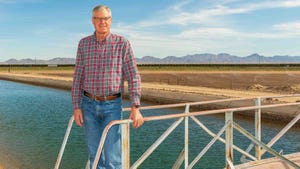
Philip Bowles, Bowles Farming, Los Banos, Calif.: "The future of agriculture is not a return to the 17th century. New technology will be required to feed the billions coming, and this progress cannot be stopped. The cat is long out of the bag."

Whatever growers decide to do should not interfere with the practices of neighboring growers, within reason.  Sometimes, incompatible practices cannot coexist, and one or the other must be heavily restricted. For instance, in many states production of weasels or ferrets is outlawed because of the risk to the poultry industry; the fishing industry as we speak is attempting to balance the needs of fish farmers and wild fish harvesters. Cotton can be grown as a semi-perennial crop, but the practice is prohibited (at least in California) in order to disrupt insect pests’ life cycles.

Coexistence between conventional and organic growers ought to be possible, but it will take both sides to make it work. On the conventional side, the pesticide use and reporting rules in California ought to be implemented nationwide. Our system allows everyone to know what material was applied, when, where, how, and why. On a more local level, simple neighborliness ought to suffice. For their part, the organic industry and its consumers need to separate myth from reality. There is nothing wrong with growing crops without the use of herbicides and pesticides. All home gardeners ought to follow these practices. As with fly fishing instead of gill-netting, it may be a little more trouble, but can be very rewarding and informative. Fly fishing will not feed the billions, however.

People who grow and consume organic produce are driven by concerns over the safety of their food, and the dangers they feel conventional agriculture presents to workers and the environment. While to many of the rest of us the risks seem negligible, the concerns themselves are certainly ones that any thoughtful human ought to share. Pesticides and herbicides are dangerous chemicals; we can discuss the science about whether and how they ought to be used. However, organic consumers and producers need to separate the physical from the cosmological. Quackery is quackery. Promulgating medieval nostrums about plant nutrition is constitutionally protected religious expression, but it is not science.  The hysteria over the perceived dangers from GMO crops is nearly as unsupportable. Bacteria (yes, even those found in organic cheese) and viruses have been happily exchanging DNA for eons. Creatures in nature such as Malacosteus niger are transgenic: this fish makes chlorophyll (probably from ancient genetic material borrowed from an algae) not for photosynthesis, but for vision in the red spectrum. Our own human genome contains the remains of ancient viral invaders; as we decode more genomes, and increase our understanding of infectious and inherited diseases, I suspect we will find that most, if not all, life forms contain genetic material not only from other species, but even from other orders, or possibly higher taxonomic ranks.

Discuss this article 3

Dear Mr. Bowles,

It is interesting to me that you yourself purchase organic products because they are often higher quality and have a greater selection. At the same time you are OK with supplying thousands of mothers children's belly's across the nation, with milk or beef products produced with feed which contains the residues of glyphosate.

Have you not read the research out of Europe and now out of the U. of Wisconsin delineating the harmful effects of glyphosate in our food?
Are you not aware of the increase in cancer rates, autism, obesity, and other diseases that common sense (not the Pharma industry) tells many of us comes as the result of not receiving proper nutrient densities from our food?
Or do you consume organic food because you know in your heart and you can feel in your belly, that it's probably more nutrient dense and good for your body?

Come on, Mr. Bowles, mothers world wide are demanding GMO free food now because they, like you, know it doesn't make sense to consume chemicals.

If the Imperial Valley Hay being exported to China isn't GMO seeded, don't you think the Chinese understand the same basic tenants above?

I agree organic growers are medieval and prehistoric in many of their practices.
The use of compost, for example, may build up carbon in the soil; but aren't there more efficient, technologically superior methods of returning manures and carbons back to the soil without cooking off all the good stuff?
The answer is yes.

In case you're still with me..
Perfect Blend Organics is a company who produces organic-based fertilizers whose nutrients are as readily available as the expensive, imported Russian and Chinese products we've used for generations on all our farms and ranches.
Without weed seeds or the harmful pathogens like E-Coli and Salmonella, and fifteen times more efficient in USDA trials on Sandy Ground than manure compost, Perfect Blend will help alfalfa growers in the following manner:

1. Minimal compaction on spreading
We've all seen a manure truck spread dusty, clumpy manure and compost, and then laser level and pack and roll the field, right?
Well, whatever aerobic bacteria that were in the soil, are now crushed and choked and depleted, after all the tire tread and roller and leveler abuse.
On top of that, they now have a high pH, tough to digest, massive clump of manure or compost put on top of them. That is, if their populations are even significantly existent.
And what nutrition is left after the elements cook the compost or manure day after hot Central Valley day?

But Mr. Bowles, don't take my word for it, and please, don't take my language as "religious expression or quackery", as recently I personally observed Dr. Jerry Hatfield, the Sr. Agronomist from Iowa's USDA Tilth Lab, explain, "Until we start treating our soil like a living, breathing organism, we will not see it enabling plants to respond to their full genetic expression." (emphasis mine)

You see, if you simply make one pass and broadcast apply 400 pounds of our 8-5-5 granule simultaneously with seed to a pre-planted alfalfa field, you will realize minimum compaction.

After wetting the dry material, the seed will have a starter fertilizer and the soil bacteria will now be able to feed actively on the same fertilizer; a pH neutralized feed source, thereby enabling and enhancing an increase in soil bacteria populations and there resulting acids (humic and fulvic acids), which essentially constitute the humus derived from healthy, living, soils.
These acids, only produced by living bacteria, and not bottled up and sold as "humates" or something similar mined up as leanordite, are the key ingredient for getting high TDS Hay. Hay that's not going to grade #2, left to sit in a barn in the Los Banos heat.
How is this possible?
One key among others is proteins.
In order to increase proteins in hay, we must increase the proteins in the soil.
Perfect Blend dry fertilizers are derived from layer chicken manure. The carbon in the manure is chelated to the metal ions in a full micro nutrient package, with high proteins coming from Alaskan Salmon.
The closed end, patented process, from feed-stock to finished product, results in minimal nutrient loss.
Again, please, don't limit my remarks to "quackery", although I've made some quack-tastic remarks in the past, you can ask my wife.

Dr. Hatfield recently made the following statement, and I quote:

“I wouldn’t confuse compost with Perfect Blend fertilizers, or any of the biotics. Because you’re talking about in composting, basically, an accelerated decomposition process and that’s about it. Whereas in the Biotics you’re really talking about a blended material that’s got, well, when you look at the analysis of Perfect Blend you’ve got nitrogen; you’ve got all the other minerals that’s really been built to match the requirements of the biological system within the soil.”

2. No weed seeds.
The problem with most amendments is that it is very expensive to destroy the weed seeds. Chances are that compost and manure that fits into the budget is going to have weed seeds.
Why?
Because you must turn a compost heap many times with the multi-million dollar thermophilic composting equipment in order to achieve sufficient heat units and dwell times to kill weed seeds and harmful pathogen spores.
In the process, most of the good nutrition is also cooked out of the manure heap every time it's turned as well; arguably adding to greenhouse gas issues.
This process, in the words of Perfect Blend co-founder John Marler, is "like taking a nice piece of steak and putting it in the oven and cooking it on 200 degrees for thirty days (emphasis mine). What you end up with is just a bunch of charcoal, really."
So, growers using compost aren't as green as they may think. They'd be better off growing a cover crop and lightly tilling or no-tilling in the residues, letting the ground lay fallow. That is, if they can afford to let their ground lay fallow.

This is neither "religious" garbage I'm spewing, as Dr. Hatfield has recently substantiated the successes of no-till farming on corn and other silage crops. He measures the CO2 given off the field with 120 foot towers with CO2 detectors setup every 10 or so feet up, from what I recall.
After the harvest, with corn stubble still standing, he detected negative or little CO2 readings. But once the grower gets bored and starts plowing early-winter, his CO2 meter alarms go off.
You see, all the carbon that was fixed into the soil out of the atmosphere as the crop grew, was now being released right out of the ground, as the ground was turned up.
Think of it? All that free carbon from the air, now lost!
I can see Al Gore foaming at the mouth.
It's no wonder the grower needs to add another 15-20 tons of manure compost (carbon) to get the crop any bump.
And think of the expense of diesel fuel, man hours, etc, of running the tractor?
And what happens when we till up weed seeds existing in the field, or the ones that were added from our "compost" or manure application?
It's all a vicious cycle, but we do it every day!

So let's consider an alternative amendment program;
One that doesn't require laying the field fallow, or cover cropping, or dusty, bulky amendments.
Simply top-dress Perfect Blend, without weed seeds, and increase the protein content of the soil so it translates to the Hay, and the dairy pays you more.
Nothing to fear, here, Mr. Bowles.

3. Use Perfect Blend as a stand alone fertilizer.
As a stand alone fertilizer, 1,500 pounds of Perfect Blend 8-5-5 recently grew a 215 bushel corn crop in heavier ground on USDA test plots in Iowa. The Iowa state average is 165 bushels.

With the cost of internationally imported fertilizers going through the roof on high fuel costs, at $500/ton MSRP landed to the farm in Los Banos, I'd venture to guess you can grow some pretty darn good hay with Perfect Blend 8-5-5 alone as well.

At 400 pounds of Perfect Blend 8-5-5 per cutting, and eight cuttings per year, your total annual fertility cost of a Perfect Blend stand alone program is much less likely to increase significantly year over year; as it is primarily indexed against the cost of manure feedstock and not overseas bulk fertilizer prices.
Or, maybe you play with application rates and apply less standard fertilizers and find the sweet spot?

Feel free to call the good folks at a dealer near you for product orders.

Ok, enough about our great fertilizer.

Mr. Bowles, you are right.
Technology is part of the answer in order for us to increase our production to meet the demand of consumption.
But with the tide running in favor of the mom's demanding chemical- free foods, shouldn't growers interested in the long term viability of their operations be pursuing technologies pursuant to the interests of the common good?
Won't failure to do so pit these growers against this growing market?

Have you noticed the amount of organic foods now being offered at Costco compared to only a few years ago?

So with many organic-based products and hundreds of experienced professionals now available to help you successfully make the transition to either organic or sustain-ably grown, why fight the tide?
This can all be done without spraying known harmful herbicides like Roundup onto the cereals and fodders for the milk our kids drink with their cereal each morning.
What might Baxter Black be joking about at this point?

Rather than spending the next ten years trying to prove to yourself and your neighbors that RR Hay is good for cows and kids, why not make life easier on everyone and adapt to technologies that are already proven AND safe?

I grew up spraying and spreading 2-4D, Roundup, Lorsban 4-E, Paraquat, Methyl-Bromide, and Urea and other fertilizers and chemicals, and I've personally witnessed and consumed foods grown superior in taste, shelf life, and nutrient density without all the synthetics. So this discussion is not "myth", or "religion", or "quackery", or "nostrums", or "expression", or "cosmology", but real-life application and observation, from someone who loves farming and food.

I obtained my Degree in Agribusiness from California Polytechnic University, and except for chasing cow girls late into the night on weekends and spitting tobacco juice in the direction of organic hippy kids, it was anything but a Yale Drama Degree.

Cal Poly taught us that we were to "learn by doing."
Dr. Jim Ahern, my Ag Policy 400 teacher told us that:
"Good policy is always policy that is supported by the masses."
In other words, the voters always win.
I guess this holds true except maybe in Vlademir Putin country, or in Dade County, Florida.

So as we are doing, what the heck are we learning?
Do we just spill the bottle into the tank, and if it quits working, start mixing different bottles and then see what happens?

Or maybe we should be focused on growing for, and not against, the very mouths who invariably consume the fodder and food we produce?

Mr. Bowles,

You're welcome to come by our booth and take a close shot at me at the Farm Show.

While you're swinging, please prove to me that GMO- grown fodder and food is not just good for you, but that it's good for me, and my children, and that it provides a lasting path for the future of agriculture.

I'm also curious to discover during our meeting, if "agriculture is rapidly moving toward the acceptance of GM crops", then is agriculture now setting price as well?

Justin Leavens
Southwest Regional Manager
Perfect Blend Organics
805-216-5260 direct

By Justin Leavens  on Jan 4, 2012

A senior level research professional with more than fifty years experience on the same subject has recently pointed out the following:

Alarm about indications of health impacts was expressed in the early 1990's by FDA scientists in suppressed memos obtained under the Freedom of Information Act. There is subsequent data suggesting health problems from eating GE food and fodder, not just caused by the unnatural traits, like Bt in plants or tolerance to glyphosate in the RR plants (and now presumably to 2,4-D), but also from the collateral damage done in the cell by how the foreign genes are inserted as demonstrated in Pusztai, et al, Digestion, 1990, and clearly defended in Ewen and Pusztai, Lancet, 1999. Your stomach does not need to hurt when you eat GE food for you or your offspring to be harmed. The precautionary principle is our guide. We need standard food safety testing. We need to understand about how the ecosystem is affected. In the end, how do GE traits "carry the day" for the plant and the consumer? It is absolutely not too late to still apply precaution, because every new crop and variety that is released with new ad hoc gene cassettes carrying unknown mutations and changes in the start and stop codons is another "cat out of the bag". We should stop now before we see the myriad impacts of a whole pipeline of cats coming out of the bag totally unregulated.

By Justin Leavens  on Jan 5, 2012

As demonstrated by the recent severe organic milk shortage, consumer demand is vastly increasing not only for organic food, but for GMO free food as well. It is absolutely wrong and unscientific to report that the benefits outweigh the risks of GMO crops...there happens to be NO proper or mandated extensive research done on these known risks! NO precautionary principle has been utilized here.. instead, unknowing taxpayers' money has been pouring in to undisclosed and unsafe research farms and laboratories with no objective oversight or attention to the ill effects of contamination and extremely little known negative dietary implications in animals and people. It is time to pull the plug on funding these absurd and expensive schemes for a science that consumers will not swallow. It is non-partisan..stop funding harmful GMO crop and food development- NO ONE WANTS to eat it- not even the writer of this "pro GE" article!

By Dorothy Dent (not verified)  on Jan 5, 2012
Post new comment
Sign In or register to use your Western Farm Press ID
(optional)

Continuing Education Courses
New Course
The 2,000-member Weed Science Society of America’s (WSSA) Herbicide Resistance Action...
New Course

The course details six of the primary diseases affecting citrus: Huanglongbing (Citrus...

Get the latest info on almond insect pest management.
Farmer-to-Farmer Used Equipment