Alfalfa trap crop and vacuuming help control lygus in strawberries

May 25, 2007 10:05 AM, By Cary Blake
Farm Press Editorial Staff

Several years of experiments have proven growers can reduce lygus numbers and yield money-saving results for California’s organic strawberries.

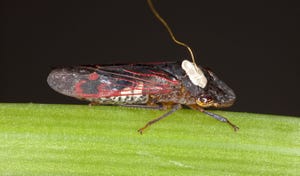
The process uses alfalfa as a trap crop to attract the western tarnished plant bug (Lygus Hesperus Knight Hemiptera: Miridae), then vacuuming the pests from alfalfa rows.

“I’ve been impressed by alfalfa as a trap crop for lygus,” says Sean Swezey, assistant director, Center for Agroecology and Sustainable Food Systems, University of California, Santa Cruz.

He, along with the Center’s Diego Nieton and Janey Bryer, conducted the experiments, mostly in organic strawberry fields.

“Over the three experiment years, twice-weekly summer vacuuming of alfalfa trap crops with a tractor-mounted device reduced lygus adults and nymphs by 72 percent and 90 percent respectively,” Swezey says.

He shared the experiment results with 50 of the world’s lygus experts at the Second International Lygus Symposium at Pacific Grove, Calif.

“Vacuuming alfalfa trap crops reduces an organic growers’ costs (tractor, fuel, and driver time) by 78 percent compared to whole field vacuuming practices,” Swezey notes.

Completely randomized design cropping experiments on an organic strawberry farm from 2002-2004 showed adult and nymph lygus were more abundant in alfalfa trap crops than in comparable edge strawberry row.

The summer vacuuming also significantly reduced damage associated with lygus in un-vacuumed organic strawberries (June and July, 2002; June, 2003; and June/July, 2004), compared with either an untreated control (2003) or the organic growers’ standard whole-field vacuuming treatment.

An economic analysis showed a positive return from vacuumed trap crops could be realized.

The Western Sustainable Agriculture Research and Education funded the field studies.

“The overall net return (savings) for three months of vacuumed alfalfa trap crop treatments in 2004 was calculated at $1,829 per hectare,” Swezey says.

California strawberry growers produce about 60 percent of the nation’s crop on 20,000 to 30,000 acres. About 7,000 acres of organic strawberries are grown in the Central Coast region.

In strawberry fields, two generations of nymphs — especially the second — cause the most damage, not migrating adults. Lygus cause cat-facing of fruit, rendering it unsaleable on the fresh market.

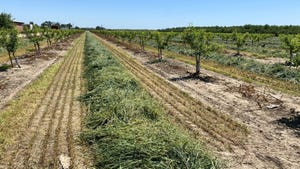
In the study, the alfalfa trap crop was planted in a row, eliminating a row of strawberries. Planted at the same time as strawberry crowns, the alfalfa was watered by the same drip system. Fertilization was also same. The trap crop received no special horticultural considerations.

Trap crop planting has been tried in waste places and roadside ditches and other abandoned spots, but hasn’t worked, Swezey notes. Agricultural machinery or employees, unaware of the crop placement, often destroy such plantings.

“We really believe alfalfa is a crop in the middle of the main crop,” he says. All experiments covered a tenth of a hectare plot.

He calls the latest field vacuum version that’s much wider than the original machines, the “Secret on the Central Coast.”

“The vacuums can generate 35 miles an hour of negative pressure through the hoods,” Swezey says. “The ability to vacuum alfalfa and the ability to suppress lygus adults and nymphs is quite high.”

Several trials were conducted on a check alfalfa row, where a vacuum was driven through without the fan engaged. A tractor without a fan will suppress lygus bugs, either flying to the side or flying away.

“They don’t like the disturbance. When you turn on the fan, the reduction is quite good between the pre-pass and the first pass. You get a 70 percent reduction.”

“We’re trying to use this technology as effectively as possible, but we don’t want to cover the world with vacuums either.”

The idea is to vacuum the trap crop but not the strawberries. The best lygus reductions occur out to row four from the trap row.

Whole field vacuuming without trap crops is the typical way that organic growers approach lygus suppression, Swezey says.

“They just use it as a wind machine and run it over all the strawberries. We believe this is counterproductive, if you can get significant reductions by concentrating the vacuuming in the trap crop row.”

Whole field vaccuming is 70 percent more expensive than just vacuuming the trap crop, he says. “It’s three times as much effort, cost, and expense, so we’re trying to run the vacuum strictly in the trap crop.”

Trap crops can cover 2 percent to 3 percent of the strawberry field.

The alfalfa should be mowed twice a year, but not lower than a foot high. A portion of the trap crop should be flowering at all times, Swezey says, which acts as a strong attraction for adult lygus.

The tractor should run at “stall speed,” or about 2 mph. The vacuum should run at 30 to 35 mph.

email: cblake@farmpress.com

Get Copyright ClearanceWant to use this article? Click here for options!
© 2008 Penton Media, Inc.


Latest Jobs

resources

events icon events

product info icon tradeshows

tradeshow icon digests

research icon photos

Continuing Education

Accredited by California DPR and California and Arizona Certified Crop Advisers:


(New Course)

Nutrient Management in Key California Crops


This online CEU course offers a detailed look at the nutrient management in key California crops. It is sponsored online by Western Plant Health Association and funded by a grant from the California Department of Food and Agriculture Fertilizer Research and Protection Program (FREP). It is accredited for one (1)-hour of credit by the California Department of Pesticide Regulation for California Pest Control Advisers (PCA), Private Applicators, Qualified Applicators and Aerial Applicators. The course is also accredited for 3 units in Nutrient Management (NM) for California and Arizona Certified Crop Advisers (CCAs).

Accredited in California, Arizona, Idaho, Oregon and Washington and for Certified Crop Advisers:


(New Course)
Organic/Sustainable Agricultural Production in the West

Organic/sustainable agriculture is expanding rapidly in the U.S. with an average annual increase of 20% during the last 15 years. This course covers a wide range of pests and organic control strategies. It is accredited for up to 4 continuing education hours for PCAs and Applicator Licensees in California, Arizona, Idaho, Oregon and Washington. It is also approved for Certified Crop Adviser credit.

ACCREDITED IN OREGON AND WASHINGTON:


(New Course)
Managing Spray Drift to Minimize Problems

This online spray drift management course has been certified by the Oregon Department of Agriculture and the Washington Department of Agriculture for 2 hours of credit for licensed Applicators and Consultants in Oregon and Washington.

ACCREDITED IN CALIFORNIA ONLY:


Almond Pest Management

Get the latest info on almond insect pest management and earn 2 hrs. CE DPR and CCA credit in California.

California Groundwater Protection Regulations

Earn 2 hrs. in California laws and regs CE and learn how to protect California groundwater supplies.


Disease Management in California Almonds

Managing diseases in California almond production is a year-long process. This course provides the latest information on controlling these diseases with management practices and fungicides. The course is approved for 2 CEUs by DPR for PCAs and all applicator categories and California CCAs.

Powdery Mildew Control in California Grapevines

Learn about the No. 1 grape disease in California; earn 2 California CE hours.

ACCREDITED IN CALIFORNIA AND ARIZONA:


The Role of Copper in Disease Control

Copper has long been a key tool in disease control in a many crops. This 2-CEU course accredited California PCAs and all DPR applicator categories and Arizona applicators details how best to use copper to maximize its potential.

Insecticide Resistance Management in Agronomic and Row Crops

A 3-hr. CE approved for California and Arizona licensees and CCAs in both states.

Agronomic Weed Resistance Management in Row Crops, Trees Nuts and Vines

Weeds Resistance Management is approved for 3 hours of CE credit for all California and Arizona licensees and Certified Crop Advisers.

Lepidopterous Pest Management/ Pesticide Safety

This course is approved for 2 hours in Arizona and California (1 hr. of laws/regs; 1 hour Other) and for CCAs.

Managing Spray Drift to Minimize Problems

2-hrs laws and regs for California licensees; 2 hours in Arizona and for CCAs.

Back to Top

Browse Print Issues

Additional Resources

subscribe to Farm Press Daily Southeast Farm Press Southwest Farm Press Delta Farm Press