Hollow biotech alfalfa court challenge waste of time, money

Mar 1, 2007 11:32 PM, By Harry Cline
Farm Press Editorial Staff

Get over it Center for Food Safety; Sierra Club, National Family Farm Coalition, Cornucopia Institute, Beyond Pesticides, Organic Consumer Association and all other so-called “non-profit consumer watchdog groups.”

You have lost another biotechnology battle.

U.S. District Court Judge Charles R. Breyer of the Northern District of California can agree with you all day long that the USDA’s approval of genetically engineered alfalfa is “a threat to farmers’ livelihoods and a risk to the environment,” as you say in your “news release.”

Fact is Roundup Ready alfalfa has taken the Western alfalfa market by storm.

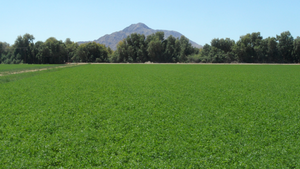
By this spring -- just two years after it was introduced -- an estimated 200,000 of California’s 1.1 million acres of alfalfa will be Roundup-resistant varieties.

One judge may buy your philosophical hogwash. Now go find a gullible judge who will order the destruction of 200,000 acres of alfalfa just because you don’t like the process used to approve its commercial use.

According to the news release issued by the Center for Food Safety the judge’s decision MAY (my emphasis) prevent this season’s sales and planting of Monsanto’s GE alfalfa and future submissions of other GE crops for commercial deregulation.

“This is a major victory for farmers and the environment,” said Andrew Kimbrell, executive director of the Center for Food Safety. “This is another nail in the coffin for USDA’s hands-off approach to regulations on these risky engineered crops,” said Will Rostov, senior attorney of The Center for Food Safety.

Great quotes no doubt picked up by newspapers nationwide, but the truth is it is all balderdash. The full story is biotech crops are continuing to grow in acreage worldwide. Herbicide-resistant alfalfa may be the biggest agricultural biotech success story yet. In just two years, it has gained almost a 25 percent of the California alfalfa market, the largest and most progressive alfalfa industry in the nation.

It has been rapidly accepted not because growers are thrilled to pay the considerable extra cost for the technology, but because it produces more alfalfa per acre using fewer or less crop-stunting herbicides to control weeds.

It works because the feed value of the herbicide-resistant hay is better than conventional hay. Growers are also expecting longer stand life from a Round Ready variety due to fewer weeds, again a major cost savings.

According to Jim Munsch, an organic livestock producer and an “advanced-degreed expert” who represents The Cornucopia Institute. “This judgment recognizes that the livelihood of farmers was not properly considered by the USDA when it approved the introduction of genetically engineered Roundup Ready alfalfa into the environment."

To the contrary Mr. Munsch, USDA, the Food and Drug Administration and the Environmental Protection Agency considered the farmer along with the environment when it approved the planting of herbicide-resistant alfalfa after exhaustive studies.

Fortunately, the government listened to reason rather than to a group of anti-capitalists who have little interest in the well being of American farmers or America’s food supply.

Like we said, get over it and go find another issue that will draw millions into your “non-profit watchdog” organizations. On agricultural biotechnology, you have lost in the court of public acceptance.

email: hcline@farmpress.com

Get Copyright ClearanceWant to use this article? Click here for options!
© 2008 Penton Media, Inc.


Latest Jobs

resources

events icon events

product info icon tradeshows

tradeshow icon digests

research icon photos

Continuing Education

Accredited by California DPR and California and Arizona Certified Crop Advisers:


(New Course)

Nutrient Management in Key California Crops


This online CEU course offers a detailed look at the nutrient management in key California crops. It is sponsored online by Western Plant Health Association and funded by a grant from the California Department of Food and Agriculture Fertilizer Research and Protection Program (FREP). It is accredited for one (1)-hour of credit by the California Department of Pesticide Regulation for California Pest Control Advisers (PCA), Private Applicators, Qualified Applicators and Aerial Applicators. The course is also accredited for 3 units in Nutrient Management (NM) for California and Arizona Certified Crop Advisers (CCAs).

Accredited in California, Arizona, Idaho, Oregon and Washington and for Certified Crop Advisers:


(New Course)
Organic/Sustainable Agricultural Production in the West

Organic/sustainable agriculture is expanding rapidly in the U.S. with an average annual increase of 20% during the last 15 years. This course covers a wide range of pests and organic control strategies. It is accredited for up to 4 continuing education hours for PCAs and Applicator Licensees in California, Arizona, Idaho, Oregon and Washington. It is also approved for Certified Crop Adviser credit.

ACCREDITED IN OREGON AND WASHINGTON:


(New Course)
Managing Spray Drift to Minimize Problems

This online spray drift management course has been certified by the Oregon Department of Agriculture and the Washington Department of Agriculture for 2 hours of credit for licensed Applicators and Consultants in Oregon and Washington.

ACCREDITED IN CALIFORNIA ONLY:


Almond Pest Management

Get the latest info on almond insect pest management and earn 2 hrs. CE DPR and CCA credit in California.

California Groundwater Protection Regulations

Earn 2 hrs. in California laws and regs CE and learn how to protect California groundwater supplies.


Disease Management in California Almonds

Managing diseases in California almond production is a year-long process. This course provides the latest information on controlling these diseases with management practices and fungicides. The course is approved for 2 CEUs by DPR for PCAs and all applicator categories and California CCAs.

Powdery Mildew Control in California Grapevines

Learn about the No. 1 grape disease in California; earn 2 California CE hours.

ACCREDITED IN CALIFORNIA AND ARIZONA:


The Role of Copper in Disease Control

Copper has long been a key tool in disease control in a many crops. This 2-CEU course accredited California PCAs and all DPR applicator categories and Arizona applicators details how best to use copper to maximize its potential.

Insecticide Resistance Management in Agronomic and Row Crops

A 3-hr. CE approved for California and Arizona licensees and CCAs in both states.

Agronomic Weed Resistance Management in Row Crops, Trees Nuts and Vines

Weeds Resistance Management is approved for 3 hours of CE credit for all California and Arizona licensees and Certified Crop Advisers.

Lepidopterous Pest Management/ Pesticide Safety

This course is approved for 2 hours in Arizona and California (1 hr. of laws/regs; 1 hour Other) and for CCAs.

Managing Spray Drift to Minimize Problems

2-hrs laws and regs for California licensees; 2 hours in Arizona and for CCAs.

Back to Top

Browse Print Issues

Additional Resources

subscribe to Farm Press Daily Southeast Farm Press Southwest Farm Press Delta Farm Press